


![SoftPro™ Chlorine+ Carbon Whole House Water Filter to Remove PFAS, Chlorine, Chloramine & Pesticides [City Water Filters Series]](http://www.softprowatersystems.com/cdn/shop/files/SoftPro_Whole_House_Carbon_Filter_with_Spin_Down_Water_Filter.webp?v=1783547361&width=140)


 855-683-8488


How to Install a Bypass Valve on Your Iron Filter System: The Complete Step-by-Step Setup Guide

To install a bypass valve on your iron filter system, position it on the main cold water supply line before the filter, wrap threaded connections with Teflon tape, and mount the valve securely. Run your drain line under 20 feet, slowly open the main water valve, then toggle through bypass positions to confirm smooth operation. Getting every detail right makes all the difference, and we've got everything you need to do it confidently.
Key Takeaways
- Position the bypass valve on the main cold water supply line before the iron filter, ensuring a dry, level, and accessible location.
- Wrap all threaded connections with Teflon tape, mount the valve, and align it correctly with the water flow direction.
- Run the drain line for backwashing, keeping it under 20 feet with an air gap to prevent contamination.
- Slowly open the main water valve to pressurize the system, then inspect all connections thoroughly for leaks.
- Toggle the bypass valve between positions to confirm smooth operation, listening for abnormal sounds and monitoring consistent water flow.
What Tools and Parts Do You Need for a Bypass Valve Installation?

Before we plunge into the installation process, let's make sure we've got everything we need. Having the right tools ready prevents frustrating mid-installation trips to the hardware store.
Tools you'll need:
- Pipe wrench
- Screwdriver
- Teflon tape
- Hammer (if installing a push-button valve)
- Pipe cutter (if existing piping needs repositioning)
- Level (ensures optimal water flow alignment)
- Bucket or towel (manages inevitable water spillage)
Parts you'll need:
- The bypass valve itself
- O-rings for proper sealing
- Appropriate fittings compatible with your existing plumbing
Don't underestimate that level—a misaligned valve restricts flow efficiency and creates unnecessary wear.
Similarly, those O-rings are your frontline defense against leaks, so never skip them.
Gather everything before starting, and the installation becomes remarkably straightforward.
Where to Install Your Iron Filter Bypass Valve?
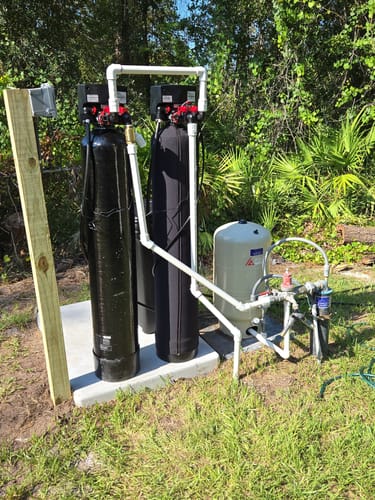
Now that we've got our tools and parts ready, let's tackle one of the most critical decisions in this installation—where exactly to place the bypass valve.
Position it on the main cold water supply line before it reaches the iron filter, giving you immediate control during maintenance.
Place the bypass valve on the main cold water supply line before the iron filter for effortless maintenance control.
Choose a dry, level spot where temperatures stay between 34°F and 120°F—anything outside that range risks damage and performance issues.
Keep it accessible; you'll want to reach it quickly without moving obstacles.
Align it inline with water flow direction so it effectively diverts water away from the filter when activated.
Finally, check your local plumbing codes before committing to a location—compliance isn't optional, and getting this right upfront saves costly corrections later.
How to Install a Bypass Valve on Your Iron Filter System
With our bypass valve location locked in, let's get it installed. Follow these four critical steps for a leak-free setup:
- Wrap all threaded connections with Teflon tape, then mount the bypass valve on the main cold water supply line, confirming flow direction arrows align with water movement.
- Run your drain line for backwashing—keep it under 20 feet and include an air gap to eliminate back-siphoning risks.
- Slowly open the main water valve to pressurize the system, inspecting every connection point for leaks.
- Test the bypass valve by toggling it through each position, confirming smooth operation before finalizing the installation.
Mastering these steps guarantees a reliable, maintainable system that protects your iron filter long-term.
How to Test Your Bypass Valve After Installation?
Once the bypass valve is installed, we'll want to test it immediately to catch any issues before they become costly problems.
Toggle the valve between bypass and normal positions — it should shift smoothly without resistance. During each toggle, inspect all connections for leaks, confirming every seal is intact.
Pay attention to sounds. Hissing or rattling signals trapped air or an obstruction worth investigating.
Monitor water flow carefully — strong and consistent in normal position, completely stopped in bypass. Anything inconsistent warrants immediate attention.
Don't treat this as a one-time check. Repeat the toggling process every few months to maintain efficiency and catch developing issues early.
Regular testing transforms a simple valve into a reliable diagnostic tool, keeping your iron filter system performing at its best.
How to Fix Low Pressure, Leaks, and Stuck Bypass Valves
Even the best installations run into hiccups, so let's walk through the three most common bypass valve problems and how to fix them fast.
- Low pressure? Confirm your bypass valve is fully open or closed per its intended function — partial alignment chokes flow.
- Leaks around connections? Tighten those threaded joints and wrap Teflon tape where needed to seal them properly.
- Valve stuck? Gently toggle it back and forth, checking for mineral buildup or debris causing it to seize.
- Prevent future issues by exercising your valve quarterly — this keeps it moving freely and extends its lifespan.
If none of these fixes work, consult your manufacturer's guide or call a certified technician for deeper diagnostics.
Frequently Asked Questions
Which Way Does a Bypass Valve Go?
We'll align the inlet arrow pointing toward the filter and the outlet arrow directing water away from it. Correct alignment's essential—any misplacement reduces pressure and compromises your filtration efficiency.
Where to Install a Bypass Valve?
We'll install the bypass valve on the main cold water supply line, before the water heater, in a dry, level spot close to the water source—ensuring easy access for maintenance and ideal system protection.
What Is a 3-Valve Bypass?
A 3-valve bypass uses two ball valves and a swing check valve to reroute water around your iron filter. It lets us maintain the system without cutting off your household's water supply.
How to Put Softener in Bypass Mode?
To put your softener in bypass mode, locate the bypass valve. If it's a push valve, press the red button until the blue pops out. If it's a turn valve, rotate the blue knob fully until it stops.






