


![SoftPro™ Chlorine+ Carbon Whole House Water Filter to Remove PFAS, Chlorine, Chloramine & Pesticides [City Water Filters Series]](http://www.softprowatersystems.com/cdn/shop/files/SoftPro_Whole_House_Carbon_Filter_with_Spin_Down_Water_Filter.webp?v=1783547361&width=140)


 855-683-8488


How to Install a Whole House Point-of-Entry Iron Filter at Your Main Water Line

To install a whole house point-of-entry iron filter, we'll need to shut off your main water supply, then cut into the main line and install a bypass valve. Next, load the filter tank with gravel and iron filter media, connect everything with Teflon-taped, leak-proof fittings, and run a 15-20 minute backwash cycle. A drop in iron levels confirms success. Stick with us and we'll walk you through every step in detail.
Key Takeaways
- Shut off the main water supply, then use a pipe cutter to create a clean opening in the main water line for installation.
- Install a bypass valve into the cut section, wrapping all threaded joints with Teflon tape to ensure a leak-free seal.
- Load the filter tank with a 2-3 inch gravel base, then add iron filter media evenly per manufacturer specifications.
- Connect the iron filter using manufacturer-matched fittings, tightening firmly without over-tightening to prevent cracks or stress points.
- Slowly restore water flow, run a 15-20 minute backwash cycle, and check iron levels to confirm successful installation.
Gather Tools and Materials for Your Iron Filter Install

Before we plunge into the installation process, let's make sure we've got everything we need on hand. First, shut off the main water supply — safety isn't optional here.
For tools, we'll need pipe cutters, wrenches, and screwdrivers. These three workhorses handle virtually every mechanical challenge we'll encounter.
On the materials side, gather your iron filter system, a bypass valve kit, flexible connectors, and appropriate pipe fittings — either PVC or PEX depending on your existing plumbing.
We'll also need 2-3 inches of gravel plus the manufacturer's recommended filter media for the tank.
Here's a critical step many installers skip: verify that every component is compatible with your current plumbing system before starting. Incompatible parts create expensive headaches we simply don't want.
Load the Iron Filter Media and Seal the Tank
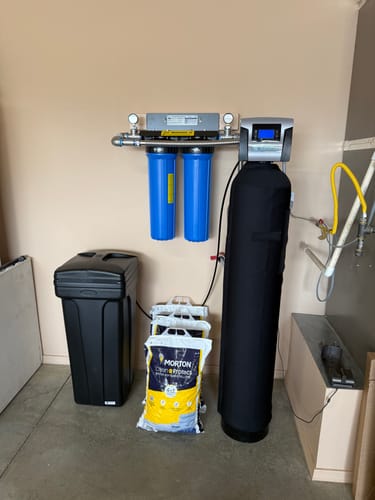
With the tools and materials ready, let's load the filter media and seal the tank. Proper loading directly impacts filtration efficiency, so precision here matters.
Start by centering the distributor tube inside the tank and taping its top to block media from entering. Then, build your foundation:
- Pour a 2-3 inch gravel layer at the tank's bottom
- Add the iron filter media per manufacturer specs, distributing it evenly
- Verify all components are correctly aligned and securely mounted
Each step compounds the last, creating a system that actually performs.
Once the media's loaded, seal the tank lid tightly—this preserves media integrity and prevents contamination during operation. A properly sealed tank isn't optional; it's what separates a reliable filter from a costly headache.
Shut Off the Water and Cut Into the Main Line
Now that the tank's sealed and ready, it's time to connect it to your home's water supply—and that starts with cutting into the main line. First, locate and shut off your main water shut-off valve completely.
| Step | Tool Needed | Key Detail |
|---|---|---|
| Cut the pipe | Material-matched pipe cutter | Mark precisely before cutting |
| Install bypass valve | Bypass valve kit | Keeps water flowing during servicing |
| Seal connections | Teflon tape | Wrap all threaded joints thoroughly |
Once the water's off, use your pipe cutter to make a clean, deliberate cut. Immediately install a bypass valve into the open section—this lets us service the filter later without disrupting household water flow. Check that all fittings align with your main line specs before finalizing connections.
Connect Your Iron Filter With Leak-Proof Fittings
There are three non-negotiable rules we follow when connecting an iron filter: wrap every threaded joint thoroughly with Teflon tape, match all fittings exactly to the manufacturer's specs, and tighten connections firmly without overdoing it.
Over-tightening cracks fittings and creates the very leaks we're trying to prevent.
Before running water, inspect every connection point for alignment. Misaligned joints create stress points that fail under pressure—often when we least expect it.
During your initial flow test, watch these three areas closely:
- Threaded joints – look for moisture forming around the tape seal
- Fitting connections – verify they match manufacturer specs under live pressure
- Cut line entry points – check for misalignment-induced stress leaks
Catching problems early saves significant repair time and water damage.
Test Your Iron Filter and Run the First Backwash
Slowly reopening the main water supply valve is the moment of truth—pressure builds through the system, and every connection we made gets its first real test.
Watch every fitting carefully for leaks and address anything suspicious immediately.
Now let's run our first backwash cycle for 15–20 minutes.
Run the first backwash cycle for 15–20 minutes and let the system do what it was built to do.
Keep your eyes on the drain line—clarity tells us everything.
Cloudy discharge gradually clearing means the media is conditioning correctly. Once it runs clean, we're ready for normal operation.
Don't skip the final step: test the water's iron content post-backwash.
This confirms the filter is actually performing, not just installed.
Numbers don't lie. If iron levels drop substantially, we've done this right and our water quality is already improving.
Frequently Asked Questions
Can You Put a Filter on Your Main Water Line?
Yes, we can absolutely put a filter on our main water line! Installing a whole house point-of-entry iron filter treats every drop entering our home, protecting our plumbing, appliances, and ensuring cleaner water throughout.
How to Install a Whole House Iron Filter?
We'll start by shutting off the main water supply, then cut in a bypass valve, assemble the filter media with gravel, and run a 15-20 minute backwash cycle to activate the system.
Where Should a Whole House Water Filter Be Installed?
We should install our whole house water filter as close to the main water line as possible, in a dry, well-ventilated space with at least 2 feet of clearance for easy maintenance access.
What Is the Best Whole House Iron Filter for Well Water?
We recommend NSF-certified filters with backwashing features that automatically clean media, removing up to 10 ppm of iron. Look for models with sediment pre-filters and flow rates matching your household's peak water demand for peak performance.






