


![SoftPro™ Chlorine+ Carbon Whole House Water Filter to Remove PFAS, Chlorine, Chloramine & Pesticides [City Water Filters Series]](http://www.softprowatersystems.com/cdn/shop/files/SoftPro_Whole_House_Carbon_Filter_with_Spin_Down_Water_Filter.webp?v=1783547361&width=140)


 855-683-8488


How to Install a Whole House Iron Filter Yourself: The Complete DIY Installation Guide

Installing a whole house iron filter yourself is easier than you'd think, and it'll save you hundreds in contractor fees. We'll walk you through gathering the right tools, shutting off your main water supply, layering your filter media correctly, sealing every fitting, and running that critical first backwash cycle. Each step builds on the last, so nothing feels overwhelming. Stick with us and you'll have clean, iron-free water flowing through every tap in your home.
Key Takeaways
- Gather essential tools and materials, including pipe cutters, Teflon tape, a bypass valve kit, flexible connectors, and manufacturer-specified filter media before starting.
- Shut off the main water supply, mark your cut location accurately, and install a bypass valve immediately after cutting the pipe.
- Layer 2-3 inches of gravel at the tank's bottom, center the distributor tube, and add filter media per manufacturer specifications.
- Seal every threaded connection with 10-15 layers of Teflon tape, then firmly tighten inlet and outlet ports against the main line.
- Gradually reopen the main supply valve, run a 15-20 minute backwash cycle, and test iron levels to confirm effective filtration.
Tools and Materials Required for Whole House Iron Filter Installation

Before we plunge into the installation process, let's make sure we've got everything we need to get the job done right. Gather your pipe cutters, wrenches, screwdrivers, and Teflon tape — these are your core tools for achieving secure, watertight connections.
For materials, you'll need the filter system, a bypass valve kit, flexible connectors, mounting hardware, and manufacturer-specified filter media.
Stock up on essentials: filter system, bypass valve kit, flexible connectors, mounting hardware, and manufacturer-specified filter media.
Don't overlook the extras: a pressure gauge, hose clamps, and a level will prove invaluable for monitoring water pressure and ensuring precise alignment.
Before touching a single pipe, assess your plumbing system's compatibility, particularly inlet and outlet port sizes, which vary across systems.
Finally, organize a dedicated workspace, keeping everything accessible and your environment safe. Preparation now prevents costly mistakes later.
Shut Off the Water and Tap Into the Main Line
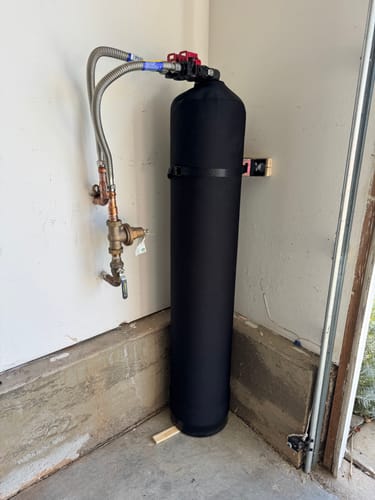
With our tools laid out and workspace prepped, it's time to get our hands on the plumbing. First, shut off the main water supply — this single step prevents costly water damage while we work.
Next, mark the exact cut location on the main line. Choose the right cutting tool for your pipe material, whether that's copper, PVC, or galvanized steel, and make a clean, precise cut.
Here's where smart installers gain an advantage: install a bypass valve in the cut section immediately. This keeps water flowing through the house while we complete the filter installation — no family complaints about lost water access.
Finally, wrap every threaded connection with Teflon tape, then tighten fittings firmly but carefully. Over-tightening damages fittings and creates leaks, so find that confident middle ground.
Layer the Gravel and Filter Media Inside the Tank
Now that the bypass valve is in place and the plumbing connections are secure, we can turn our attention to the heart of the filter system — the tank itself.
Start by pouring a 2-3 inch gravel layer at the bottom, which anchors everything above it and keeps filtration stable. Next, center the distributor tube and seal its top with tape — this simple step prevents media from flooding the tube during loading.
When adding filter media, follow the manufacturer's specs precisely, distributing it evenly to eliminate channeling risks that quietly destroy filtration performance. Layering matters here — each material serves a distinct purpose in the filtration sequence.
Before connecting any plumbing, verify every component is properly aligned and secured. Shortcuts at this stage cost you efficiency downstream.
Connect the Bypass Valve and Seal Every Fitting to the Main Line
Cutting into the main line commits us to this installation, so every fitting from this point forward has to be sealed correctly — no exceptions.
Once we've marked and cut the main water line, we install the bypass valve to keep water flowing during maintenance without interrupting household service — that's the valve's entire purpose, and it earns its place in the system.
Wrap every threaded connection with 10 to 15 layers of Teflon tape before threading anything together. This isn't optional — it's what separates a tight seal from a slow drip that ruins drywall.
Tighten the inlet and outlet ports firmly against the main line, and use flexible connectors wherever alignment gets stubborn.
After everything's connected, inspect every joint for leaks and monitor pressure closely.
Run the First Backwash Cycle and Test Your Iron Levels
The hardest part is behind us — now we find out if the system works. Slowly reopen the main supply valve to build pressure gradually, avoiding damaging spikes. Then initiate your first backwash cycle.
The hardest part is done — now open the valve slowly and let the system prove itself.
Here's what we're watching for over those 15–20 minutes:
- Drain line clarity — Water should run clear, confirming the media is properly prepared for iron reduction.
- Connection integrity — Inspect every fitting for leaks, which signal installation errors or seal failures before they become costly problems.
- Iron level confirmation — Once the cycle completes, test your water's iron content to verify the system is actually pulling contaminants out.
Clear water during backwash means we've done this right. The test results will prove it.
Frequently Asked Questions
Can I Install a Whole House Filter Myself?
Yes, you can install a whole house filter yourself! We'll need basic plumbing skills, pipe cutters, and wrenches. Shut off your main water supply first, and we're ready to tackle this project confidently.
How to Install a Whole House Iron Filter?
We'll start by shutting off your main water supply, cutting the line to install a bypass valve, adding gravel and filter media, then restoring pressure and running a 15-20 minute backwash cycle to finalize installation.
Do Water Filters Remove Giardia?
Yes, water filters can remove Giardia, but only if they're rated at 1 micron or smaller. We recommend microfiltration or reverse osmosis systems, as activated carbon filters alone won't effectively capture these chlorine-resistant parasitic cysts.
How Much Does It Cost to Install an Iron Filter?
If you're doing it yourself, you'll spend $100–$300 on tools and fittings. Hiring a pro adds $200–$500 in labor. Factor in the system itself—$800–$2,500—and you're looking at a manageable investment for clean water.






