


![SoftPro™ Chlorine+ Carbon Whole House Water Filter to Remove PFAS, Chlorine, Chloramine & Pesticides [City Water Filters Series]](http://www.softprowatersystems.com/cdn/shop/files/SoftPro_Whole_House_Carbon_Filter_with_Spin_Down_Water_Filter.webp?v=1783547361&width=140)
![SoftPro™ Iron Filter - Iron Master AIO [Air Injected Water Filter / Katalox]](http://www.softprowatersystems.com/cdn/shop/files/SoftPro_AIO_Iron_Master_Iron_Filter_Main.webp?v=1783547787&width=140)


 855-683-8488


How to Measure Your Well Pump GPM Before Buying Any Water Treatment System or Iron Filter

To measure your well pump's GPM, shut off all faucets and appliances, then fill a 5-gallon bucket from a hose bib while timing it in seconds. Plug those numbers into this formula: (gallons drawn ÷ seconds timed) × 60. Run the test a few times for consistency. Most households need between 6 and 12 GPM for a treatment system to work properly. Stick with us, and we'll show you exactly how to use that number to make the smartest purchase possible.
Key Takeaways
- Shut off all faucets and appliances, then fill a 5-gallon bucket from a hose bib while timing the process.
- Calculate GPM using this formula: (gallons drawn ÷ seconds timed) × 60 for an accurate flow rate result.
- Most households require between 6 and 12 GPM to ensure water treatment systems function properly and effectively.
- Iron filters need a backwash flow rate roughly twice the service flow rate, making accurate GPM measurement essential.
- If GPM falls below 7, check for sediment blockages or consider upgrading your submersible pump for better flow.
Why Your Well Pump GPM Matters Before You Buy a Treatment System

Before investing in a water treatment system, there's one critical measurement we need to nail down first: our well pump's gallons per minute, or GPM.
Without it, we're fundamentally guessing—and guessing gets expensive fast.
Skipping this step means guessing—and when it comes to water treatment systems, guessing gets expensive fast.
Here's why it matters: treatment systems, especially iron filters, require specific flow rates to operate effectively. Most households need between 6 and 12 GPM.
Fall outside that range with the wrong equipment, and we're looking at insufficient filtration, compromised water quality, and wasted money on systems that simply can't keep up.
Testing GPM before purchasing eliminates that risk entirely. We'll know exactly what backwash flow rates our system demands, ensuring every component we select is sized correctly for our home's actual water needs.
How GPM Determines Which Iron Filter Will Actually Work
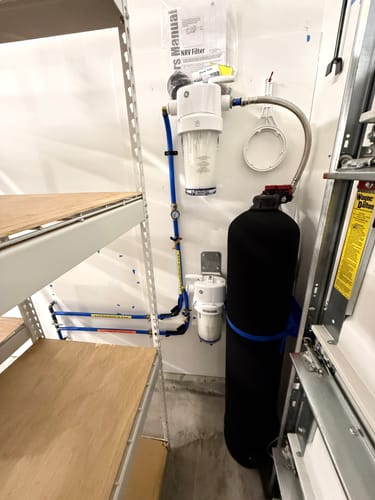
Now that we recognize why GPM matters, let's talk about what we actually do with that number—because it directly determines which iron filter will work in our home and which ones will fail us.
Every iron filter carries two critical requirements: a service flow rate and a backwash flow rate. That backwash rate typically runs double the service rate, so if we're filtering at 6 GPM, we'll need roughly 12 GPM available during backwash cycles.
Fall short of that threshold, and sediment builds, iron sneaks through, and our system deteriorates faster than we'd expect. Knowing our well pump's GPM—ideally between 6 and 12 GPM minimum—lets us match the right filter to our actual capacity, protecting our investment and guaranteeing genuinely clean water.
How to Measure Your Well Pump GPM the Right Way
Getting an accurate GPM reading starts with one non-negotiable step: shut off every faucet and water-using appliance in the house before we begin. Any running water skews our numbers, and skewed numbers lead to wrong equipment choices.
Once everything's off, we activate the pump, grab a 5-gallon bucket, and time how long it takes to fill from a hose bib.
Then we run this formula: (gallons drawn ÷ seconds timed) × 60. That gives us GPM.
One round isn't enough. We run the test several times to catch variations caused by seasonal shifts or system performance dips.
Consistency across multiple readings is what gives us a number we can actually trust when selecting an iron filter or any treatment system.
Calculate Your Well Pump GPM With This Simple Formula
(Gallons drawn down ÷ Seconds for recovery) × 60. That's the formula standing between you and confident equipment decisions.
Here's how it works in practice:
- Draw water until your pump activates
- Count the seconds until it shuts off again
- Measure exactly how many gallons you pulled down
- Divide gallons by seconds, then multiply by 60
Let's say you drew 8 gallons in 45 seconds. That's 8 ÷ 45 × 60, giving you roughly 10.7 GPM.
Why does this matter? Water treatment systems and iron filters require specific service and backwash flow rates. Without knowing your GPM, you're guessing.
Run this test periodically, too—declining numbers signal pump inefficiency before it becomes a costly emergency.
What to Do If Your Well Pump Flow Rate Is Too Low?
So you've run the test and the numbers aren't great—maybe you're sitting at 4 GPM when your iron filter demands at least 7.
Don't panic. First, inspect your well screen and plumbing for sediment blockages, since buildup alone can choke flow unnecessarily. If the pump itself is undersized or worn, upgrading to a higher-capacity submersible pump is often the most direct fix.
We also recommend installing a pressure tank or running a second pump in parallel—both strategies buffer supply and smooth out inconsistencies.
Annual flow rate testing catches decline early, before it becomes a crisis. Solving low flow now protects your equipment investment and guarantees your treatment systems actually perform the way they're designed to.
Frequently Asked Questions
How to Determine Well Pump Gpm?
We'll determine your well pump's GPM by filling a 5-gallon bucket from a pressure tank spigot, timing it, then calculating: (gallons ÷ seconds) x 60. It's that simple!
How Many GPM Water Filters Do I Need?
You'll need a water filter rated at your home's peak GPM demand—typically 6-12 GPM for residential use. Match or exceed your measured well pump's flow rate to maintain consistent pressure and effective filtration throughout your home.
How Many GPM Well Pumps Do I Need?
We'll need a well pump that delivers 6–12 GPM to meet our household's simultaneous demands. Match the pump's capacity to our peak usage needs, ensuring it can reliably power every fixture and appliance running at once.
Is 60 Gpm Good for a Well?
Yes, 60 GPM is excellent for a well! You'll have more than enough water to handle multiple appliances, irrigation, and treatment systems simultaneously without worrying about pressure drops or interruptions.





