


![SoftPro™ Chlorine+ Carbon Whole House Water Filter to Remove PFAS, Chlorine, Chloramine & Pesticides [City Water Filters Series]](http://www.softprowatersystems.com/cdn/shop/files/SoftPro_Whole_House_Carbon_Filter_with_Spin_Down_Water_Filter.webp?v=1783547361&width=140)


 855-683-8488


How to Properly Prime and Start Your Iron Filter System for the Very First Time

To properly prime and start your iron filter for the first time, we'll want to shut off the main water supply and inspect all fittings, connections, and filter media before doing anything else. Then, gradually restore water pressure while watching for leaks. Run an initial backwash cycle for 15–20 minutes to flush debris, and test your water's iron levels afterward. Stick with us, and we'll walk you through every critical detail that makes this process work.
Key Takeaways
- Shut off the main water supply completely and inspect all fittings, valves, and filter media before beginning the priming process.
- Gradually open the main supply valve to prevent hydraulic shock, stabilizing pressure between 30–50 psi while monitoring for leaks.
- Run an initial backwash cycle for 15–20 minutes to flush debris; murky water draining is completely normal at first.
- Inspect all threaded connections, hose clamps, and joints for leaks, applying Teflon tape and tightening fittings where necessary.
- Test iron levels post-backwash using an iron-specific kit, targeting below 0.3 ppm to confirm effective filtration performance.
What to Check Before Priming Your Iron Filter

Before we fire up our iron filter system, let's make sure everything's properly set up — skipping these checks now can mean leaks, poor filtration, or a messy backwash situation later.
First, confirm the main water supply is completely shut off.
Before touching anything else, shut off the main water supply — completely, no halfway measures.
Next, inspect every threaded fitting and bypass valve — Teflon tape should be sealing all connections tight.
Verify your filter media is installed exactly per the manufacturer's specs, including any optional sand or activated charcoal layers.
Now check the control valve's inlet and outlet connections — those directional arrows matter more than most people realize.
Finally, examine your drain line. It needs to be unobstructed, properly sized, and equipped with an air gap to prevent contamination during backwashing.
Miss any of these, and you're starting on shaky ground.
How to Restore Water Pressure Without Shocking the System
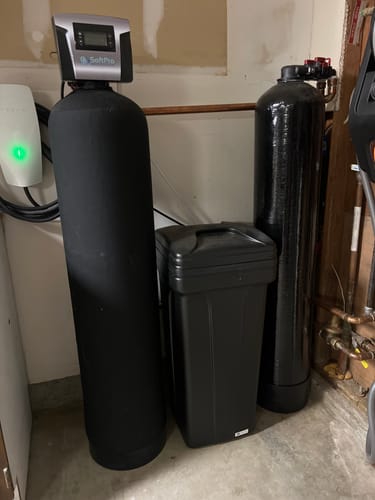
Now that everything's checked and connected, it's time to bring the system to life — carefully. Rushing this step risks pressure shock, which can damage fittings and compromise your filter media.
Here's how we restore pressure the right way:
- Open the main supply valve gradually — slow water flow prevents hydraulic shock to system components.
- Watch the pressure gauge constantly — we're looking for a slow, steady climb, never sudden spikes.
- Stabilize at low pressure first — hold the system between 30–50 psi before pushing to operational levels.
- Inspect every connection for leaks — address anything suspicious immediately before pressure increases further.
Once pressure stabilizes, run an initial backwash cycle for 15–20 minutes to flush debris and prime the filter for peak performance.
How to Run Your First Iron Filter Backwash Cycle
With pressure stabilized, we're ready to run the first backwash cycle — and it's simpler than it sounds.
Slowly restore the main water supply, keeping flow gradual to prevent pressure surges that could disrupt the filter media.
Run the backwash for 15–20 minutes and watch the drain line closely. Initially, the exiting water will appear murky — that's normal. As debris flushes out, clarity improves, signaling the media is functioning correctly. That visual shift is your confirmation everything's working.
Murky water leaving the drain line isn't a problem — it's proof the backwash cycle is doing its job.
While the cycle runs, inspect every connection and fitting for leaks.
Once complete, test the water's iron content immediately. This baseline measurement tells us whether the system is performing as designed — and gives us a benchmark for ongoing monitoring.
How to Find and Fix Leaks in Your Iron Filter System
Leaks are sneaky — they often start small and show up in the least obvious places, so let's track them down systematically.
- Wrap all threaded connections with Teflon tape and tighten firmly — loose fittings are the most common culprits.
- Inspect the drain line at every hose clamp and connection point, confirming a 3-inch air gap exists to prevent backflow.
- Dry the tank area completely, then recheck resin tank joints and the control valve for moisture reappearance.
- Restore water pressure slowly during start-up, watching every plumbing connection carefully for drips in real time.
Once you've addressed any issues, log everything — dates, locations, repairs made.
A solid maintenance log helps us spot recurring patterns before they become serious problems.
How to Test Your Water After the First Backwash
How well is our filter actually working? After the first backwash cycle completes, let's find out.
Collect water samples from the faucet nearest to the filter—this gives us the most accurate reading of what's actually coming through.
Use an iron-specific testing kit that measures in parts per million (ppm). We're targeting below 0.3 ppm, which confirms our filter's performing as it should.
Also examine the water visually—clear water signals effective filtration, while reddish-brown discoloration tells us the media isn't performing at its best yet.
Don't treat this as a one-time check. Schedule follow-up tests every 3-6 months to track ongoing performance.
Consistent monitoring is what separates people who simply own a filter from those who truly master their water quality.
Frequently Asked Questions
Why Is My Iron Filter Not Working?
Your iron filter might not be working due to improper media installation, lack of priming, blocked connections, a bypass valve left open, or insufficient backwashing—all of which we can troubleshoot to restore peak filtration performance.
How Do You Prime a Canister Filter?
We'll fill the canister with water, ensuring no air bubbles are trapped in the hoses. Close all valves first, then open the intake valve and run the pump to clear remaining air pockets.
How Do I Set up My Water Softener for the First Time?
We'll start by placing the softener near the main water line, connecting it with Teflon-taped fittings, filling the brine tank with salt, programming hardness settings, then running a manual regeneration cycle to confirm everything's working flawlessly.
How Long to Backwash an Iron Filter?
We recommend backwashing your iron filter for 15-20 minutes initially. Watch the drain line closely — once the water runs clear, you'll know the media's clean and your system's ready to perform.






