


![SoftPro™ Chlorine+ Carbon Whole House Water Filter to Remove PFAS, Chlorine, Chloramine & Pesticides [City Water Filters Series]](http://www.softprowatersystems.com/cdn/shop/files/SoftPro_Whole_House_Carbon_Filter_with_Spin_Down_Water_Filter.webp?v=1783547361&width=140)


 855-683-8488


How to Correctly Set Backwash Duration and Frequency on Your Iron Filter Controller

Setting backwash duration and frequency on your iron filter controller depends on three key factors: your iron level, media type, and well pump capacity. Iron levels above 5 ppm demand backwashing every 2–3 days, while lower levels may only need weekly cycles. Your media type determines duration—catalytic and Birm media need 10–12 minutes, while green sand needs 8–10. Keep an eye on pressure gauges too, because they'll tell you everything you need to know before problems start.
Key Takeaways
- Set backwash frequency every 2–3 days for iron levels above 5 ppm, or every 3–5 days for levels between 1–5 ppm.
- Schedule backwash duration between 10–20 minutes, adjusting based on media type: catalytic and Birm require 10–12 minutes minimum.
- A pressure drop of 15 PSI or more signals that immediate backwashing is needed, regardless of your set schedule.
- Always schedule backwash cycles outside peak household demand windows, maintaining at least 5–10 GPM during high-use periods.
- Monitor pressure gauges regularly and adjust backwash frequency based on actual performance data to prevent media fouling.
What Your Iron Level Tells You About Backwash Frequency?

How often you backwash your iron filter depends heavily on how much iron is actually in your water. Think of your iron level as a dial that directly controls your maintenance schedule.
Here's what the numbers tell you:
- Above 5 ppm — Backwash every 2-3 days to prevent dangerous media buildup.
- Between 1-5 ppm — Every 3-5 days keeps performance strong.
- Low levels — Weekly backwashing is sufficient since saturation happens slowly.
- Multiple contaminants present — Drop to every 1-2 days, regardless of iron concentration.
The key takeaway? Don't set your controller and forget it.
Your iron filter isn't a "set it and forget it" system — regular monitoring keeps everything running at peak performance.
We recommend monitoring iron levels regularly so you're always adjusting frequency based on real data, not assumptions. Precision here protects your entire filtration system.
How Pressure Gauges Tell You When to Backwash Your Iron Filter?
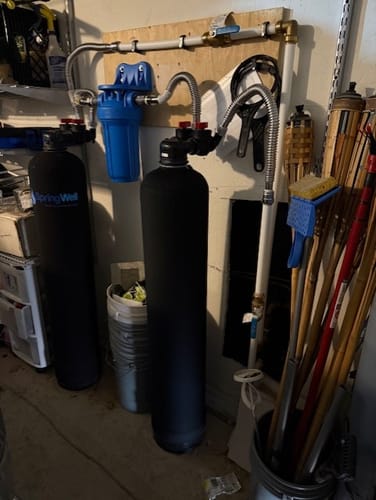
Pressure gauges take the guesswork out of knowing when your iron filter needs attention. By monitoring readings before and after your filter system, we can pinpoint exactly when backwashing becomes necessary.
Here's what to watch for:
- A pressure drop of 15 PSI or more signals it's time to backwash immediately.
- Pressure below 20 PSI means your backwash system can't operate effectively—act fast.
- Recording baseline readings regularly helps us track performance trends and catch problems early.
- Rapidly increasing differential pressure means we should schedule backwashing sooner than planned.
Catching these pressure shifts early keeps your filtration running efficiently.
Think of your gauges as your filter's communication system—they're constantly telling us what's happening inside the media bed.
Can Your Well Pump Keep up With Backwash Flow Demands?
Once we're aware our pressure gauges are signaling a backwash cycle, there's another piece of the puzzle worth examining—can our well pump actually handle the demand?
Backwashing iron filters requires 8-12 GPM per square foot of media, and if our pump can't sustain that flow, we're setting ourselves up for incomplete cleaning and media fouling.
Insufficient backwash flow doesn't just clean poorly—it actively destroys media, turning a maintenance task into a replacement bill.
High iron concentrations above 5 ppm demand backwashing every 2-3 days, which puts consistent stress on our pump's capacity.
We also need to maintain a minimum of 20 PSI throughout the cycle to keep valves operating correctly.
Monitoring our pump's performance isn't optional—it's essential.
Pressure drops during backwash are red flags telling us our pump is struggling to meet the system's demands.
What Backwash Duration Does Each Media Type Actually Need?
Different media types have their own backwash duration requirements, and getting these wrong means incomplete cleaning and a shorter media lifespan. Here's what each media actually needs:
- Catalytic media – 10–12 minutes; guarantees trapped contaminants fully dislodge from the bed.
- Green sand – 8–10 minutes; also demands strict pH monitoring between 6.2–8.5 for peak performance.
- Birm media – 10–12 minutes; operates best within a pH range of 6.8–9.0.
- All media types – insufficient backwash time causes fouling, reducing iron removal efficiency and consistency.
We can't treat these durations as interchangeable. Each window exists for a reason—proper bed expansion and thorough cleaning.
Dial in the correct duration, and we're extending media lifespan while maintaining reliable water quality.
How to Configure Your Iron Filter Controller for Peak Household Demand
Configuring our iron filter controller comes down to three core variables: backwash frequency, duration, and timing relative to household demand.
We recommend initiating backwashing every 4 to 14 days, calibrated to your iron concentration and usage patterns. Duration should fall between 10 and 20 minutes—enough to fully dislodge trapped iron particles without wasting water.
Backwash every 4 to 14 days, tuned to your iron levels—10 to 20 minutes keeps media clean without wasting water.
Here's where timing becomes critical: schedule backwash cycles outside peak demand windows. We need at least 5 to 10 GPM available during high-use periods, so conflicts hurt everyone.
Monitor your pressure gauges consistently—a noticeable drop signals your backwash frequency needs increasing before media saturates.
Test flow rates during peak periods and use that real data to fine-tune your schedule. Precision here directly protects filtration performance.
Frequently Asked Questions
How Long Should an Iron Filter Backwash?
We recommend running your iron filter's backwash cycle for 10 to 20 minutes. This range effectively flushes accumulated iron particles from the media bed, though you'll want to adjust based on your specific filter media's flow rate requirements.
What Is the Recommended Backwash Rate?
We recommend backwashing at 10-12 gallons per minute (GPM) per square foot of media surface area. This rate's essential for effectively cleaning your filter media and preventing fouling that'll compromise your system's iron removal performance.
How Long Should a Backwash Cycle Be?
We recommend setting your backwash cycle to 10-20 minutes, but if you're dealing with higher iron concentrations, you'll want to push closer to 20 minutes to guarantee the media bed's thoroughly cleaned.
How to Calculate Backwash Time?
We'll start with a 10-20 minute baseline, then adjust based on your water's iron concentration and flow rate. Higher iron levels demand longer cycles, so monitor your pressure gauge to fine-tune your system's ideal duration.






