


![SoftPro™ Chlorine+ Carbon Whole House Water Filter to Remove PFAS, Chlorine, Chloramine & Pesticides [City Water Filters Series]](http://www.softprowatersystems.com/cdn/shop/files/SoftPro_Whole_House_Carbon_Filter_with_Spin_Down_Water_Filter.webp?v=1783547361&width=140)


 855-683-8488


How to Tell Definitively If Your Iron Filter Cannot Handle Your Household's Water Demand

You can tell definitively if your iron filter can't handle your household's water demand by watching for a few key warning signs. Rust stains returning to fixtures, a persistent metallic taste, and iron levels consistently above 0.3 ppm all confirm filtration failure. Pressure dropping below 40 psi during peak use signals the system is overwhelmed. Backwash cycles running over 20 minutes confirm media saturation. Stick with us—there's a lot more to uncover.
Key Takeaways
- Iron levels consistently above 0.3 ppm confirm your filter is exhausted and cannot effectively manage your household's water demand.
- Pressure drops exceeding 10 psi or flow rates below 6–12 GPM signal your filter is undersized for current usage.
- Rust stains reappearing after cleaning indicate ongoing filtration failure and an overwhelmed system.
- Backwash cycles lasting over 20 minutes with persistent iron carryover confirm media saturation beyond recovery.
- A rotten egg smell combined with consistent pressure below 40 psi suggests complete media exhaustion and system failure.
What Your Water Is Telling You About Your Iron Filter

When our water starts sending warning signals, it's worth paying attention. Rust stains on sinks and fixtures aren't just unsightly—they're your filter's way of admitting defeat against iron levels it can't handle. A metallic taste or sulfur-like odor means iron or hydrogen sulfide is slipping straight through your filtration system.
Here's what makes this actionable: regular water testing is your clearest diagnostic tool. If iron levels consistently exceed 0.3 ppm, your filter isn't keeping pace with demand.
Don't ignore pressure drops below 40 psi either—clogged filter media signals your system is overwhelmed.
And if you're hearing gurgling or unusual noises during regeneration cycles, your air injection system is likely compromised, quietly reducing your filter's effectiveness with every passing day.
Iron Levels Above 0.3 Ppm That Confirm Your Filter Is Failing
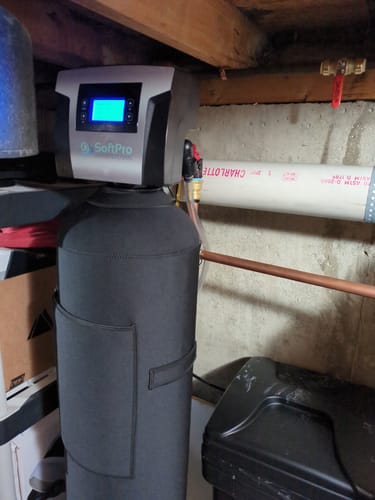
The 0.3 ppm threshold isn't arbitrary—it's the point where iron stops being a manageable nuisance and starts confirming your filter is losing the battle. When consistent testing reveals concentrations exceeding this level, your filter media is likely saturated or fully exhausted.
Watch for these confirming signals: rust stains returning on fixtures or clothing despite active filtration, and that unmistakable metallic taste creeping back into your water. That taste tells us ferrous iron is bypassing the filter entirely—a clear sign the system's capacity is overwhelmed.
Here's what matters most: monitoring iron levels regularly gives us the earliest warning possible. When readings climb past 0.3 ppm, acting immediately prevents compounding damage to your plumbing and appliances that untreated iron inevitably causes.
How Much Pressure Drop Means Your Iron Filter Is Undersized
Pressure drop is one of the clearest signals that your iron filter is working harder than it's built to handle. If you're losing more than 10 psi during active water use, your system is undersized. Consistent pressure below 40 psi confirms it's struggling with volume demands.
| Pressure Indicator | What It Means |
|---|---|
| Drop exceeding 10 psi | Filter undersized for demand |
| Pressure below 40 psi | Volume capacity exceeded |
| Flow below 6–12 GPM | System failing peak performance |
Watch for fluctuations during showers or laundry cycles — those spikes reveal a filter straining against real-world demand. We recommend tracking pressure trends over time; a gradual decline signals your household's needs have outgrown your current system's capabilities.
Backwash Cycles and Iron Carryover That Confirm Overload
Backwash cycles tell a story most homeowners overlook, and reading them correctly can save you from chronic iron problems. Watch the duration first — anything beyond 20 minutes signals media saturation.
We also recommend testing iron carryover during backwash; levels above 0.3 ppm confirm your system's overwhelmed. If you're noticing backwash cycles happening more frequently than usual, that's your filter struggling against rising iron loads.
Don't ignore your fixtures either. Rust stains reappearing shortly after backwashing mean iron's bypassing the media entirely.
Finally, monitor pressure changes during the cycle. Minimal or absent pressure shifts point to channeling or blockage — both killers of filtration efficiency. Each of these signals compounds the others, giving you a clear, definitive picture of system overload.
Signs Your Iron Filter Needs Replacing, Not Just Adjusting
Some warning signs go beyond what a simple adjustment can fix, and knowing the difference saves you from pouring money into a system that's already past its prime.
If rust stains reappear shortly after cleaning, your filter's simply not removing iron anymore. A persistent metallic taste means concentrations have exceeded 0.3 ppm—your system can't meet demand.
That rotten egg smell? It signals air injector failure and exhausted media simultaneously.
When pressure drops below 40 psi consistently, clogged media is likely beyond recovery.
The clearest confirmation comes when backwash frequency increases while iron staining and discoloration persist—that's media exhaustion, not a settings problem. At that point, adjustments won't restore performance.
Replacement is the only move that actually protects your household's water quality.
Frequently Asked Questions
What Are Common Problems With Iron Filters?
We've seen iron filters struggle with rusty fixture stains, metallic-tasting water, clogged injectors, and decreased water pressure. These issues signal your filter's failing to remove iron effectively, potentially damaging your plumbing system beyond repair.
Do You Need a Water Softener if You Have an Iron Filter?
You might need a water softener alongside your iron filter if your water's high in calcium and magnesium. While iron filters tackle iron, they don't remove hardness minerals—both systems together guarantee thorough, superior water quality.
What Are the Symptoms of Too Much Iron in Water?
We've seen too much iron show up as rusty orange stains, metallic-tasting water, cloudy discoloration, and that telltale rotten egg smell—all red flags that your filtration system's struggling to keep up.
How to Check Iron Filter System for Clogging?
We'll check your iron filter for clogging by monitoring water pressure drops below 40 psi, listening for gurgling during regeneration cycles, and inspecting faucets for rust stains indicating bypassed iron.






