


![SoftPro™ Chlorine+ Carbon Whole House Water Filter to Remove PFAS, Chlorine, Chloramine & Pesticides [City Water Filters Series]](http://www.softprowatersystems.com/cdn/shop/files/SoftPro_Whole_House_Carbon_Filter_with_Spin_Down_Water_Filter.webp?v=1783547361&width=140)


 855-683-8488


How to Troubleshoot Serious Pressure Loss After Any Iron Filter System Installation

Serious pressure loss after installing an iron filter almost always comes down to a few fixable mechanical problems. We're talking clogged cartridges, incorrect filter orientation, malfunctioning bypass valves, or a Venturi air injector choking your flow before water even reaches filtration. You can lose 20–30% pressure immediately, dropping flow from 60 LPM to just 20 LPM. Start by testing your system filterless to isolate the culprit — and everything you need to restore full pressure is closer than you think.
Key Takeaways
- Test your system without filters installed to quickly identify whether cartridges or installation errors are causing serious pressure loss.
- Remove filters one at a time, checking pressure after each removal to precisely isolate which component causes the drop.
- Inspect sediment filter cartridges for clogging; switching from 1-micron to 5-micron filtration can significantly restore lost pressure.
- Check the pressure tank bladder, ensuring resting pressure measures approximately 38 psi, as incorrect bladder pressure causes significant flow issues.
- Verify filter orientation and bypass valve function, since incorrectly installed end caps or malfunctioning valves directly restrict water flow.
Why Your Iron Filter Is Destroying Water Pressure

When an iron filter hits your water system, it's not just cleaning your water—it's quietly throttling your pressure.
Here's why: iron filters routinely cause a 20-30% pressure drop, and in severe cases, flow rates can nosedive from 60+ LPM to just 20 LPM.
That's not a minor inconvenience—that's a crippled system.
Two culprits drive this collapse.
First, Venturi components used for air injection compound the pressure drop, restricting flow before water even reaches filtration.
Second, clogged or undersized cartridges create excessive resistance, strangling output further.
The fix starts with understanding your water.
Testing iron concentration and verifying your filter's sizing aren't optional steps—they're foundational.
Without that data, you're guessing, and guessing costs you pressure every single time.
Filter Orientation, Clogged Cartridges, and Bypass Valves: Check These First
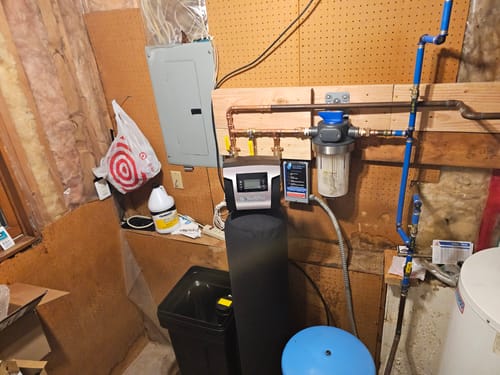
Before we blame the iron filter itself, let's look at three mechanical issues that are often the real pressure killers.
First, check filter orientation—incorrectly installed end caps dramatically restrict flow, so confirm every filter faces the right direction.
Second, inspect your cartridges. Sediment filters clog fastest and quietly strangle pressure over time. If you haven't replaced yours recently, start there. A 1-micron sediment filter may also be overkill; switching to 5-micron reduces flow resistance without sacrificing filtration quality.
Third, examine your bypass valves. A malfunctioning or improperly set bypass mixes unfiltered water into your treated supply, creating both pressure loss and filtration failure.
To isolate the exact culprit, temporarily run the system filterless—you'll quickly identify whether clogged cartridges or installation errors are responsible.
How to Find Exactly What's Causing the Pressure Drop
Once we've ruled out the obvious culprits, it's time to methodically pinpoint exactly where pressure is dying. Remove filters one at a time, testing pressure after each removal. This isolation technique reveals the exact restriction.
| Component to Test | What to Look For |
|---|---|
| Fine micron sediment filter | Clogging from sediment buildup |
| Pressure tank bladder | Needs ~38 psi at rest |
| Pump-to-system flow rate | Mismatch causing inadequate pressure |
Fine micron sediment filters are notorious culprits—they're more restrictive by design and wear out fastest. Meanwhile, a pressure tank bladder running outside that 38 psi sweet spot quietly sabotages your entire system. Don't overlook pump capacity either; if your filtration system's flow rate exceeds what your pump delivers, pressure loss is inevitable.
How to Fix Iron Filter Pressure Loss Without Compromising Filtration
Most pressure loss problems after iron filter installation are fixable without gutting your filtration setup.
Start by calibrating your system correctly — improper settings alone can cause significant pressure drops that mimic bigger problems.
Miscalibrated settings can masquerade as serious pressure problems — fix your configuration before assuming the worst.
Next, commit to backwashing every 2-4 weeks. Fouled media is one of the most common culprits, and regular flushing restores flow rates without touching your filtration integrity.
Check your injector assemblies too. Clogged injectors block brine draw during regeneration, creating pressure issues that compound quickly if ignored.
If drops exceed that 20-30% threshold typical of iron filters, we'd recommend upgrading to larger pressure vessels or air compressors rather than fighting an undersized system.
Routine air injector cleaning and cartridge inspections catch resistance points early — before they become expensive problems.
Backwash Schedules and Sizing Fixes That Keep Pressure Loss From Returning
Keeping pressure loss from coming back is really a two-part problem: how often you're backwashing and whether your system is sized right for your household's actual demand.
We recommend backwashing every two to four weeks to prevent media fouling before it chokes your flow rates. Miss that window consistently, and you're fighting an uphill battle. If your iron concentrations run high, check even more frequently.
On the sizing side, an undersized system simply can't keep pace with real consumption. If pressure complaints persist despite proper backwashing, your vessel or air compressor may need upgrading.
We also recommend semi-annual water testing to fine-tune your backwash frequency and confirm your sizing still matches evolving demand. These two disciplines together are what actually break the cycle.
Frequently Asked Questions
What Are Common Problems With Iron Filters?
We've seen iron filters struggle with clogged media, salt bridges, undersized units, and failed regeneration cycles. These issues cause dramatic pressure drops, rusty water, metallic tastes, and flow rates plummeting from 60 LPM to just 20 LPM.
Why Is My Water Pressure Low After Changing the Filter?
Low pressure after a filter change often means sediment's clogging your new filter, air's still purging, or the filter's too restrictive. We'll want to check installation orientation and flush the system thoroughly to restore flow.
How to Get Your Water Pressure Back Up?
We'll restore your pressure by flushing the system, reseating components correctly, lubricating the O-ring, and swapping restrictive filters for less restrictive ones — then monitor pressure consistently to confirm everything's performing efficiently.
What Causes Pressure Drop in Filter?
Pressure drops in your filter system are caused by clogged or damaged filters, fine micron ratings, trapped air, undersized pipes, improper filter orientation, sediment buildup, or changes in your municipal water supply restricting flow.






