


![SoftPro™ Chlorine+ Carbon Whole House Water Filter to Remove PFAS, Chlorine, Chloramine & Pesticides [City Water Filters Series]](http://www.softprowatersystems.com/cdn/shop/files/SoftPro_Whole_House_Carbon_Filter_with_Spin_Down_Water_Filter.webp?v=1783547361&width=140)


 855-683-8488


Iron and Sulfur Filter Systems for Well Water: What Actually Removes Both Contaminants Effectively

When it comes to well water, iron and sulfur are two of the most stubborn contaminants you'll face. The good news? The right system handles both at once. Advanced oxidation technologies—like hydrogen peroxide treatment or media such as Katalox Light—convert dissolved iron and hydrogen sulfide into solid particles that filters can actually trap. But here's what most well owners miss: sulfur above 10 ppm changes everything, and that's where standard iron filters fall short. Stick with us, and we'll show you exactly what works.
Key Takeaways
- Katalox Light media effectively removes iron up to 30 ppm and sulfur up to 10 ppm within a single filtration unit.
- Hydrogen peroxide oxidation systems simultaneously convert dissolved iron and hydrogen sulfide into solid, filterable particles.
- Ozone treatment is another advanced method that converts both iron and hydrogen sulfide into removable solid particles.
- Sulfur levels exceeding 10 ppm require dedicated specialized removal systems beyond standard iron filtration capabilities.
- Accurate water testing is essential before selecting a system to ensure contaminant levels are properly addressed.
Why Well Water Needs an Iron and Sulfur Filter System

If you rely on well water, you've likely noticed some telltale signs of iron and sulfur contamination — rusty stains on your fixtures, discolored laundry, or that unmistakable rotten egg smell.
These aren't just cosmetic annoyances. Iron affects taste, while sulfur concentrations above 10 ppm create serious odor problems that make your water genuinely unpleasant to use.
Here's what we understand: well water naturally pulls minerals and compounds from surrounding soil and rock, making iron and sulfur contamination nearly unavoidable in many regions.
Without a dedicated filtration system, these contaminants continuously damage your plumbing, stain your clothes, and compromise your drinking water quality.
That's why understanding what actually removes both contaminants — not just one — becomes critical for anyone serious about their water supply.
How Iron and Sulfur Filter Systems Actually Work
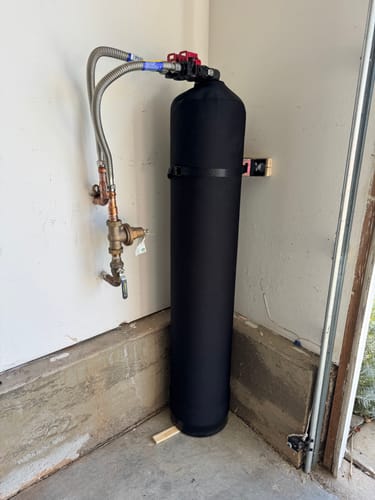
Most iron and sulfur filter systems tackle contamination through a straightforward two-stage process: first oxidizing dissolved contaminants into solid particles, then capturing those particles through filtration.
Think of it as a one-two punch against water quality problems.
Technologies like air injection, ozone treatment, and hydrogen peroxide drive that first stage. They chemically transform dissolved iron and hydrogen sulfide gas into filterable solids.
Hydrogen peroxide is particularly powerful for sulfur removal, converting hydrogen sulfide into elemental sulfur that's easily strained out, eliminating that rotten-egg odor entirely.
Advanced media like Katalox Light pushes performance further, handling up to 30 ppm of iron, 15 ppm of manganese, and 10 ppm of sulfur simultaneously.
That's meaningful multi-contaminant removal happening within a single unit.
When Iron Filters Can't Handle High Sulfur Alone
While iron filters do a solid job handling moderate contamination, they hit a wall when sulfur concentrations climb above 10 ppm. That persistent rotten egg smell? It's your water telling you the filter's reached its limit.
At that point, we need a dedicated sulfur removal system—one that converts hydrogen sulfide gas into solid particles that can actually be filtered out.
Integrated systems like the Fleck 2510AIO handle iron alongside lower sulfur levels effectively, but high concentrations demand specialized treatment.
Here's what separates informed homeowners from frustrated ones: regular water testing.
Without accurate sulfur measurements, we're guessing—and guessing wrong means compromised water quality. Testing tells us exactly where we stand and which solution fits our situation precisely.
Which Systems Actually Remove Both Iron and Sulfur?
So now that we recognize high sulfur levels need more than a standard iron filter, let's look at the systems that actually tackle both problems together. Katalox Light media handles iron up to 30 ppm alongside sulfur up to 10 ppm in one unit.
Katalox Light media tackles iron up to 30 ppm and sulfur up to 10 ppm—one unit, zero compromises.
Need something stronger? Advanced oxidation systems using hydrogen peroxide convert both dissolved iron and hydrogen sulfide into filterable particles simultaneously. Ozone treatment achieves the same result without leaving chemical residues behind.
Integrated systems like the Fleck 2510AIO streamline maintenance while cutting costs compared to running separate filters. For severe iron concentrations, specialized filtration converts hydrogen sulfide into solid form for easy removal.
Each option addresses both contaminants directly—no workarounds, no compromises.
How to Choose an Iron and Sulfur Filter for Well Water
Choosing the right iron and sulfur filter starts with knowing exactly what's in your water. Thorough testing tells you exactly what you're dealing with—no guesswork.
| Contaminant Level | Recommended Approach |
|---|---|
| Iron ≤30 ppm, Sulfur ≤10 ppm | Integrated system like Fleck 2510AIO with Katalox Light |
| Sulfur >10 ppm or persistent odors | Dedicated sulfur unit with chemical oxidation added |
| Multiple contaminants present | Multi-contaminant system for better value and simpler maintenance |
Once you've tested, prioritize systems using two-stage oxidation and filtration—they convert dissolved contaminants into solid particles your filter can actually capture. Integrated units that tackle iron, manganese, and sulfur simultaneously beat managing separate systems every time. Simpler maintenance, lower costs, better results.
Frequently Asked Questions
What Are Common Problems With Iron Filters?
We've seen iron filters struggle with media needing replacement every 6-8 years, sulfur odors above 10 ppm, low pH corrosion, iron bacteria breakthrough, and declining effectiveness—all of which demand proactive maintenance to keep your water truly clean.
Can an Iron Filter Remove Other Contaminants?
Yes, modern iron filters can remove multiple contaminants! We're talking manganese, sulfur up to 10 ppm, and even heavy metals like arsenic and lead—all in one system, making your water treatment far more efficient.
What Is the Best System to Remove Manganese From Well Water?
We recommend Katalox Light for removing manganese—it combines oxidation and filtration, tackling up to 15 ppm. Air injection systems are another excellent chemical-free option, oxidizing dissolved manganese into easily filterable particles for cleaner, better-tasting water.
Does Reverse Osmosis Remove Iron and Sulfur?
RO can remove some iron, but it's not highly effective against hydrogen sulfide. We recommend combining RO with pre-treatment methods that oxidize iron and target sulfur compounds for complete contaminant removal.






