


![SoftPro™ Chlorine+ Carbon Whole House Water Filter to Remove PFAS, Chlorine, Chloramine & Pesticides [City Water Filters Series]](http://www.softprowatersystems.com/cdn/shop/files/SoftPro_Whole_House_Carbon_Filter_with_Spin_Down_Water_Filter.webp?v=1783547361&width=140)


 855-683-8488


Iron Bacteria and Coliform in Well Water: Why a UV System Belongs With Your Iron Filter

If your well has iron bacteria, there's a good chance coliform is hiding in there too. Iron bacteria create biofilms that actually help coliform thrive, and your iron filter can't eliminate either one. It removes rust and discoloration, but bacteria slip right through. A UV system destroys up to 99.99% of harmful microorganisms your iron filter misses. Stick with us, and we'll show you exactly why these two systems work better together.
Key Takeaways
- Iron filters remove rust and minerals but cannot eliminate bacteria, leaving health risks unaddressed even when water looks clean.
- Iron bacteria create biofilms inside filters, providing an environment where harmful coliform bacteria can grow and thrive.
- Low iron levels do not guarantee coliform absence, making bacterial testing essential alongside iron management.
- UV systems use UV-C light to neutralize 99.99% of bacteria, complementing what iron filters cannot handle alone.
- Installing a UV system after the iron filter ensures cleaner water maximizes UV effectiveness against harmful microorganisms.
What Iron Bacteria and Coliform Actually Do to Your Well Water

When iron bacteria take hold in your well, they convert dissolved iron into rust-colored clumps that clog pipes and filtration systems over time.
Iron bacteria don't just contaminate your water—they physically transform it into rust-colored sludge that chokes your entire system.
They also form stubborn biofilms on system components, quietly degrading efficiency and driving up maintenance costs.
Coliform bacteria present a different but equally serious problem.
Strains like E. coli signal fecal contamination, meaning harmful pathogens could be sharing your water supply. Coliform levels tend to spike during warmer months when runoff increases, making seasonal testing critical rather than optional.
Together, these two contaminants attack your well water from separate angles—one mechanical, one biological.
Understanding what each does helps you recognize why addressing only one leaves you exposed. Effective treatment means targeting both simultaneously with the right combination of technologies.
Signs Your Well Water Has Both Iron Bacteria and Coliform
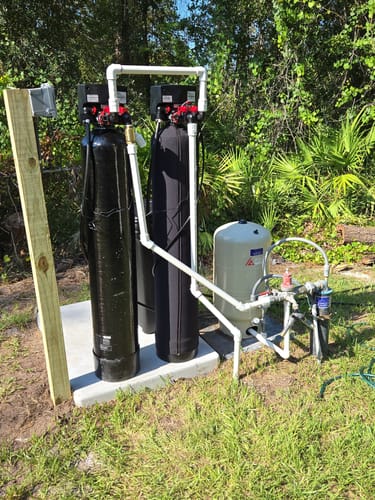
Knowing what these contaminants do is one thing—recognizing them in your own water is another. When both iron bacteria and coliform are present, your water often sends multiple warning signals simultaneously.
Watch for rusty or reddish discoloration, slimy buildup inside toilet tanks, and unusual odors or taste changes—these rarely appear together by coincidence. Iron bacteria leave behind that characteristic orange-brown slime, while coliform contamination introduces foul smells and cloudiness that iron bacteria alone won't explain.
You can run a simple home test by letting a water sample sit and watching for iron-colored clumps.
But confirming coliform requires specific laboratory testing. If your water shows several of these signs at once, don't treat them as separate problems—they're likely connected, and your treatment approach should address both.
Why an Iron Filter Alone Won't Protect Against Coliform?
If you've already installed an iron filter, it's easy to assume your water's covered—but that assumption can leave you exposed to something far more dangerous than rust stains.
Iron filters do exactly what they're designed to do—remove iron and manganese—but they don't touch harmful bacteria like coliform or E. coli.
Here's where it gets worse: iron bacteria create biofilms that actually help coliform thrive, turning your filter into an environment where dangerous pathogens can multiply. You might test low on iron and still test positive for coliform.
That's the gap most homeowners don't see coming. Controlling iron aesthetics doesn't equal controlling health risks. Without a UV system working alongside your iron filter, bacterial contamination remains an active, invisible threat in your water supply.
How a UV System Eliminates Bacteria an Iron Filter Leaves Behind
UV systems do one thing an iron filter simply can't—they destroy bacteria at the cellular level.
Here's how it works:
- UV-C light targets bacteria at 254 nm, directly disrupting their DNA.
- Once disrupted, pathogens like E. coli and coliform can't reproduce.
- This process neutralizes up to 99.99% of harmful microorganisms your iron filter leaves untouched.
We're talking about protection that's invisible but decisive.
Your iron filter handles iron bacteria, sediment, and sulfur—but it doesn't neutralize pathogens. Adding UV disinfection closes that gap completely.
It's especially critical if your well sits in an area vulnerable to runoff or organic contamination. Together, both systems create a defense that handles every threat your water supply faces.
Why the UV System Must Be Installed After the Iron Filter
Pairing a UV system with an iron filter is smart—but the order they're installed in matters more than most people realize.
Iron particles suspended in water scatter UV light, which weakens the system's ability to neutralize bacteria—sometimes reducing effectiveness by up to 99.99%. That's not a margin we can afford to lose.
By installing the UV system downstream of the iron filter, we guarantee the water arriving at the UV stage is already clear of oxidized iron sediment. Cleaner water means unobstructed UV exposure, which means microorganisms have nowhere to hide.
We also can't overlook maintenance. Buildup in the iron filter directly impacts UV performance.
Keeping both systems clean preserves the integrity of the entire treatment sequence—and the safety of your water.
Frequently Asked Questions
Will an Iron Filter Remove Iron Bacteria?
No, an iron filter won't remove iron bacteria. It's designed to oxidize soluble iron, but bacteria form biofilms that clog your filter. We recommend combining shock chlorination and UV disinfection for complete protection.
What Is the Downside of UV Disinfection Water?
UV disinfection doesn't remove chemicals, heavy metals, or sediments, and it won't protect against recontamination. It also struggles with turbid water, requires regular maintenance, and high iron content can scale the equipment, reducing its effectiveness.
How Do You Get Rid of Iron Bacteria in Well Water?
We recommend combining a Chemical Feeder System with a Terminox™ ISM backwashing filter to eliminate iron bacteria effectively. This powerful duo attacks slimy buildups, clears contaminants, and keeps your well water clean and flowing freely.
Can I Still Drink My Well Water With Coliform?
We don't recommend drinking well water with coliform present. It signals potential harmful bacteria like E. coli, which causes serious gastrointestinal illness. Test your water, identify the contamination source, and install proper treatment before consuming it.






