


![SoftPro™ Chlorine+ Carbon Whole House Water Filter to Remove PFAS, Chlorine, Chloramine & Pesticides [City Water Filters Series]](http://www.softprowatersystems.com/cdn/shop/files/SoftPro_Whole_House_Carbon_Filter_with_Spin_Down_Water_Filter.webp?v=1783547361&width=140)


 855-683-8488


Iron Bacteria in Well Water: Why Your Standard Iron Filter Alone Simply Isn't Enough

Iron bacteria in well water aren't just a filtration problem — they're a biological one. These microscopic organisms produce protective biofilms that standard iron filters simply can't penetrate. Your filter might trap iron particles, but it won't stop bacteria from thriving behind a gelatinous shield. That means staining, odors, and worsening water quality despite your best efforts. Stick with us, and we'll show you exactly what it takes to beat them for good.
Key Takeaways
- Iron bacteria produce protective biofilms that standard iron filters cannot penetrate, allowing bacteria to survive and continue contaminating your well water.
- These organisms create thick, gelatinous layers in plumbing that worsen water quality beyond what mechanical filtration alone can address.
- Warning signs like rust stains, oily sheens, and foul odors indicate an active biological problem requiring more than basic filtration.
- Iron bacteria create conditions that support harmful pathogen growth, making comprehensive treatment essential for maintaining safe drinking water.
- Effective treatment requires layering solutions: shock chlorination, chemical feeders, and backwashing filters working together to eliminate iron bacteria fully.
What Is Iron Bacteria and Why Does It Defeat Standard Filters?

Iron bacteria are sneaky little microorganisms that survive by feeding on dissolved iron and manganese in groundwater — and they're far more resilient than most people realize.
Here's what makes them genuinely problematic: they produce protective biofilms that act like armor, shielding them from standard filtration methods. Your conventional iron filter simply wasn't designed to penetrate that defense.
What's worse, these bacteria generate thick, gelatinous layers that compound the problem over time. Carbon filters get overwhelmed, tastes and odors persist, and water quality deteriorates despite your best efforts.
You're fundamentally fighting a biological threat with tools built for a chemical one. That mismatch is exactly why understanding iron bacteria's nature is the first step toward choosing a filtration system that actually works.
What Are the Warning Signs You Have Iron Bacteria in Your Well Water?
Now that we recognize what we're up against, let's talk about how to spot the problem before it gets worse.
Iron bacteria leave behind unmistakable clues if you know what to look for:
Iron bacteria don't hide — they leave behind unmistakable clues. You just need to know what to look for.
- Rust-colored stains and deposits on plumbing fixtures, or orange, brown, and yellow masses forming inside toilets and faucets
- An oily sheen floating on water surfaces in toilet tanks or bowls
- Foul odors resembling sewage, rotten eggs, or swamp water coming from your taps
- Red, slimy deposits—sticky or filamentous—alongside yellow, red, or orange water discoloration
Don't dismiss these signs as cosmetic nuisances. They signal an active biological problem that creates conditions where other harmful bacteria can thrive.
Regular testing is your first line of defense.
How to Test and Confirm Iron Bacteria in Your Well?
Confirming iron bacteria in your well doesn't have to be complicated, but it does require a methodical approach. Start simple: collect water in a clear, sealable bottle and observe it for 24 hours. Rust-colored sediment or fluffy strands forming? That's a red flag worth pursuing.
Next, inspect your faucets and toilet tanks for orange, brown, or yellow slime. These visual clues matter.
But here's where most people stop short—they skip professional lab testing. Few labs specialize in iron bacteria analysis, so finding the right one is essential for confirmed results.
One more critical step: if your home test suggests iron bacteria, also test for coliform and E. coli. These bacteria frequently coexist, and the health implications are serious.
Is Iron Bacteria in Well Water Actually a Health Risk?
So you've found iron bacteria in your well—but should you actually be worried about your health? The short answer: not directly, but don't dismiss it either.
Iron bacteria themselves aren't a direct health threat—they're more of a nuisance, causing:
Iron bacteria won't make you sick directly—but they're far from harmless, turning your water into a breeding ground for bigger problems.
- Unpleasant tastes and odors in your water
- Stubborn reddish-brown staining on fixtures
- Conditions that encourage harmful pathogen growth
- Complicated treatment processes when iron levels run high
Here's where it gets serious—iron bacteria create an environment where dangerous bacteria can thrive.
That's why we strongly recommend testing for coliform and E. coli simultaneously. These tests reveal whether your contamination problem runs deeper than aesthetics.
Bottom line: proactive management and regular water quality testing aren't optional—they're essential for keeping your drinking water genuinely safe.
Shock Chlorination, Chemical Feeders, and Filtration: How to Treat Iron Bacteria
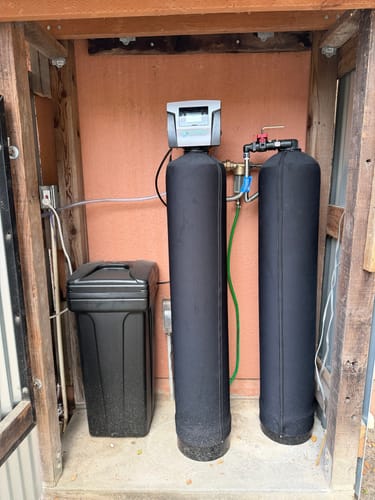
Once you've confirmed iron bacteria in your well, the good news is that effective treatments exist—and combining them delivers the best results. Start with shock chlorination (200–500 ppm), which delivers an aggressive initial kill. Then sustain protection through a chemical feeder maintaining consistent chlorine levels. Finally, a backwashing filtration system removes iron precipitates and keeps water flowing cleanly.
| Treatment | Primary Function | Maintenance Frequency |
|---|---|---|
| Shock Chlorination | Kills existing iron bacteria colonies | Every 2–3 years |
| Chemical Feeder | Maintains consistent disinfection levels | Ongoing monitoring |
| Backwashing Filter | Removes iron precipitates, controls odors | Regular backwash cycles |
Together, these three components tackle iron bacteria, sulfur, manganese, and odors thoroughly. No single solution cuts it—strategic layering does.
Frequently Asked Questions
Will an Iron Filter Get Rid of Iron Bacteria?
Standard iron filters won't fully eliminate iron bacteria—they're built to remove dissolved iron, not biofilm-forming bacteria. We need an all-encompassing system combining professional filtration with continuous chlorination or ozone injection to tackle iron bacteria effectively.
What Kills Iron Bacteria in Well Water?
We can kill iron bacteria using shock chlorination at 200-500 ppm, ozone injection, chemical feeder systems, or high-quality backwashing filters like Terminox™ ISM—but consistent maintenance guarantees they don't resurge.
How Often Should I Shock My Well for Iron Bacteria?
We recommend shocking your well every 2-3 years to effectively combat iron bacteria. However, if you're noticing recurring issues sooner, don't wait—test regularly and act when bacteria levels demand it.
What Are Common Problems With Iron Filters?
We've seen iron filters fail in predictable ways: biofilms overwhelm the media, oxidized precipitates slip through, clogs demand constant maintenance, and without chemical treatment, iron bacteria always resurge—leaving you with persistently compromised water quality.






