


![SoftPro™ Chlorine+ Carbon Whole House Water Filter to Remove PFAS, Chlorine, Chloramine & Pesticides [City Water Filters Series]](http://www.softprowatersystems.com/cdn/shop/files/SoftPro_Whole_House_Carbon_Filter_with_Spin_Down_Water_Filter.webp?v=1783547361&width=140)


 855-683-8488


Iron Bacteria in Wells: Why It Demands Specialized Treatment That Goes Far Beyond Standard Filtration

Iron bacteria in wells aren't just a water quality nuisance — they're living organisms that feed, reproduce, and build protective slime layers that standard filters simply can't touch. Unlike dissolved iron, these bacteria form biofilms that clog your system, create musty odors, and keep growing no matter how many filters you swap out. Treating them requires shock chlorination, UV disinfection, or chemical treatments that penetrate those stubborn colonies. Stick with us, and we'll show you exactly how to handle it.
Key Takeaways
- Iron bacteria are living organisms that form protective biofilms, making them immune to standard iron filtration methods designed only for dissolved iron.
- Biofilms shield bacterial colonies from conventional filters, causing clogged pores, musty odors, reduced water pressure, and off-tasting water.
- Detection involves identifying reddish slime deposits, swampy odors, and unexplained pressure drops, confirmed through professional laboratory testing.
- Effective treatment requires shock chlorination, chemical treatments with sodium hypochlorite, mechanical scrubbing, or continuous UV disinfection systems to eliminate bacteria.
- Licensed well contractors with specialized equipment are essential for thorough treatment, alongside routine annual testing to prevent recurring infestations.
What Makes Iron Bacteria Harder to Deal With Than Regular Iron?

When iron bacteria move into a well, they don't just sit there passively the way dissolved iron does — they feed, reproduce, and build.
They consume iron and oxygen, then construct a protective slime layer that standard filtration simply can't handle. That biofilm clogs filter pores, chokes water flow, and shields the bacteria from conventional iron removal methods — effectively rendering your existing equipment useless.
Regular dissolved iron responds predictably to standard filtration. Iron bacteria don't. They're living organisms with a survival strategy. Their sludge accumulates, their colonies spread fast, and if you treat them like ordinary iron contamination, you'll lose that battle every time.
That's exactly why they demand something stronger — shock chlorination and UV disinfection — not just a filter upgrade.
How to Detect Iron Bacteria in Your Well Before It Gets Worse
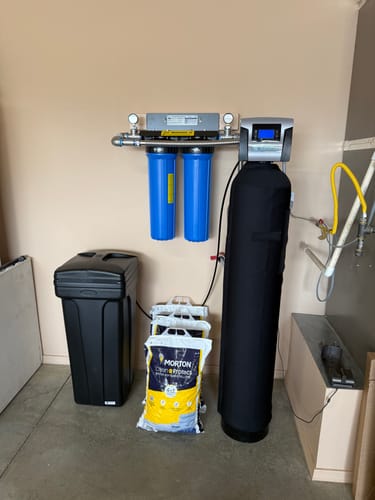
Knowing that iron bacteria demand a different playbook than regular iron contamination, the next logical question is: how do you even know they've moved in?
Your senses are your first diagnostic tool:
Your senses are your first line of defense — trust what you smell, see, and feel before reaching for a test kit.
- Smell — musty, oily, or swampy odors signal bacterial activity
- Sight — reddish sediment, slimy fixture deposits, or oily rainbow sheens on water's surface
- Pressure — unexplained drops suggest bacterial clogging inside your plumbing
- Testing — laboratory confirmation remains the gold standard, and we'd strongly recommend testing for nitrate and coliform bacteria simultaneously, since iron bacteria often shelter dangerous companions
Observation gets you suspicious; lab results get you certain. Don't skip either step — catching this early determines whether you're managing a nuisance or battling an entrenched colony.
Why Iron Filters Alone Won't Eliminate Iron Bacteria
Many well owners install an iron filter and assume the problem's handled — and that's exactly where things go wrong.
Iron filters target dissolved iron, but iron bacteria don't play by those rules. They hide inside biofilms, sticky microbial communities that cling to pipes and filter surfaces, completely shielded from standard filtration.
Here's what makes this dangerous: those biofilms clog filter pores, throttle water flow, and create the perfect shelter for other harmful microbes to thrive.
Meanwhile, you're left with musty odors and off-tasting water — signs the root cause was never addressed.
Eliminating iron bacteria requires shock chlorination, UV disinfection, or both.
We can't filter our way out of a biological problem. That distinction changes everything about how we approach treatment.
Which Treatments Actually Work Against Iron Bacteria?
Tackling iron bacteria isn't a one-size-fits-all job — the right treatment depends on how deep the problem runs.
We've seen four approaches consistently deliver results:
- Shock chlorination — flooding the well with a concentrated chlorine solution that penetrates and eliminates existing colonies.
- Chemical treatments — sodium hypochlorite or acids applied at higher concentrations to cut through protective slime layers.
- Physical removal — mechanically scrubbing thick biofilms that laugh at chemical treatments alone.
- UV disinfection systems — sterilizing incoming water continuously, stopping future growth without adding chemicals.
Here's what most people miss: treatment isn't a single event.
Without routine testing and cleaning afterward, iron bacteria stages a comeback.
The real win combines aggressive initial treatment with disciplined long-term maintenance.
Signs Your Iron Bacteria Problem Needs a Licensed Well Contractor
Some signs of iron bacteria are easy to brush off — a faint odor, a slight discoloration — until they aren't. When you're noticing reddish-brown stains, slimy deposits, or musty smells consistently, that's your well signaling something deeper.
Add sudden drops in water flow or chronic plumbing clogs, and you're no longer dealing with a filtration problem — you're dealing with an infestation.
Here's what separates a DIY situation from a professional one: scale and penetration. Licensed well contractors bring specialized equipment for shock chlorination and physical removal of heavily infected systems — tools and techniques standard filtration simply can't replicate.
Annual testing for coliform bacteria and routine visual inspections help catch problems early, but when those checks reveal biofilm or sediment buildup, call a licensed contractor immediately.
Frequently Asked Questions
How to Get Rid of Iron Bacteria in a Well?
We'll tackle iron bacteria through shock chlorination—flooding your well with a strong chlorine solution calculated to your water volume. We'll follow up with UV disinfection, routine testing, and annual treatments to prevent resurgence.
When Iron Bacteria Is a Problem, It Is Most Severe.?
Iron bacteria's most severe when your well has high dissolved iron levels, low oxygen, and stagnant water — conditions that let biofilms rapidly coat pipes, clog systems, and create an environment where other harmful microorganisms thrive.
Can Iron Bacteria Contaminate Wells?
Yes, iron bacteria can contaminate wells, and they're sneaky about it. They often hitchhike in during drilling, pump installation, or routine maintenance, making proper construction practices our strongest defense against their unwelcome invasion.
Can Water Filters Remove Iron Bacteria?
Standard water filters can't remove iron bacteria. They're designed to tackle dissolved iron, but iron bacteria form biofilms that actually clog filter pores, reducing flow rates and demanding specialized treatments like shock chlorination or UV disinfection instead.






