


![SoftPro™ Chlorine+ Carbon Whole House Water Filter to Remove PFAS, Chlorine, Chloramine & Pesticides [City Water Filters Series]](http://www.softprowatersystems.com/cdn/shop/files/SoftPro_Whole_House_Carbon_Filter_with_Spin_Down_Water_Filter.webp?v=1783547361&width=140)


 855-683-8488


Iron Bacteria Well Water Treatment: The Complete Step-by-Step Solution Guide for Homeowners

If you've noticed reddish-brown slime, stained fixtures, or foul-smelling water from your well, iron bacteria are likely the culprit. These microscopic organisms thrive in groundwater, clogging pipes and creating conditions for more dangerous bacteria to grow. The good news? You can eliminate them through shock chlorination, continuous disinfection, and proper filtration — then keep them gone with regular testing and maintenance. Stick with us, and we'll walk you through every step.
Key Takeaways
- Identify iron bacteria by looking for reddish-brown slime, orange stains, discolored water, or a rotten egg smell from your well.
- Confirm iron bacteria presence by letting collected water sit for 24 hours and watching for rust sediment or filamentous growth.
- Treat infected wells with shock chlorination at 200-500 ppm chlorine, then flush thoroughly to remove remaining sludge and biofilm.
- Install a continuous disinfection system paired with a whole-house water filter to maintain long-term water quality after treatment.
- Prevent iron bacteria from returning by scheduling annual water tests, inspecting wells regularly, and ensuring watertight seals on well caps.
What Is Iron Bacteria and How Does It Enter Your Well?

Iron bacteria are microscopic organisms that feed on dissolved iron and manganese in groundwater, leaving behind a telltale reddish-brown slime in the process. They derive their energy through oxidation, and that biological activity produces the thick, sticky biofilms that clog your plumbing and well components over time.
These bacteria don't just appear out of nowhere. They enter your well system during drilling, pump installation, or routine maintenance — especially when contaminated tools are involved.
Poorly constructed wells face even greater exposure risks, as flooding, septic system leakage, and unchlorinated surface water all create easy entry points.
While iron bacteria aren't directly harmful to your health, they do create conditions where more dangerous bacteria can thrive — and that's a risk we can't ignore.
How to Tell If Your Well Water Has Iron Bacteria
Knowing how iron bacteria enter your well is one thing — spotting the signs they've actually taken up residence is another.
Look for reddish or orange stains on your fixtures, slimy residue around drains, and discolored water ranging from yellow to brown. Your nose and taste buds matter too — a rotten egg smell or swampy, musty taste are classic red flags.
Reddish stains, slimy drains, discolored water — your well is sending distress signals. Are you listening?
Here's a simple visual test: collect water in a clear glass. Clear water suggests you're fine. Rusty layers or fluffy, floating strands? That's bacterial activity staring back at you.
Don't rely on visual clues alone, though.
Professional water testing gives you the definitive answer. Accurate diagnosis means targeted treatment — and that's exactly where we're headed next.
Test Your Well Water for Iron Bacteria Before Treatment
Before you treat anything, you've got to know exactly what you're dealing with. Misidentifying iron bacteria means shock chlorination won't solve your problem—it'll just delay it.
Start with a simple visual test. Fill a clear glass, let it sit 24 hours, then look for rust sediment, slimy layers, or filamentous growths. That's your first clue.
But don't stop there. Get professional testing done. A certified lab gives you accurate concentration levels and confirms exactly what you're fighting.
We also recommend bundling your iron bacteria test with coliform and nitrate screening—you'll get a complete picture of your water quality in one shot.
Test annually, and whenever you notice changes in taste, smell, or appearance.
Knowledge before treatment saves you time, money, and frustration.
How to Treat Iron Bacteria in Well Water
Once you've confirmed iron bacteria in your well, it's time to fight back—and shock chlorination is where we start. We're talking 200-500 ppm of chlorine, strong enough to demolish bacterial colonies and break down stubborn biofilms lurking in your system.
After chlorination, we flush the well thoroughly—no shortcuts here. Residual sludge and biofilm must go completely.
From there, we recommend installing a continuous disinfection system to maintain lower chlorine levels, keeping regrowth permanently at bay.
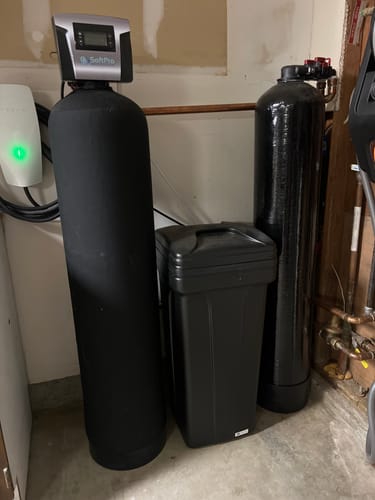
Pair that with a whole-house water filter, and you've got an all-encompassing solution handling both dissolved iron and bacterial residue simultaneously.
Finally, commit to regular bacterial testing and routine maintenance. Treatment isn't a one-time event—it's an ongoing strategy that keeps your water reliably clean and your household protected.
How to Keep Iron Bacteria From Returning After Treatment
Keeping iron bacteria from coming back is all about building a system that works for you long after the initial treatment.
Start with a continuous disinfection system that maintains consistent chlorine levels—this denies iron bacteria the foothold they need to reestablish.
Schedule annual water testing to monitor iron and bacteria levels, catching problems before they escalate.
Regular well inspections and cleaning eliminate the buildup conditions bacteria thrive in.
When repairs or maintenance are necessary, always use disinfected water—introducing untreated water is one of the fastest ways to undo your progress.
Finally, guarantee your well has watertight seals and proper caps to block surface water intrusion.
Prevention isn't a one-time action; it's an ongoing commitment that protects everything you've already invested in your water quality.
Frequently Asked Questions
What Kills Iron Bacteria in Well Water?
Shock chlorination kills iron bacteria effectively—we'll use 200-500 ppm of chlorine to eliminate colonies fast. Continuous disinfection systems, chemical treatments like surfactants and acids, and professional biofilm removal guarantee long-term control of recurring iron bacteria infestations.
Do Iron Bacteria Stain Laundry?
Yes, iron bacteria stain laundry, leaving rusty, reddish-brown marks that permanently discolor fabrics if we don't act fast. White and light-colored clothing suffer the most, making treatment essential before your next wash cycle.
How to Treat Iron Water at Home?
We'll tackle iron water using oxidation-filtration systems, air injection, or shock chlorination. These methods convert or eliminate dissolved iron effectively, giving you cleaner, safer water while preventing bacteria resurgence through continuous disinfection and regular water quality testing.
Can I Shower in High Iron Water?
You can shower in high iron water, but it's not ideal. We've seen it cause dry skin, hair discoloration, and reddish-brown stains on fixtures—making treatment a smarter long-term solution.






