


![SoftPro™ Chlorine+ Carbon Whole House Water Filter to Remove PFAS, Chlorine, Chloramine & Pesticides [City Water Filters Series]](http://www.softprowatersystems.com/cdn/shop/files/SoftPro_Whole_House_Carbon_Filter_with_Spin_Down_Water_Filter.webp?v=1783547361&width=140)


 855-683-8488


Iron Breakthrough in Water Filters: Why Missed Backwashing Is Almost Always to Blame

When iron breaks through your water filter, a missed backwash cycle is almost always the culprit. Without regular backwashing, trapped iron particles accumulate in your filter media until it reaches full saturation. Once that happens, iron slips right through, leaving you with rusty, brown, metallic-tasting water. It's fundamentally a clogged sieve at that point — it can't do its job. Stick with us, and we'll walk you through everything you need to know to fix it and prevent it from happening again.
Key Takeaways
- Skipping backwashing allows iron particles to accumulate in filter media, eventually causing saturation and iron breakthrough into treated water.
- Rusty or brown-colored water at the tap is a clear warning sign that backwashing has been missed or delayed.
- Iron-saturated filters develop clogged drain lines, biofilm colonies, and iron bacteria, producing foul odors and metallic-tasting water.
- Recovery from iron breakthrough requires a 10–20 minute backwash, pressure gauge monitoring, and water chemistry testing for proper pH levels.
- Backwashing every 4 days to 2 weeks, adjusted for usage and iron concentration, prevents breakthrough and extends media lifespan.
Why Missed Backwashing Causes Iron Breakthrough

When we skip backwashing, trapped iron particles stay locked in the filter media instead of getting flushed out — and that's where the trouble starts.
Over time, those particles accumulate until the filter reaches saturation, and once that happens, iron breaks through into your treated water. It's not a gradual warning — it's a failure point.
Think of it like a clogged sieve. The more buildup we allow, the less the system can do its job.
That's why backwashing every 4 days to 2 weeks isn't optional — it's the mechanism that keeps everything functioning. Miss that window consistently, and we're not maintaining a filter anymore. We're just running water through a saturated bed of iron particles.
Warning Signs Your Backwash Cycle Is Failing
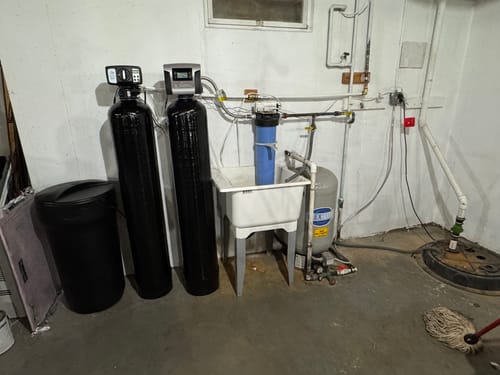
Knowing that a saturated filter bed leads to iron breakthrough is one thing — catching it before it ruins your water is another.
Watch for these red flags: rusty or brown-colored water signals iron is slipping past the media, usually because a backwash cycle was missed or poorly executed. Orange sediment appearing at your tap tells the same story.
If your pressure suddenly drops during use, your filter bed's likely clogged — check that pressure gauge immediately. A significant reading drop confirms the backwash hasn't done its job.
And if you're backwashing more than every four days, your media's saturated and struggling. These warning signs don't lie. Catch them early, and you'll stop iron breakthrough before it compromises everything downstream.
What Skipping Backwash Actually Does to Your Filter Over Time
Skipping backwash doesn't just hurt your water quality today — it sets off a slow chain reaction that quietly destroys your filter from the inside out.
When we skip cycles, iron saturates the media and breaks through into your water, turning it discolored and metallic-tasting. Drain lines begin clogging, biofilm colonies establish themselves, and iron bacteria move in — creating odors that no amount of treatment will mask downstream.
Pressure drops follow, flow rates collapse, and what started as a missed maintenance window becomes a costly system failure.
We recommend backwashing every 4 days to 2 weeks. Ignore that window consistently, and you're not just reducing efficiency — you're shortening your filter's lifespan in ways that are difficult, sometimes impossible, to reverse.
How to Fix an Iron Filter After Breakthrough Occurs
Once iron breakthrough hits, the clock starts ticking — but the damage isn't always permanent if we move fast. Here's our recovery playbook:
| Fix | Target |
|---|---|
| Backwash frequency | Every 4 days–2 weeks |
| Backwash duration | 10–20 minutes |
| pH balance | 6.5–8.5 |
Start by inspecting control valves and supply lines — restricted flow kills an effective backwash before it begins. Then run a thorough 10–20 minute backwash, watching pressure gauges closely. A significant pressure drop tells us iron's still packed in the media.
Next, test water chemistry. pH outside 6.5–8.5 undermines filtration efficiency and quietly destroys media. If backwashing doesn't restore pressure, we're likely looking at media replacement — typically necessary every 3–5 years.
Act fast. Every delay compounds the problem.
How Often to Backwash Your Iron Filter to Prevent Breakthrough
Backwashing your iron filter every 4 days to 2 weeks is the simplest way to stay ahead of breakthrough before it becomes a costly problem. Your exact schedule depends on water usage and iron concentration, so we recommend watching your pressure gauge closely.
A significant pressure drop tells you the media's saturated and needs immediate attention — don't wait for rust stains or metallic tastes to confirm what the gauge already knows.
Skipping backwashes compounds quickly. Media clogs, iron slips through, and suddenly you're facing replacement costs that consistent maintenance would've prevented.
Treat your filter like any performance system — monitor it, respond to its signals, and stay proactive. That discipline keeps media lasting 3–5 years and keeps breakthrough from ever becoming your problem.
Frequently Asked Questions
How Often Should an Iron Filter Backwash?
We recommend backwashing your iron filter every 4 days to 2 weeks, depending on your water usage and iron levels. Each cycle should run 10-20 minutes to fully flush trapped iron particles and maintain peak filtration performance.
What Are Common Problems With Iron Filters?
We've seen iron filters struggle with clogged media beds, missed backwashing cycles, iron bacteria biofilms, misconfigured control valves, and worn-out media—each silently allowing iron levels to creep past that critical 0.3 ppm threshold.
What Happens if You Don't Backwash Your Water Filter?
If you skip backwashing, your filter's media becomes saturated, iron particles accumulate, and you'll notice rust stains, pressure drops, and inconsistent water quality. We're fundamentally letting our system work against us.
Where to Drain Iron Filter Backwash?
We'll want to drain iron filter backwash into a designated wastewater system—never storm drains, as iron-laden water harms the environment. A sump pit or dedicated drain area keeps everything compliant and flowing properly.






