


![SoftPro™ Chlorine+ Carbon Whole House Water Filter to Remove PFAS, Chlorine, Chloramine & Pesticides [City Water Filters Series]](http://www.softprowatersystems.com/cdn/shop/files/SoftPro_Whole_House_Carbon_Filter_with_Spin_Down_Water_Filter.webp?v=1783547361&width=140)


 855-683-8488


Iron Breakthrough Despite Having an Iron Filter Installed: What's Actually Going Wrong in Your System

If you're still seeing orange-tinted water or rust stains despite having an iron filter, something specific is failing in your system. The most common culprits include poorly timed regeneration cycles, undersized equipment, iron bacteria producing biofilms, or pH levels too low for proper oxidation. These aren't random flukes — they're identifiable problems with real solutions. Stick with us, and we'll walk you through exactly what's going wrong and how to fix it.
Key Takeaways
- Poorly timed regeneration cycles prevent effective brine draw, allowing untreated iron to bypass the filter entirely.
- Accumulated iron particles clog filter media over time, significantly reducing the system's iron-removal efficiency.
- Iron bacteria produce biofilms that coat filter media, sabotaging performance even when the system appears functional.
- An undersized filter struggling during peak demand will inevitably allow iron breakthrough into your water supply.
- Low pH levels below 6.8 disrupt oxidation processes, preventing your filter from capturing dissolved iron effectively.
The Most Common Reasons Iron Is Still Getting Through Your Filter

Why is iron still sneaking past your filter even after you've invested in a filtration system? The answer usually comes down to five key culprits worth understanding deeply.
First, poorly timed regeneration cycles mean your filter isn't drawing enough brine to do its job.
Second, accumulated iron particles clog the filter media, gutting its efficiency.
Third, if your iron concentration exceeds the filter's rated capacity, it'll overwhelm the system entirely.
Here's where it gets interesting—iron bacteria produce biofilms that actively sabotage your filter's performance from the inside.
Finally, pH levels dropping below 6.8 disrupt the oxidation process your system depends on.
Identifying which of these is happening in your system is the fastest path to actually solving the problem.
Is Your Iron Filter the Right Size for Your Water Demand?
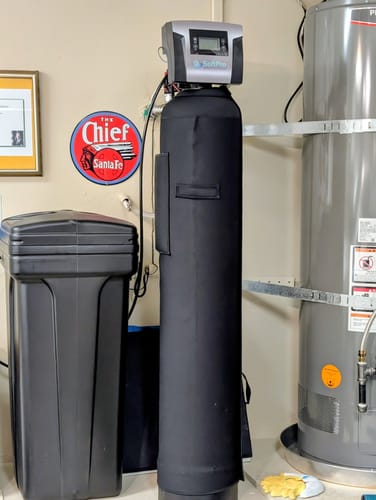
Even the best iron filter will fail you if it's not sized right for your home's water demand. Sizing isn't guesswork — it's engineering.
We need to match your filter's capacity to your actual flow rate and iron concentration, or iron breakthrough becomes inevitable.
Under-sized systems buckle under peak demand, letting iron slip through exactly when you need clean water most. That's a fixable problem, but only if we identify it first.
Before installation, test your water for iron levels, pH, hardness, and manganese. These numbers drive every sizing decision.
We also factor in your household's daily usage to calibrate backwashing and regeneration cycles correctly.
A properly sized, reliable residential system typically starts around $2,195 — a worthwhile investment when the alternative is iron-stained laundry and fixtures.
How Iron Bacteria Overwhelm Even a Working Filter?
Sizing your filter correctly gets us halfway there — but there's another threat that can quietly undo even a perfectly engineered system: iron bacteria.
These microorganisms thrive in iron-rich water, coating your filter media with slimy biofilms that choke efficiency and trigger iron breakthrough. They're relentless competitors — outpacing the filtration process itself, allowing untreated iron to slip through undetected.
What makes them particularly deceptive is that your filter appears functional while it's quietly losing the battle.
You'll often notice a rotten egg odor as an early warning sign — don't ignore it.
The solution starts with regular water testing to catch bacterial buildup early.
Timely disinfection and maintenance restore filter integrity before iron bacteria permanently compromise your system's performance.
Why Your Iron Filter's Regeneration Cycle Is Letting Iron Through
When your iron filter's regeneration cycle falls out of sync with your actual water usage, untreated iron slips right through — and the culprit is often something as fixable as incorrect programming settings.
But programming isn't the only weak point.
Salt bridges in your brine tank silently block brine draw, leaving resin beds uncleaned and iron-saturated. A clogged injector assembly disrupts brine flow during regeneration, and if you're noticing insufficient air draw, suspect a fouled venturi — that directly kills the oxidation your filter depends on.
Here's what we've learned: most iron breakthrough isn't a system failure — it's a maintenance failure.
Cleaning injector assemblies regularly and auditing your programming settings catches these issues before iron reaches your taps.
When to Clean, Repair, or Replace Your Iron Filter
Knowing exactly what your iron filter is telling you saves you from making expensive decisions too early — or too late.
Orange-tinted water signals immediate action — clean your filter media or adjust the regeneration cycle before the problem compounds.
Orange water isn't a suggestion — it's a command. Act on your filter before the damage decides for you.
Grinding valve noises or dropping pressure? Schedule an inspection now, not later.
Every 2-3 years, clean the injector assembly to prevent brine draw disruptions that quietly undermine iron removal.
If flow rates are sluggish and iron keeps breaking through, your media's likely exhausted — replace it every 3-5 years.
Frequent regeneration cycles or iron bacteria presence means disinfection or full system replacement may be necessary.
Each symptom is data. Read it correctly, and you'll always know whether you're cleaning, repairing, or replacing.
Frequently Asked Questions
What Are Common Problems With Iron Filters?
We've seen iron filters fail due to mineral buildup, ineffective regeneration cycles, iron bacteria forming biofilms, control valve malfunctions, and degraded filtration media—each problem letting iron slip through and compromising your water quality faster than you'd expect.
What Is the Life Expectancy of an Iron Filter?
Most iron filters last 3–10 years, but we can extend that with proper maintenance. Media needs replacing every 3–5 years, while Katalox Light media pushes 6–8 years before you'll notice performance declining.
Why Is My Iron Filter Not Working?
Your iron filter's likely failing due to degraded media, missed regeneration cycles, clogged injectors, salt bridges, or iron bacteria biofilms. We've found that identifying the exact culprit transforms your system's performance dramatically.
Is an Iron Filter Necessary?
Yes, we absolutely need an iron filter if our water contains elevated iron levels. Without one, we're risking stained fixtures, damaged plumbing, metallic-tasting water, and slimy bacterial buildup that'll cost us considerably more to fix later.






