


![SoftPro™ Chlorine+ Carbon Whole House Water Filter to Remove PFAS, Chlorine, Chloramine & Pesticides [City Water Filters Series]](http://www.softprowatersystems.com/cdn/shop/files/SoftPro_Whole_House_Carbon_Filter_with_Spin_Down_Water_Filter.webp?v=1783547361&width=140)


 855-683-8488


How Iron-Contaminated Well Water Adds Up to Thousands in Costs

Iron-contaminated well water doesn't just stain your sinks — it silently destroys your appliances, clogs your pipes, and inflates your utility bills. Without treatment, you're looking at over $1,500 in appliance damage, $3,000 in plumbing repairs, and energy bills climbing 20-30% higher. That's thousands gone before you even connect the dots. We'll walk you through exactly how these costs stack up and what you can do to stop them.
Key Takeaways
- Iron buildup damages water heaters, dishwashers, and washing machines, costing over $1,500 in repairs alone.
- Corroded pipes from iron contamination can lead to plumbing repair costs exceeding $3,000.
- Struggling appliances increase energy bills by 20-30%, compounding long-term financial losses significantly.
- Rust-stained fixtures require costly cleaning or replacement, adding hundreds more in unexpected expenses.
- Declining property values from iron contamination can cause significant long-term losses in home equity.
How Iron Destroys Plumbing, Appliances, and Your Wallet

When iron sneaks into your well water, it doesn't just stain your sinks — it quietly wages war on everything it touches. The buildup accumulates inside your water heater, washing machine, and dishwasher, triggering appliance damage that can exceed $1,500.
Meanwhile, iron deposits clog and corrode your pipes, pushing plumbing repair costs past $3,000. It doesn't stop there. That same buildup forces your appliances to work harder, inflating energy bills by 20-30%.
Add annual maintenance costs between $300 and $800 for inspections and repairs, and the numbers grow fast.
Here's what most homeowners miss: iron contamination also quietly erodes property value, costing thousands in lost equity. What starts as a water quality issue becomes a financial one — and it compounds the longer you wait.
What Iron Filter Systems Actually Cost
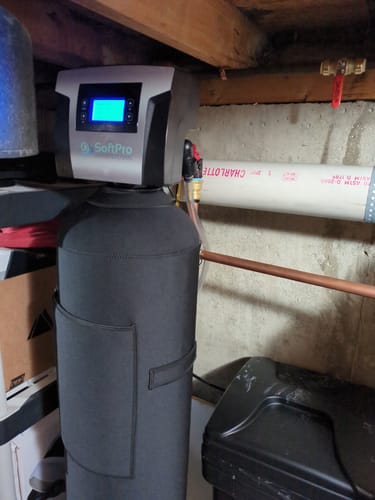
So you're ready to fix the problem — but here's where many homeowners get blindsided a second time. Iron filtration systems are priced between $800 and $6,000 — yet they cost manufacturers just $100 to $250 to produce. That's a 400% markup before you've spent a single dollar on installation.
Add professional installation ($150–$500), annual maintenance ($300–$800), replacement media every 4–6 years ($150–$400), and monthly chemical refills ($20–$40), and the total financial impact climbs toward $7,500.
Nobody warns you about these layered costs upfront. You budget for the unit, then discover the permits, the service contracts, the consumables. It compounds fast.
Understanding the complete cost picture before you buy isn't just smart — it's the only way to avoid a second financial gut punch.
The Maintenance Costs Nobody Warns You About
Once you've paid for the unit and installation, the real financial drain begins — and most sellers never mention it. Annual maintenance alone runs $300–$800, and that's before factoring in expenses that quietly compound over time.
The unit is just the beginning — the real costs are the ones sellers hope you never ask about.
Here's what catches most homeowners off guard:
- Media replacement every 4–6 years costs $150–$400 and resets your system's effectiveness.
- Monthly chemical refills add $20–$40 to your budget just to sustain filtration efficiency.
- Professional service visits run $300–$700 annually, depending on your system's complexity.
When you stack these costs across a decade, you're often paying double your original investment. Understanding this full financial picture upfront isn't pessimism — it's the strategic thinking that separates informed homeowners from those constantly surprised by their water bills.
Iron Filters vs. Water Softeners: Which Saves More Long-Term?
Those mounting maintenance costs raise a fair question: are we even using the right system in the first place?
Water softeners cost less upfront—$400 to $2,500—but they'll fail you once iron exceeds 3.0 ppm. You're fundamentally paying for a system that can't finish the job.
Iron filters run $800 to $6,000 initially, and yes, they'll roughly double over time with media replacements every 5-20 years.
But here's what changes the math: untreated iron causes appliance damage exceeding $1,500 and plumbing repairs surpassing $3,000. Suddenly, that higher upfront investment looks like the smarter play.
We're not just choosing between two filtration systems—we're choosing between controlled costs now or unpredictable, compounding damage later. Iron filters consistently win that long-term calculation.
What Happens When You Skip the Iron Filter
Skipping the iron filter doesn't just leave the problem unsolved—it actively makes everything worse. Without it, you're setting yourself up for a cascade of expensive consequences that compound over time.
Here's what you're really risking:
- Appliance damage exceeding $1,500 as iron corrosion degrades water heaters, dishwashers, and washing machines
- Plumbing repairs surpassing $3,000 when iron build-up clogs pipes and triggers leaks
- Utility bills climbing 20-30% as struggling appliances consume more energy to compensate for inefficiency
Beyond the repair bills, you're also dealing with rust-stained fixtures requiring costly cleaning or replacement, and a measurable drop in property value that discourages buyers.
Every month without filtration, the damage quietly accumulates—making the filter's upfront cost look insignificant by comparison.
Frequently Asked Questions
What Is the Cheapest Way to Remove Iron From Well Water?
We recommend water softeners as your cheapest option, costing $400–$2,500 upfront. They'll effectively tackle low-to-moderate iron levels, saving you thousands in long-term damage compared to leaving contaminated well water untreated.
Why Is My Well Water so High in Iron?
Your well water's high in iron because it flows through iron-rich soil and rocks underground. The longer it travels, the more iron it dissolves—your well's depth, age, and local soil composition all amplify this.
Is Well Water With Iron in It Bad for You?
Yes, iron-contaminated well water can harm your health. We're talking gastrointestinal issues, nausea, and long-term risks like heart disease and liver damage — especially if you're genetically predisposed to accumulating excess iron.
Does Hydrogen Peroxide Remove Iron From Well Water?
Yes, hydrogen peroxide effectively removes iron from well water by converting soluble ferrous iron into insoluble ferric iron, which we can then filter out, tackling even severe contamination exceeding 10 ppm with minimal maintenance required.






