


![SoftPro™ Chlorine+ Carbon Whole House Water Filter to Remove PFAS, Chlorine, Chloramine & Pesticides [City Water Filters Series]](http://www.softprowatersystems.com/cdn/shop/files/SoftPro_Whole_House_Carbon_Filter_with_Spin_Down_Water_Filter.webp?v=1783547361&width=140)


 855-683-8488


Iron Filter AIO System Not Eliminating Sulfur Odor After Installation: Complete Troubleshooting Guide

When your AIO iron filter isn't eliminating sulfur odor after installation, we've seen it come down to a few common culprits. Clogged air injectors restrict oxygen supply, low pH neutralizes oxidation, and neglected backwashing lets fouled media defeat the whole system. Sometimes sulfur levels simply exceed the filter's capacity. We'll walk you through testing injectors, checking your media, and backwashing properly — everything you need to finally get that rotten egg smell gone for good.
Key Takeaways
- Clogged air injectors restrict oxygen supply; clean them with vinegar every few months to prevent sulfur odors from returning.
- If water pH falls below 6.5, oxidation weakens, reducing the system's ability to eliminate sulfur effectively.
- Perform a full 15-minute backwash cycle to remove accumulated sediments causing persistent rotten egg odors.
- Sulfur levels exceeding 10 ppm can overwhelm system capacity, requiring professional assessment for effective resolution.
- Persistent odors after basic maintenance signal exhausted filter media, typically needing replacement every 3-5 years.
Why Isn't Your AIO Iron Filter Removing Sulfur Odor?

When your AIO iron filter isn't tackling that rotten egg smell, it's usually one of a handful of culprits — and tracking down the right one can save you from replacing equipment you don't need to.
Start by asking a few targeted questions: Are your air injectors clogged? Is your water's pH dipping below 6.5? Is the system actually drawing air during regeneration? Are sulfur levels exceeding 10 ppm? Has maintenance slipped?
Each answer points toward a specific failure. Clogged injectors starve the system of oxygen. Low pH neutralizes the oxidation process. A weak air draw cuts contact time short. High sulfur overwhelms capacity. Neglected backwashing fouls the media.
We'll walk through every one of these scenarios so you know exactly what you're dealing with.
How to Test and Clean a Clogged Iron Filter Air Injector
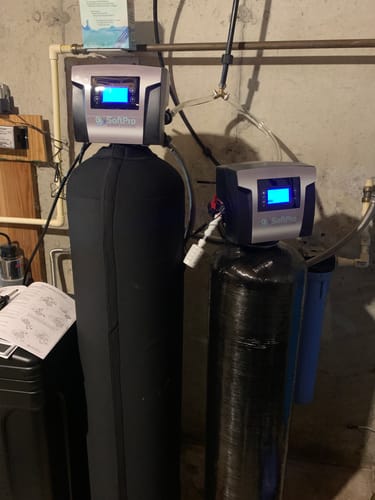
Of all the culprits behind a failing AIO iron filter, a clogged air injector is one of the easiest to confirm — and one of the most satisfying to fix.
Start by pressing the regeneration button and listening carefully. Hear gurgling? You're good. Silence? That's your clog.
Here's your action plan:
- Press regeneration and listen for gurgling sounds indicating airflow
- Disassemble the injector by removing its surrounding components
- Inspect thoroughly for mineral buildup blocking internal passages
- Clean with vinegar or a specialized solution to dissolve deposits
- Repeat every few months to prevent sulfur odors from returning
If cleaning doesn't restore function, don't stop there — inspect the venturi system next, because the problem may run deeper than the injector alone.
How to Tell If Your Iron Filter Media Needs Cleaning or Replacement
How do you know when your iron filter media has hit its limit? Watch for the telltale signs: persistent rusty water returning to your taps or that unmistakable rotten egg odor creeping back.
These aren't random quirks—they're your system communicating that the media's exhausted.
We recommend backwashing every 3-5 years to refresh the media and restore its fighting power against iron and sulfur.
Cleaning with bleach during maintenance can extend its life considerably, but if performance problems persist after cleaning, don't delay replacement.
Here's the timeline to track: most filter media lasts 5-10 years.
Monitor your water quality trends closely. When you notice gradual decline rather than sharp performance, that's your cue—replacement is approaching faster than you think.
How to Backwash Your AIO Iron Filter to Eliminate Sulfur Smell
Backwashing your AIO iron filter takes just a few deliberate steps, and getting them right makes all the difference between water that smells fresh and water that sends everyone reaching for bottled alternatives.
Here's exactly what we recommend doing:
- Switch the control valve to the backwash position per your manufacturer's specifications.
- Watch the water shift from cloudy to clear—that visual change confirms contaminants are flushing out.
- Set the valve to regeneration mode and let the full cycle run its course.
- Allow the complete 15-minute backwash cycle to finish without interruption.
- Verify normal pressure and clear water output afterward to confirm successful sediment and hydrogen sulfide removal.
Repeat this process every 3-5 years to keep sulfur odors permanently at bay.
When Your Iron Filter Needs a Professional Diagnosis
Sometimes we do everything right—backwash on schedule, clean the air injectors, run every regeneration cycle to completion—and that sulfur smell still lingers like an unwelcome houseguest. That's your system telling you something deeper is wrong.
Watch for these red flags: persistent odors despite clean injectors often point to venturi system malfunctions. Significant pressure drops after backwashing can signal exhausted filter media. A pattern of failed regeneration cycles suggests fundamental problems beyond routine fixes.
Here's where your maintenance records become invaluable. When a qualified technician arrives, those documented patterns help them pinpoint the source faster and more accurately.
Don't guess at this stage—professional diagnosis exists precisely because some problems genuinely exceed DIY troubleshooting. Calling an expert isn't defeat; it's smart, strategic problem-solving.
Frequently Asked Questions
Will an Iron Filter Remove Sulfur Smell?
Yes, we can remove sulfur smell with an iron filter—but only up to 10 ppm of hydrogen sulfide and at a pH of 6.5 or higher. Exceed those thresholds, and you'll need additional treatment.
How to Check Iron Filter System for Clogging?
Press the regeneration button and listen for gurgling from the air injectors—silence signals a blockage. We'll also want to monitor water pressure changes after backwashing, as drops indicate sediment buildup demanding our immediate attention.
Why Does My Water Filter Smell Like Sulfur?
Your filter smells like sulfur because hydrogen sulfide gas isn't being fully oxidized—usually from a faulty air injector or low pH levels below 6.5 that's sabotaging your system's ability to neutralize it effectively.
Why Is My Iron Filter Not Working?
Your iron filter's likely failing due to clogged air injectors, exhausted filter media, or insufficient backwashing. We'll want to check for gurgling sounds during regeneration and make certain backwash cycles run at least 15 minutes.






