


![SoftPro™ Chlorine+ Carbon Whole House Water Filter to Remove PFAS, Chlorine, Chloramine & Pesticides [City Water Filters Series]](http://www.softprowatersystems.com/cdn/shop/files/SoftPro_Whole_House_Carbon_Filter_with_Spin_Down_Water_Filter.webp?v=1783547361&width=140)
![SoftPro™ Iron Filter - Iron Master AIO [Air Injected Water Filter / Katalox]](http://www.softprowatersystems.com/cdn/shop/files/SoftPro_AIO_Iron_Master_Iron_Filter_Main.webp?v=1783547787&width=140)


 855-683-8488


Iron Filter Pays for Itself When You Factor in Appliance Repair Costs

When you factor in appliance repair costs, an iron filter absolutely pays for itself. Iron-laden water quietly destroys water heaters, washing machines, and pipes, costing homeowners up to $2,000 annually in repairs and replacements. A premium iron filtration system runs $3,000–$5,000 upfront, but most homeowners hit their break-even point within six years. That's real money staying in your pocket. Stick with us, and we'll show you exactly how the numbers break down.
Key Takeaways
- Premium iron filtration systems cost $3,000–$5,000 upfront but prevent over $4,500 in potential appliance damage over time.
- Untreated iron causes up to $1,000 annually in appliance repairs, making filtration a financially sound investment.
- Homeowners typically reach break-even within six years, saving approximately $2,000 annually through reduced repairs and plumbing costs.
- Iron deposits can halve a water heater's lifespan, with replacements costing up to $5,400.
- Premium filters removing over 95% of iron contaminants outperform budget systems, which accumulate long-term costs exceeding $6,800.
How Iron Destroys Water Heaters, Pipes, and Washing Machines

When iron sneaks into your home's water supply, it doesn't just stain your sinks—it silently wages war on your appliances and plumbing.
It's a slow, costly battle you'll likely lose without intervention.
Here's what's happening behind the scenes: iron deposits corrode your water heater, potentially cutting its lifespan in half and leaving you facing replacement costs up to $5,400.
Your washing machine and dishwasher aren't spared either, accumulating iron buildup that generates $100–$500 in annual repairs.
Iron buildup in your washing machine and dishwasher quietly drains your wallet—costing up to $500 in repairs every year.
Meanwhile, clogged pipes quietly reduce water pressure, trigger leaks, and demand repairs exceeding $300 per incident.
Left unchecked, these hidden costs compound fast—easily surpassing $1,000 annually.
Iron isn't just an aesthetic problem; it's an expensive infrastructure problem demanding a real solution.
The Real Dollar Cost of Ignoring Iron in Your Water
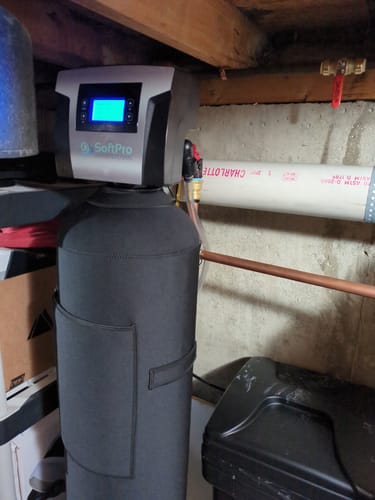
The damage iron does to your appliances tells only half the story—the other half lives in your wallet.
Let's put real numbers to it. Ignoring iron can cost you up to $1,000 annually in appliance repairs alone. Hidden plumbing and appliance damage can push that figure past $4,500. A single water heater replacement from iron accumulation? Up to $5,400.
Add several hundred dollars more for clogged pipes and rust-related leaks, and the losses compound fast.
Here's what that means for you: a quality iron filtration system typically reaches its break-even point within six years—often sooner.
When you stack those repair and replacement costs against the upfront investment, filtration isn't an expense. It's the smarter financial move.
Iron Filter Costs vs. Appliance Repair Bills
Comparing iron filter costs to appliance repair bills makes the math surprisingly clear. A premium system runs $3,000 to $5,000 upfront, which sounds steep until you stack it against reality.
Untreated iron quietly drains $100 to $500 annually from appliance repairs alone, and when a washing machine or dishwasher fails prematurely, you're looking at replacement costs reaching $5,400.
Budget systems seem tempting at $800 to $1,500, but they'll cost you over $6,800 across a decade through constant media replacements and maintenance.
Premium systems? Around $4,500 total. That's a meaningful difference.
Here's what we find most compelling: quality filtration saves roughly $1,000 every year by stopping iron damage before it starts.
The filter doesn't just pay for itself—it pays you back.
How Fast Does an Iron Filter Pay for Itself?
So we've established that a quality iron filter beats the alternative on paper—but how quickly does that math play out in real life?
Most homeowners hit their break-even point within six years. That timeline makes sense when you factor in roughly $1,000 annually in appliance repair savings plus another $1,000 in avoided plumbing costs related to iron buildup.
That's $2,000 working in your favor every year.
Even a premium system costing $3,000 to $5,000 starts earning its keep faster than you'd expect.
And over a decade, you're looking at preventing more than $4,500 in iron-related damage alone.
The numbers don't lie—an iron filter isn't an expense. It's a strategic investment that compounds in value the longer it runs.
Which Iron Filter Actually Stops Appliance Damage
Not all iron filters are built equal—and that gap matters when appliances worth thousands of dollars are on the line.
Premium systems—those running $3,000 to $5,000—remove over 95% of iron contaminants. That's the threshold that actually protects your water heater, dishwasher, and plumbing from the slow corrosion that budget filters miss.
Here's what that performance difference means in real numbers: iron deposits can slash water heater efficiency by 50% and trigger annual repair bills exceeding $1,000. Premium filtration eliminates that exposure.
We're talking about a system that prevents over $4,500 in potential appliance damage.
Budget filters cut corners. Premium filters cut iron.
When you're protecting equipment that costs thousands to replace, the filter's performance level isn't a minor detail—it's everything.
Frequently Asked Questions
What Is the Life Expectancy of an Iron Filter?
We've seen budget iron filters last 5–10 years, while premium systems push 10–15 years. Consistent annual maintenance keeps yours running longer, protecting your appliances and maximizing every dollar you've invested.
Is an Iron Filter Worth It?
Yes, an iron filter's absolutely worth it. We're talking about preventing over $4,500 in hidden repair costs while protecting your appliances from iron damage—savings that easily outweigh the initial investment within six years.
What Is the Cheapest Way to Remove Iron From Well Water?
For low to moderate iron levels, we recommend water softeners as your most affordable option. They'll effectively eliminate ferrous iron when your water's pH stays between 6.5 and 7.5—saving you money upfront.
How Much Does It Cost to Maintain an Iron Filter?
We're looking at $150–$300 annually for servicing, plus $50–$500 for filter replacements. Budget for occasional backwashing at $100 per service. Skip maintenance, and you'll risk emergency repairs exceeding $2,000—making proactive upkeep your smartest investment.





