


![SoftPro™ Chlorine+ Carbon Whole House Water Filter to Remove PFAS, Chlorine, Chloramine & Pesticides [City Water Filters Series]](http://www.softprowatersystems.com/cdn/shop/files/SoftPro_Whole_House_Carbon_Filter_with_Spin_Down_Water_Filter.webp?v=1783547361&width=140)


 855-683-8488


Iron Filter as Water Softener Resin Protection: Why Leading Softener Manufacturers Strongly Recommend It

Iron is one of the sneakiest threats to your water softener resin, and leading manufacturers know it. Even at just 0.3 ppm, iron coats resin beads, cuts their effectiveness, and forces costly replacements. That's why they strongly recommend installing an iron filter first — before water ever reaches your softener. It stops both ferric and ferrous iron in their tracks, protecting your investment and lowering salt costs. Stick with us, and we'll show you exactly how to keep your system running at its best.
Key Takeaways
- Dissolved ferrous iron oxidizes into solid ferric iron, coating resin beads and permanently reducing their capacity to remove hardness minerals.
- Iron levels as low as 0.3 ppm cause staining, while resin typically tolerates only 3–5 ppm before significant degradation occurs.
- Installing an iron filter before the softener ensures resin exclusively targets hardness minerals, extending equipment lifespan considerably.
- Proper iron filtration reduces regeneration frequency, lowering salt consumption and overall operating costs substantially over time.
- Without an iron filter, fouled resin eventually fails entirely, requiring costly replacements that manufacturers consistently advise preventing proactively.
How Iron Destroys Water Softener Resin

Iron is water softener resin's worst enemy. Here's what happens beneath the surface: dissolved ferrous iron enters your softener, then oxidizes into insoluble ferric iron.
That ferric iron doesn't pass through — it coats your resin beads, systematically strangling their ability to capture hardness minerals.
Think of it like arterial plaque. The buildup is gradual, quiet, and ruthless. Once the resin's exchange capacity is compromised, your softener works harder while delivering less.
You'll notice staining at iron concentrations as low as 0.3 ppm — an early warning sign most homeowners miss.
Above 3 ppm, your softener's fundamentally fighting a losing battle. Without intervention, the resin doesn't just underperform — it fails entirely, leaving you facing costly replacement.
Ferric vs. Ferrous Iron: Which Type Does More Damage?
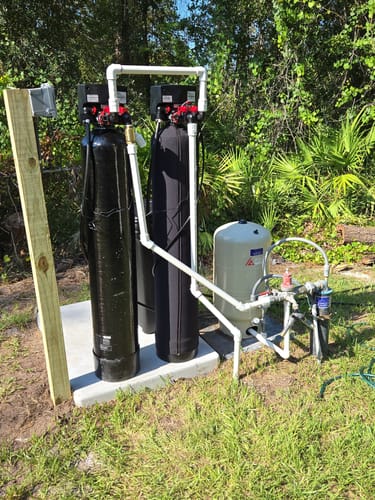
Not all iron damages your resin the same way — and understanding the difference between ferric and ferrous iron changes how you protect your system.
Ferric iron is already oxidized — visible as rust — and physically clogs resin beds on contact. Ferrous iron stays dissolved below pH 7.0, slipping through softeners quietly, but oxidizes the moment it hits air. Both destroy resin, just differently.
| Feature | Ferric Iron | Ferrous Iron |
|---|---|---|
| State | Solid (rust particles) | Dissolved |
| Visibility | Visible | Invisible |
| Resin damage | Immediate clogging | Gradual fouling after oxidation |
| Softener tolerance | None | Up to 3 ppm |
| Primary risk | Aesthetic staining | Corrosion, resin degradation |
Neither type is safe long-term. That's exactly why an iron filter installed before your softener isn't optional — it's essential.
Where to Install an Iron Filter in Your System
Placement makes or breaks your iron filter's effectiveness. Install it on your main water line, before any other treatment equipment, so every drop entering your home gets treated.
From there, the sequence is non-negotiable: iron filter first, water softener second, carbon filter last.
The order is fixed: iron filter, then water softener, then carbon filter—no exceptions.
Here's why that order matters. If iron reaches your softener resin before being filtered, it coats and degrades those resin beads—exactly the damage we're trying to prevent.
Filtering iron upstream keeps your softener focused solely on hardness minerals, which is what it's designed for.
For homes dealing with high iron concentrations, we'd recommend a two-stage iron filtration setup upstream of your softener. More iron demands more filtration capacity.
Don't cut corners on positioning—your softener's lifespan depends on getting this right.
Why Iron Filter First Reduces Salt Use and Resin Fouling
When iron hits softener resin directly, it fouls the beads, forcing more frequent regeneration cycles and burning through salt fast. By intercepting iron first, we're protecting resin designed for only 3–5 ppm from concentrations reaching 15 ppm.
| Scenario | Salt Regeneration Frequency | Resin Condition |
|---|---|---|
| No iron filter | Weekly or more | Fouled, degraded |
| Iron filter installed | Annually | Clean, efficient |
| High iron, no filter | Multiple times weekly | Severely damaged |
| Moderate iron, no filter | Bi-weekly | Partially fouled |
| Iron filter + softener | Once yearly | Peak performance |
That single upstream decision transforms your system's efficiency, longevity, and operating costs dramatically.
Warning Signs Your Resin Tank Is Already Iron-Fouled
If your resin tank is already iron-fouled, it'll tell you — you just need to know what to listen for.
Rust-colored stains on faucets, laundry, and fixtures? That's oxidized iron accumulating unchecked.
Rust stains on your faucets and laundry aren't cosmetic issues — they're iron escaping your resin tank unchecked.
Noticing your water feels less soft than usual? Your resin beads are likely coated, losing their ability to capture hardness minerals effectively.
A sudden pressure drop isn't a plumbing mystery — it's iron buildup obstructing flow.
And that orange or reddish residue around your brine tank and water lines? It's a direct warning your resin's condition is deteriorating fast.
For well water systems especially, monthly treatment with an iron-specific cleaner isn't optional — it's essential maintenance.
Catch these signs early, and you'll save your resin before replacement becomes your only option.
Frequently Asked Questions
Should I Get an Iron Filter or Water Softener?
We recommend getting both! Start with an iron filter to protect your softener's resin, then let the softener handle hardness. Together, they'll tackle your water quality issues effectively and extend your system's lifespan.
Why Are States Banning Water Softeners?
States are banning water softeners because they discharge excess sodium into wastewater, raising salinity levels that harm soil, aquatic ecosystems, and water quality—prompting regulators to push greener alternatives that protect our natural water resources.
Can Resin Remove Iron From Water?
Yes, resin can remove small amounts of ferrous iron—up to 3 ppm—but we're pushing its limits. Beyond that, iron fouls the resin, coating beads with rust and destroying your softener's hardness-fighting ability.
What Is the Best Water Softener Brand According to Consumer Reports?
According to Consumer Reports, we'd point you toward WaterBoss, SoftPro, and Fleck as top-rated brands, consistently praised for reliability, efficiency, and customer satisfaction — giving you confidence in your water softening investment.






