


![SoftPro™ Chlorine+ Carbon Whole House Water Filter to Remove PFAS, Chlorine, Chloramine & Pesticides [City Water Filters Series]](http://www.softprowatersystems.com/cdn/shop/files/SoftPro_Whole_House_Carbon_Filter_with_Spin_Down_Water_Filter.webp?v=1783547361&width=140)


 855-683-8488


Iron Filter Backwash Duration and Frequency: How to Finally Get the Balance Right

If your iron levels are under 5 ppm, you're typically backwashing every two to four weeks. Above 5 ppm, that jumps to every one to three days. Duration matters just as much — you'll want 10 to 20 minutes of reverse flow to actually expand the media bed and flush contaminants out. Get this balance wrong and your filter slowly loses ground without you noticing. Stick around, because there's a lot more to unpack about getting this exactly right for your setup.
Key Takeaways
- Iron concentration determines backwash frequency: under 5 ppm requires every 2-4 weeks, while above 5 ppm needs every 1-3 days.
- Backwash duration should last 10-20 minutes, expanding the media bed 20-30% to effectively dislodge and remove contaminants.
- Media type influences required flow rates: catalytic media needs 10-12 GPM/sq ft versus greensand's 8-10 GPM/sq ft.
- Rust stains, foul taste, cloudy water, and pressure drops signal that your backwash schedule needs immediate adjustment.
- Seasonal shifts demand flexible scheduling; summer requires more frequent backwashing while winter allows longer intervals between cycles.
How Often Should You Backwash an Iron Filter?

How often you backwash your iron filter depends heavily on your water's iron concentration. For most households, every 2-4 weeks works well — but push past 5 ppm of iron, and you'll need to backwash every 1-3 days to prevent clogging.
Don't overlook seasonal shifts, either. Summer typically demands more frequent backwashing because higher water usage drives iron levels up. Ignore this pattern, and you're inviting rusty water and unpleasant tastes into your home.
Here's the real key: monitor your system pressure and water clarity consistently.
These two indicators tell you exactly when your filter needs attention, letting you fine-tune your schedule with precision. The goal isn't a rigid routine — it's a responsive one that keeps your system performing at its peak.
What Factors Actually Determine Your Backwash Schedule?
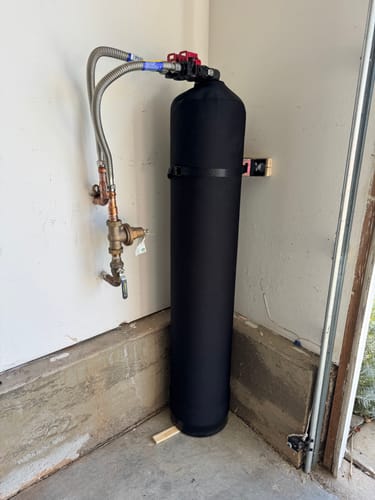
Several interconnected factors dictate how often we need to backwash an iron filter — and understanding them means the difference between a system that protects your water quality and one that quietly fails.
Iron concentration, media type, pressure drop trends, and seasonal demand all play distinct roles.
| Factor | Threshold/Trigger | Action Required |
|---|---|---|
| Iron concentration | Exceeds 5 ppm | Backwash every 1–3 days |
| Media type | Catalytic vs. greensand | 10–12 vs. 8–10 GPM/sq ft |
| Seasonal demand | Summer peak usage | Adjust schedule accordingly |
We also can't ignore pressure monitoring — a declining flow rate signals accumulating buildup before it becomes a crisis. Combine that data with regular water testing, and we're able to build a backwash schedule that's precise, not guesswork.
What Does Backwash Duration Actually Do to Your Filter Media?
Backwash duration isn't just a timer setting — it's the mechanism that determines whether your filter media actually gets clean or just gets rinsed.
During those 10-20 minutes, water flowing in reverse expands the media bed by at least 20-30%, physically dislodging trapped iron particles and accumulated contaminants. Without that expansion, you're fundamentally shuffling debris around rather than removing it.
Cut the duration short, and fouling builds gradually — pressure drops, flow rates suffer, and efficiency collapses.
Different media compounds the challenge: catalytic media demands 10-12 GPM per square foot to achieve meaningful bed expansion.
We recommend monitoring post-backwash water clarity and pressure drop consistently, since these indicators reveal whether your duration is actually accomplishing the deep cleaning your filter media requires.
Signs Your Iron Filter Backwash Schedule Needs Adjusting
Knowing what backwash duration accomplishes only gets you halfway there — you also need to recognize when your current schedule isn't cutting it. Watch for these red flags:
| Warning Sign | What It Means | Corrective Action |
|---|---|---|
| Rust stains on fixtures | Filter media is exhausted | Adjust backwash schedule immediately |
| Foul water taste | Contaminants breaking through | Increase backwash frequency |
| Pressure drops | Accumulated iron clogging media | Backwash every 2-3 days |
| Cloudy water clarity | Filter efficiency declining | Run full 10-20 minute cycle |
| Summer concentration spikes | Higher seasonal iron levels | Backwash every 1-3 days |
Don't wait until problems compound. Each warning sign represents your system communicating a specific failure point. Address them proactively, and you'll maintain peak filtration performance year-round.
Seasonal Changes That Require a Backwash Timing Adjustment
As seasons shift, so do the demands on your iron filter's backwash schedule. During summer, increased water usage combined with rising temperatures can accelerate iron concentration changes—we recommend backwashing every 1-3 days in high-iron regions.
Winter's lower household consumption typically allows longer intervals between cycles.
Here's what makes seasonal management powerful: groundwater iron concentrations fluctuate monthly, meaning a static schedule will eventually fail you. That's why we suggest keeping a seasonal water quality journal, tracking pressure shifts and water clarity alongside iron readings.
When you observe slight pressure drops or cloudiness during peak usage seasons, don't wait—adjust immediately.
Monthly monitoring transforms reactive problem-solving into proactive control, putting you firmly in charge of your system's performance year-round.
Frequently Asked Questions
How Long Should an Iron Filter Backwash?
We recommend you run your iron filter's backwash cycle for 10-20 minutes. This duration effectively dislodges accumulated contaminants, restores flow efficiency, and guarantees your filter media performs at its absolute peak.
Should You Rinse Every Time You Backwash?
Yes, we recommend rinsing after every backwash. It flushes out residual sediment and contaminants, ensuring your filter performs effectively. Skipping this step risks discolored water and reduced filter efficiency—don't let that happen.
How Long Should a Backwash Cycle Be?
We recommend keeping your backwash cycle between 10-20 minutes. If you're in a high-iron area, push toward that 20-minute mark to guarantee you're fully flushing trapped contaminants and achieving proper filter media expansion.
What Is the Flow Rate of Iron Filter Backwash?
We'd recommend aiming for 10-12 GPM per square foot of media surface area. However, if you're using green sand, you'll need slightly less—around 8-10 GPM—for ideal backwashing performance.






