


![SoftPro™ Chlorine+ Carbon Whole House Water Filter to Remove PFAS, Chlorine, Chloramine & Pesticides [City Water Filters Series]](http://www.softprowatersystems.com/cdn/shop/files/SoftPro_Whole_House_Carbon_Filter_with_Spin_Down_Water_Filter.webp?v=1783547361&width=140)


 855-683-8488


Iron Filter Backwash Frequency: 5 Key Factors That Determine Your Ideal Schedule

Your iron filter's backwash frequency depends on five key factors: iron concentration, daily water demand, filter media type, seasonal water quality shifts, and warning signs your system sends you. For example, iron levels under 1 ppm only need weekly backwashing, while levels over 5 ppm demand every 2-3 days. Getting this balance right protects your system and keeps your water clean—and each factor carries surprising nuances worth understanding.
Key Takeaways
- Iron concentration is the primary factor; levels above 5 ppm require backwashing every 2-3 days, while under 1 ppm needs only weekly backwashing.
- Higher daily water consumption accelerates iron buildup, requiring more frequent backwashing, especially during peak usage of 7-12 GPM.
- Filter media type matters; catalytic media needs backwashing every 1-3 days, while green sand operates at a lower frequency.
- Seasonal changes, especially spring and fall rainfall, can spike iron levels above 5 ppm, demanding schedule adjustments through regular water testing.
- Warning signs like rust stains, sulfur odors, or declining water pressure indicate immediate need for increased backwash frequency.
How Iron Concentration Determines Your Backwash Frequency?

When it comes to iron filtration, concentration is everything — it's the single biggest factor that determines how often you'll need to backwash your system.
Think of it as a sliding scale: the higher the iron, the more aggressive your maintenance schedule needs to be.
Higher iron concentration demands a more aggressive maintenance schedule — it's a sliding scale, not a fixed rule.
Here's how it breaks down. Under 1 ppm? Weekly backwashing keeps things running smoothly. Between 1–5 ppm, you're looking at every 3–5 days. Push past 5 ppm, and that window tightens to every 2–3 days. Exceed 10 ppm, and twice-weekly backwashing becomes necessary to prevent serious fouling.
But here's what most people miss — these ranges only work if you're testing your water regularly.
Without accurate, current data, you're fundamentally guessing, and guessing costs you system performance.
How Daily Water Demand Affects How Often You Should Backwash
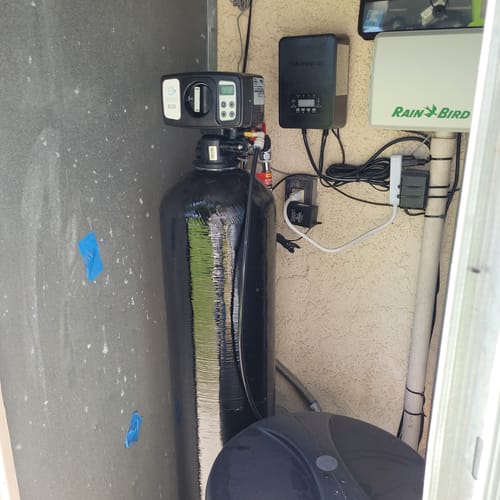
Iron concentration doesn't tell the whole story, though — how much water your household actually pulls through the system each day is just as important.
Think about it: higher daily consumption means more iron-laden water cycling through your filter, accelerating deposit buildup and pushing your system toward clogging faster than you'd expect.
During peak usage, multiple fixtures running simultaneously demand 7-12 GPM to keep filtration effective. If your system's undersized for those moments, pressure drops and performance gaps follow.
Here's the practical takeaway: monitor flow during high-demand periods to understand your real usage patterns.
If iron levels exceed 5 ppm and consumption is heavy, you'll likely need backwashing every 1-3 days.
Matching backwash frequency to actual demand — not guesswork — is what separates a well-maintained system from a failing one.
Which Filter Media Type Requires the Most Frequent Backwashing?
Not all filter media are created equal — and when it comes to backwash frequency, the differences matter more than most people realize.
Catalytic media sits at the top, demanding backwashing every 1-3 days under ideal conditions and requiring 10-12 GPM per square foot to clean effectively.
Catalytic media demands the most — backwashing every 1-3 days and 10-12 GPM per square foot to stay effective.
Birm media matches that flow rate but adds another layer of complexity — pH sensitivity means you're monitoring constantly or risking efficiency losses.
Green sand falls slightly behind at 8-10 GPM per square foot, though it shares Birm's pH vulnerability.
Here's the common thread: when iron concentrations exceed 5 ppm, every media type escalates to backwashing every 2-3 days.
The media you choose doesn't just affect filtration — it shapes your entire maintenance rhythm.
How Seasonal Water Quality Changes Shift Your Backwash Schedule
Your backwash schedule isn't a set-it-and-forget-it system — the seasons have other plans.
Spring and fall rainfall flushes iron-heavy runoff into groundwater, often pushing concentrations past 5 ppm. At that point, you're backwashing every 2-3 days instead of weekly.
Winter adds a different wrinkle — cold temperatures slow flow rates and expand filter media, reducing filtration efficiency and demanding more frequent cycles.
Here's what separates reactive homeowners from proactive ones: regular seasonal water testing. Instead of guessing, you're matching your schedule to actual contaminant loads during high-rainfall or agricultural activity periods.
Don't ignore your fixtures either. Rust stains and sulfur odors are your filter's distress signals — visible proof that water quality has shifted and your current backwash frequency isn't keeping pace.
What Warning Signs Tell You to Backwash More Often?
When your iron filter starts struggling, it rarely stays quiet about it. Watch for these red flags:
| Warning Sign | Action Required |
|---|---|
| Rotten egg or sulfur odor | Increase backwash frequency immediately |
| Rust stains or iron bleeding | Backwash more often to restore filtration |
| Declining water pressure | Backwash to clear developing clogs |
| Irregular regeneration cycles | Increase frequency to stabilize operation |
Each symptom tells a specific story. That sulfur smell? Your media's overwhelmed. Rust stains bleeding through? Your filter's losing the battle. Pressure dropping? Something's blocking flow. Regeneration cycling erratically? Your system's fighting to keep up.
We'd also flag water pooling around filter tanks — that signals leaks demanding urgent attention. Don't wait. These warnings exist precisely so you'll act before performance collapses entirely.
Frequently Asked Questions
How Often Should an Iron Filter Backwash?
We recommend backwashing your iron filter every 1-3 days for high iron levels above 5 ppm, every 3-5 days for moderate levels, or monthly if iron stays below 2 ppm.
What Is the Recommended Backwash Rate?
We recommend aiming for 8-12 gallons per minute per square foot of media surface area. Hit that sweet spot, and you'll guarantee thorough cleaning while preventing the media fouling that quietly destroys filtration efficiency over time.
How to Backflush an Iron Filter?
To backflush your iron filter, we'll first turn off the water supply and switch to bypass mode. Then, we initiate the backwash cycle, letting water flow in reverse to flush out trapped iron particles.
How Often Should I Backwash My Pool?
We recommend backwashing your pool every 1-4 weeks, but watch your pressure gauge closely. When it rises 8-10 psi above normal, it's time. Heavy debris, high pollen, or cloudy water means you'll backwash more frequently.






