


![SoftPro™ Chlorine+ Carbon Whole House Water Filter to Remove PFAS, Chlorine, Chloramine & Pesticides [City Water Filters Series]](http://www.softprowatersystems.com/cdn/shop/files/SoftPro_Whole_House_Carbon_Filter_with_Spin_Down_Water_Filter.webp?v=1783547361&width=140)


 855-683-8488


Iron Filter Backwash Schedule by Media Type and Iron Concentration: A Visual Guide

Your iron filter's backwash schedule depends on two things: your iron concentration and your filter media. Low iron levels need weekly backwashing, while moderate levels (1–5 ppm) require every 3–5 days. Above 5 ppm, you're looking at every 2–3 days. Each media type — Greensand, Birm, and catalytic carbon — also has specific flow rate requirements to clean properly. Get either factor wrong, and your system suffers. Stick with us, and we'll walk you through everything you need to dial it in perfectly.
Key Takeaways
- Low iron levels require weekly backwashing, moderate levels (1–5 ppm) every 3–5 days, and high levels above 5 ppm every 2–3 days.
- Greensand filters need 8–10 GPM per square foot and perform best within a pH range of 6.2–8.5.
- Birm and catalytic carbon media both require higher flow rates of 10–12 GPM per square foot for effective backwashing.
- Multiple simultaneous contaminants increase backwashing frequency to every 1–2 days, regardless of iron concentration alone.
- Warning signs like stained fixtures, discolored laundry, and odd odors indicate an inadequate backwash schedule needing immediate adjustment.
How Much Iron You Have Determines How Often You Should Backwash

Most of the time, how often you'll need to backwash your iron filter comes down to one key factor: how much iron is actually in your water.
Think of it as a sliding scale. If your iron levels are low, you're backwashing roughly once a week. Moderate iron between 1–5 ppm pushes that to every 3–5 days. High concentrations above 5 ppm? You're looking at every 2–3 days to keep performance sharp.
And if you're dealing with multiple contaminants alongside iron, that window tightens to every 1–2 days.
That's why testing your water isn't optional—it's your foundation. Without knowing your exact iron concentration, you're guessing, and guessing wastes both water and filter efficiency.
Backwash Schedules for Greensand, Birm, and Catalytic Carbon
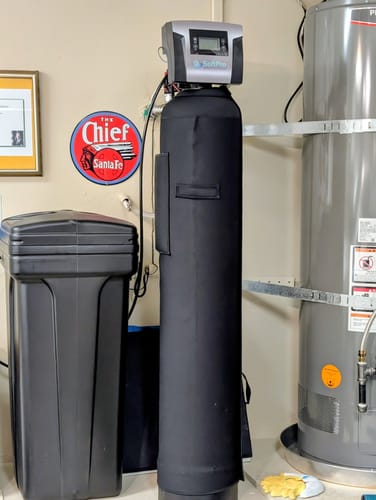
Not all filter media play by the same rules, and that matters when you're dialing in a backwash schedule.
Each media type has its own backwash flow rate requirements and iron tolerance thresholds that directly shape how often you'll need to run a cycle.
Greensand operates best between pH 6.2–8.5 and needs 8–10 GPM per square foot during backwash.
Birm and catalytic carbon both require a stronger 10–12 GPM flow to properly expand the media bed.
When iron climbs above 5 ppm, both Birm and Greensand demand backwashing every 2–3 days to prevent fouling.
Ignore these distinctions, and you'll shorten your media's lifespan and compromise water quality.
Match the schedule to the media, and your system stays sharp.
Flow Rates Each Media Type Needs to Backwash Effectively
Getting the flow rate right is where backwash schedules move from theory into real-world performance. Each media type demands something different, and meeting those demands is what separates a clean system from a fouled one.
Getting the flow rate right is where backwash schedules stop being theory and start being results.
Here's what we're working with:
- Birm filters need 8–12 GPM per square foot—a forgiving range, but pH sensitivity keeps us honest.
- Green sand filters require 8–10 GPM per square foot and demand pH levels between 6.2 and 8.5 to perform reliably.
- Catalytic media pushes us to 10–12 GPM per square foot, the highest threshold, because it needs that extra force to clean effectively.
When iron levels climb above 5 ppm, flow rate precision matters even more—fouling accelerates, and the margin for error shrinks fast.
What Happens When Your Iron Filter Doesn't Backwash Enough
When an iron filter doesn't backwash enough, the consequences stack up fast. Media fouls as contaminants accumulate, stripping the filter of its ability to remove iron effectively.
Sediment builds, clogs form, and suddenly you're replacing media far sooner than you should.
Here's what you'll notice first: stained fixtures, discolored laundry, and water that smells and tastes wrong. Those are your warning signs that iron concentrations are climbing unchecked.
If your water tests above 5 ppm, you need to backwash every 2-3 days—no exceptions. Skip that schedule, and water quality deteriorates quickly.
Different media demand different backwash frequencies. Knowing your media type and monitoring your flow rates isn't optional—it's the difference between a filter that performs and one that fails.
Signs Your Current Backwash Schedule Isn't Working
Knowing the consequences of an inadequate backwash schedule is one thing—recognizing the warning signs in real time is another. Watch for these critical indicators:
- Shifting water clarity or odor — Frequent changes signal that your current schedule isn't removing contaminants effectively.
- Excessive backwash frequency at low iron levels — If you're backwashing every 1-2 days despite minimal iron, your media may be underperforming.
- Pressure gauge irregularities — Significant pressure drops reveal that media isn't getting properly cleaned between cycles.
When iron exceeds 5 ppm, backwashing every 2-3 days isn't optional—it's essential.
Multiple contaminants or peak demand periods compound these warning signs. Catching them early prevents media fouling and keeps your system running at full capacity.
Frequently Asked Questions
How Often Should an Iron Filter Backwash?
We recommend backwashing every 2-3 days for iron above 5 ppm, every 3-5 days for moderate levels, and weekly for low concentrations. Your media type and water quality monitoring should always guide your final schedule.
How to Backflush an Iron Filter?
We'll reverse your filter's water flow using the control valve, letting it flush trapped contaminants from the media bed. Follow up with a thorough rinse phase to restore peak filtration performance before returning it to service.
What Is the Filter Backwash Rule?
The backwash rule we follow is simple: match your frequency to your iron levels. High iron (above 5 ppm) means every 2-3 days; moderate levels need every 3-5 days; low concentrations require weekly backwashing.
How to Backwash a Media Filter?
To backwash your media filter, we'll reverse water flow through the media at 8-12 GPM per square foot, monitor pressure gauges, then run a rinse cycle to flush out contaminants before resuming normal operation.






