


![SoftPro™ Chlorine+ Carbon Whole House Water Filter to Remove PFAS, Chlorine, Chloramine & Pesticides [City Water Filters Series]](http://www.softprowatersystems.com/cdn/shop/files/SoftPro_Whole_House_Carbon_Filter_with_Spin_Down_Water_Filter.webp?v=1783547361&width=140)


 855-683-8488


Iron Filter Backwash Timing: Why Both Too Often and Not Enough Will Cost You

Backwashing your iron filter too often wastes up to 5,000 gallons of water annually and wears down your system faster than necessary. But waiting too long lets iron particles compact inside your media, creating channels that push untreated water straight to your tap. Getting the timing right depends on your iron levels, media type, and flow rate — and once you understand how these factors work together, protecting your system becomes much simpler.
Key Takeaways
- Over-backwashing wastes up to 5,000 gallons annually, raises utility bills, and accelerates system wear by disrupting filtration media stratification.
- Insufficient backwashing allows iron buildup, causing clogging, pressure drops, channeling, and contaminant breakthrough that stains water and degrades media.
- Iron levels below 5 ppm require backwashing every 4-14 days; above 5 ppm demands every 2-3 days.
- Pressure gauge drops, cloudy water, and rising tap iron levels signal incorrect backwash timing requiring immediate schedule adjustments.
- Media type and flow rate above 5-10 GPM must align with backwash frequency to maintain effective filtration performance.
Backwashing Your Iron Filter Too Often: What It Actually Costs You

When it comes to iron filter maintenance, more isn't always better — and over-backwashing is one of the most common mistakes homeowners make without realizing the true cost.
Here's what's actually happening behind the scenes: excessive backwashing wastes up to 5,000 gallons of water annually, driving up your utility bills unnecessarily. Each cycle runs 10-20 minutes, and that repeated stress accelerates wear on your system, shortening its lifespan.
Worse, over-backwashing disrupts media stratification, invites channeling, and lets untreated water slip through unfiltered. It also degrades your filter media faster, forcing premature replacements that cost hundreds of dollars.
The irony? Backwashing too often doesn't make your system cleaner — it quietly undermines everything it's designed to do.
What Happens When Iron Particles Build Up Between Backwash Cycles
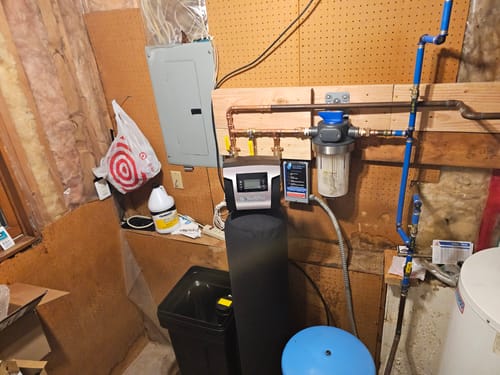
Between backwash cycles, iron particles don't just sit quietly in your filter — they accumulate, compact, and start working against you.
Here's what that buildup actually triggers:
- Clogging and pressure drops — Saturated media forces your system to strain, signaling it's time to act before performance collapses.
- Channeling — Compacted iron creates pathways where untreated water bypasses the media entirely, gutting your filtration effectiveness.
- Contaminant breakthrough — Iron escapes into your water supply, causing staining, bad taste, and declining water quality.
We've seen this pattern repeatedly: neglect the timing, and the media degrades faster than necessary.
Backwashing every 4-14 days interrupts this cycle, preserving media life up to five years and keeping your water consistently clean.
How to Set the Right Iron Filter Backwash Frequency for Your System
Knowing what iron buildup does to your system is one thing — stopping it before it starts is another. Your backwash frequency isn't guesswork; it's math.
| Iron Concentration | Recommended Frequency |
|---|---|
| Below 5 ppm | Every 4–14 days |
| Above 5 ppm | Every 2–3 days |
Start by testing your iron levels, then watch your pressure gauges — a notable drop signals media saturation. We also recommend aligning your schedule with peak household demand so filtration stays sharp when you need it most.
Each backwash cycle should run 10–20 minutes. That window fully cleanses the media and eliminates channeling risks. Dial these variables in correctly, and your system runs efficiently without unnecessary wear.
How Iron Levels, Media Type, and Flow Rate Determine Your Backwash Schedule
Three variables quietly govern your backwash schedule — iron concentration, media type, and flow rate — and getting them right means the difference between a system that protects your water and one that quietly fails.
Here's how each factor shapes your timing:
- Iron concentration — Above 5 ppm demands backwashing every 2-3 days; moderate levels (1-5 ppm) allow 3-5 days.
- Media type — Catalytic media requires 10-12 GPM/sq ft; green sand needs 8-10 GPM/sq ft to clean effectively.
- Flow rate — Dropping below 5-10 GPM leaves contaminants behind, accelerating media failure.
We also watch pressure gauges closely — sudden drops signal saturation before problems escalate.
When you align all three variables deliberately, your system stops reacting and starts performing.
Warning Signs Your Backwash Timing Is Wrong and How to Correct It
Even when we dial in iron concentration, media type, and flow rate perfectly, the system can still drift off course — and it'll tell us when it does. Watch for dropping pressure gauge readings, cloudier water, or rising iron content at your tap. These aren't minor nuisances — they're the system signaling media saturation.
A rapid spike in differential pressure across the filter means backwash can't wait.
On the flip side, if you're backwashing daily in a low-iron environment, you're bleeding water and accelerating mechanical wear unnecessarily. The correction is straightforward: match your schedule to what the data shows.
Adjust frequency based on real pressure trends and water quality readings, not guesswork, and your system will reward you with longer life and consistent performance.
Frequently Asked Questions
How Often Should an Iron Filter Backwash?
We recommend backwashing your iron filter every 4 to 14 days, but if your iron levels exceed 5 ppm, you'll need to backwash every 2 to 3 days to prevent costly contaminant breakthrough.
Is It Bad to Backwash Often?
Yes, backwashing too often wears down your filter media faster, shortening its lifespan considerably. We recommend sticking to every 4-14 days unless iron levels exceed 5 ppm, which justifies more frequent cycles.
What Problem Is Created by Insufficient Backwash Rates?
When we don't backwash enough, our filter media becomes saturated, efficiency drops, and contaminants like iron sneak through. We're also risking channeling, mudballs, and costly early media replacement — all preventable problems.
What Are Common Problems With Iron Filters?
We've seen iron filters struggle with media saturation, channeling, and pressure drops. Backwash too little, and contaminants surge through. Backwash too often, and you'll wear out expensive media prematurely—both mistakes cost you considerably.






