


![SoftPro™ Chlorine+ Carbon Whole House Water Filter to Remove PFAS, Chlorine, Chloramine & Pesticides [City Water Filters Series]](http://www.softprowatersystems.com/cdn/shop/files/SoftPro_Whole_House_Carbon_Filter_with_Spin_Down_Water_Filter.webp?v=1783547361&width=140)


 855-683-8488


Iron Filter Bypass Valve Setup: How It Protects Your Home's Water Supply During Maintenance

When we set up an iron filter bypass valve correctly, we can keep water flowing to our home even while maintaining or servicing the filter. It uses three ball valves to redirect water around the filter when needed. We simply close the inlet and outlet valves, then open the center valve for bypass mode. This protects our household from interruptions and freeze damage. Stick with us, and we'll walk you through everything you need to know.
Key Takeaways
- An iron filter bypass valve redirects water flow away from the filter during maintenance, ensuring your household retains an uninterrupted water supply.
- Three ball valves control water flow, with bypass mode achieved by closing inlet and outlet valves while opening the center valve.
- Install the bypass valve on the main cold water supply line before the filter unit for proper system protection.
- Wrap all threaded connections with Teflon tape and align flow arrows correctly to prevent leaks during installation.
- Toggle the bypass valve every three months to prevent mineral buildup, seizing, and unexpected flow failures.
How an Iron Filter Bypass Valve Works

When our iron filter needs maintenance or a replacement, the last thing we want is to cut off water to the entire house. That's exactly where the bypass valve saves us. It redirects water flow away from the filter, keeping untreated water accessible while we work.
Here's how it operates: three ball valves control the flow. During normal service, water moves through the filter as intended.
When we need to bypass, we close the two valves at the inlet and outlet, then open the center valve. Water channels directly into the home, skipping the filter entirely.
Close the inlet and outlet valves, open the center valve, and water flows straight to your home — filter bypassed.
This simple mechanism eliminates system downtime, giving us the flexibility to handle maintenance and troubleshooting without disrupting our household's water supply.
How to Install Your Iron Filter Bypass Valve the Right Way
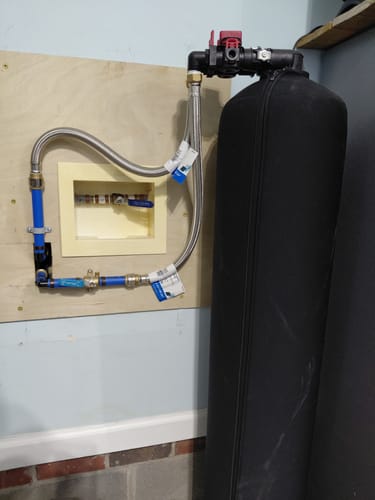
Installing the bypass valve correctly starts with one non-negotiable step: mount it on the main cold water supply line before the filter unit. This positioning gives us immediate access during maintenance without disrupting your household water.
Connect the inlet pipe using a 90-degree fitting and wrap every threaded connection with Teflon tape—no exceptions.
| Step | Action | Purpose |
|---|---|---|
| 1 | Mount before filter unit | Guarantees maintenance access |
| 2 | Apply Teflon tape | Prevents threaded leaks |
| 3 | Align flow arrows | Confirms Service mode flow |
Once installed, toggle between Service and Bypass positions while inspecting for leaks. Correct arrow alignment isn't optional—misalignment kills performance. We recommend quarterly valve exercises and monthly inspections to prevent mineral buildup and keep everything operating smoothly.
Which Bypass Valve Position Should You Use and When?
Knowing which position to use—and when—keeps your iron filter working at peak performance while protecting your home's water supply.
Here's how we make smart valve decisions:
Smart valve decisions protect your water supply, extend filter life, and turn maintenance into a confident, repeatable routine.
- Service position routes water through the iron filter, delivering clean, treated water throughout your home.
- Bypass position diverts untreated water around the filter during maintenance or repairs without disrupting household flow.
- Regular toggling between positions verifies the valve operates fully, preventing unexpected flow failures.
- Proper alignment with flow direction indicators guarantees consistent water quality and stable pressure—never skip this step.
- Cold climate protection means switching to bypass during harsh winters shields your filter from freeze damage.
Mastering these two positions transforms valve management from guesswork into a deliberate, confidence-building routine.
What Causes Your Iron Filter Bypass Valve to Leak or Stick?
Even with a solid handle on which valve position to use and when, a leaking or sticking bypass valve can quickly undo all that careful management. Most leaks trace back to improper installation—skipping Teflon tape on threaded connections is a common culprit. Worn or hardened O-rings and seals also let water escape during bypassing.
Sticking usually means mineral deposits have quietly accumulated inside the valve mechanism. That's why we recommend exercising the valve monthly—moving it through its positions prevents seizing before it becomes a real problem.
Debris buildup can similarly obstruct the mechanism, making switching between service and bypass modes frustratingly difficult.
Catching these issues early through monthly inspections keeps small problems from becoming costly failures, protecting everything downstream that depends on reliable valve performance.
How Often Should You Exercise Your Iron Filter Bypass Valve?
How often you exercise your bypass valve makes a bigger difference than most homeowners realize. We recommend toggling it every three months to prevent mineral buildup and keep it operating smoothly.
A quick monthly visual check also helps us catch early wear or moisture before problems escalate.
A monthly visual check helps catch early wear or moisture before small issues have the chance to escalate.
Here's what consistent valve exercise does for us:
- Prevents seizing caused by mineral deposits locking the valve over time
- Maintains smooth operation so the valve responds reliably when we need it most
- Reveals leaks early before they damage surrounding components
- Identifies alignment issues we can troubleshoot before they worsen
- Extends system lifespan by keeping both the valve and filtration system in peak condition
Small, consistent habits protect our entire water treatment investment long-term.
Frequently Asked Questions
What Should a Bypass Valve Be Set At?
We recommend setting your bypass valve to the Service position when your iron filter's operational. This guarantees water flows through the filtration system, keeping your home's water clean, safe, and properly treated at all times.
Why Are States Banning Water Softeners?
States are banning water softeners because they're releasing harmful sodium and chloride into wastewater, damaging freshwater ecosystems, local aquifers, and drinking water sources. We're seeing stricter regulations push homeowners toward eco-friendlier, salt-free water treatment alternatives.
What Is the Purpose of a Bypass Valve in a Filter?
A bypass valve lets us reroute water around your filter during maintenance, so your household never loses its supply. It's the safeguard that keeps everything running smoothly while we service the system.
Should My Water Softener Be Set to Service or Bypass?
We recommend keeping your softener in service mode during normal use—it's actively treating your water. Switch to bypass only when performing maintenance, protecting your resin bed while keeping water flowing throughout your home.






