


![SoftPro™ Chlorine+ Carbon Whole House Water Filter to Remove PFAS, Chlorine, Chloramine & Pesticides [City Water Filters Series]](http://www.softprowatersystems.com/cdn/shop/files/SoftPro_Whole_House_Carbon_Filter_with_Spin_Down_Water_Filter.webp?v=1783547361&width=140)


 855-683-8488


Iron Filter Commissioning After First Flush: Every Step From Installation to Clean Filtered Water

After the first flush clears, we're not done yet — commissioning your iron filter correctly makes the difference between clean water and ongoing problems. We'll want to verify pressure stays between 50–70 psi, confirm flow rate hits around 5 GPM, and set backwash cycles every 2–3 days. Watch for disappearing rust stains, clearing tap water, and fading odors as proof it's working. Stick with us — every critical step is just ahead.
Key Takeaways
- Run the first flush for 10–15 minutes post-installation, watching for discoloration, particles, or metallic taste indicating system purging.
- Maintain pressure between 50–70 psi and a flow rate of 5 GPM for optimal system performance.
- Set backwash cycles every 2–3 days; increased back pressure signals potential clogging requiring attention.
- Test pH after a few days, targeting 6.5–8; install an acid neutralizer if levels drop below 6.5.
- Confirm clean filtered water by checking for clear tap water, no rust stains, and eliminated rotten egg odors.
How to Run the First Flush After Iron Filter Installation

Once the iron filter is installed, we'll want to run the first flush for 10 to 15 minutes to clear out any residual debris from the installation and help the system settle in. During this process, watch the water closely—discoloration or particles are actually good signs, confirming the system is purging contaminants from both the plumbing and filter media.
After the flush completes, check for any lingering metallic taste or odors. These sensory cues tell us whether the filter is performing as expected before we put it into regular use.
From there, set the backwash cycle to trigger every two to three days. We'll then monitor water quality over the following days, adjusting flow rates or settings as needed to dial everything in.
How to Check Pressure, Flow Rate, and Iron Filter Settings
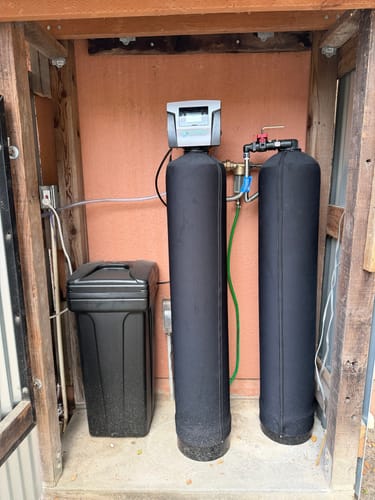
With the first flush behind us, it's time to confirm the system's doing its job by checking three key indicators: pressure, flow rate, and filter settings.
| Indicator | Target Range | What to Watch For |
|---|---|---|
| Pressure | 50–70 psi | Drop or spike signals issues |
| Flow Rate | ~5 GPM | Fill a 5-gallon bucket in ~1 min |
| Backwash Cycle | Every 2–3 days | Back pressure increase = clogging |
Use your installed pressure gauge to verify you're within range. Test flow rate by timing how long it takes to fill a known container. Then dial in backwash frequency based on your water test results. Also confirm the air injection system's cycling correctly — it's your frontline oxidation tool for knocking out ferrous iron.
Visual and Water Quality Signs Your Iron Filter Is Working
Now that the system's up and running, the proof is in the water. Watch for these clear indicators that your iron filter's doing its job.
First, check your sinks, toilets, and laundry — those orange and reddish stains should start disappearing. Your tap water should run crystal clear, confirming that ferrous iron is oxidizing and filtering out properly.
If you've been dealing with a rotten egg smell, that should fade too, signaling effective hydrogen sulfide control.
One more thing to inspect: your plumbing fixtures. No red slimy buildup means the Katalox Light media is handling iron bacteria effectively.
To keep all these results consistent, backwash every 2–3 days. That simple habit protects your flow rate, pressure, and long-term water quality.
How to Check and Balance Your Water's pH After Installation
After a few days of running your iron filter, it's time to test your water's pH — and this step matters more than most people realize.
Use a reliable pH test kit or meter and aim for a reading between 6.5 and 8. That range isn't arbitrary — it's where your Katalox Light filter performs at its best and your valves stay protected.
If your pH dips below 6.5, we recommend installing a Clack Non-Backwashing Acid Neutralizer to bring it back up.
Don't just test once — monitor frequently during those first few weeks, since fluctuations are common early on. Catching imbalances early protects both your filtration effectiveness and the long-term lifespan of every component in your system.
How to Test Iron Levels and Know When Your Filter Needs Attention
Once your iron filter is up and running, knowing how to track its performance keeps small problems from becoming expensive ones.
Test your well water every 6 to 12 months using a local water testing lab to measure iron, manganese, and other contaminants accurately. If iron exceeds 3 ppm, act immediately—your current treatment setup may need upgrading.
Watch for early warning signs between tests: returning rust stains on fixtures, changes in water color or odor, reduced flow, or frequent clogging. These signal that iron levels may be overwhelming your Katalox Light filter or that maintenance is overdue.
Don't wait for visible problems. Consistent testing gives you the data to make smart decisions before your water quality—or your filter—fails you.
Frequently Asked Questions
How Often Should an Iron Filter Backwash?
We recommend backwashing your iron filter every 2–3 days to keep it performing at peak efficiency. Higher water demand may require more frequent cycles, so monitor your flow rate and adjust accordingly.
What Is the Correct Order in the Water Treatment Process?
We recommend starting with the Fleck 2510AIO Iron Filter, then the Clack Acid Neutralizer to raise pH, followed by the Clack Carbon Filter for taste, and finally the Viqua VH410 UV System for disinfection.
What Are the First 5 Steps to Service the Potable Water?
We'll start by testing water quality, then install the iron filter, conduct the first flush, monitor pressure and flow rates, and finally perform a post-flush water quality test to confirm clean, filtered water.
Do You Install Iron Filter or Softener First?
We install the iron filter first, then the softener. This protects the softener's resin beads from iron damage, extending its lifespan and ensuring both systems perform at peak efficiency for cleaner water.






