


![SoftPro™ Chlorine+ Carbon Whole House Water Filter to Remove PFAS, Chlorine, Chloramine & Pesticides [City Water Filters Series]](http://softprowatersystems.com/cdn/shop/files/SoftPro_Whole_House_Carbon_Filter_with_Spin_Down_Water_Filter.webp?v=1783547361&width=140)


 855-683-8488


Iron Filter Control Valve Programming for Different Iron PPM Levels: A Practical Reference

Programming your Clack WS1 iron filter isn't one-size-fits-all — your iron PPM level determines everything. At 0–3 PPM, regenerate every 3 days. Between 4–7 PPM, every 2 days keeps buildup in check. Above 8 PPM, you'll need weekly cycles to maintain performance. When sulfur enters the picture, every 3 days becomes your baseline. Match your settings to your actual water test results, and there's a lot more precision you can apply to get this right.
Key Takeaways
- For 0–3 PPM iron, regenerate every 3 days; at 4–7 PPM, every 2 days; above 8 PPM, weekly regeneration is recommended.
- Iron levels at 2 PPM or below allow flexible programming, with regeneration every 4 days to prevent over-cycling.
- When iron and sulfur are both present, set regeneration cycles to every 3 days for effective contamination management.
- At approximately 5 PPM and above, daily regeneration becomes necessary to maintain consistent iron filter performance.
- Regularly test iron levels due to seasonal fluctuations and adjust regeneration schedules based on actual PPM data.
Iron PPM Thresholds That Determine Your Clack WS1 Settings

Iron levels in your water are the deciding factor for how often your Clack WS1 valve needs to regenerate.
We've broken the thresholds down into three distinct ranges, and knowing which one applies to your situation changes everything.
If your iron measures between 0–3 PPM, regenerate every three days. That balance protects the filter without unnecessary wear.
At 0–3 PPM iron, a three-day regeneration cycle keeps your filter protected without burning through unnecessary wear.
Jump into the 4–7 PPM range, and you'll want to shift to every two days—higher contamination demands a more aggressive response.
Above 8 PPM? Weekly regeneration keeps buildup manageable and performance sharp.
These aren't arbitrary numbers. Each threshold reflects real filtration demands, and matching your schedule to your actual iron level is what separates a system that performs from one that quietly fails.
Clack WS1 Settings for Low to Moderate Iron Levels
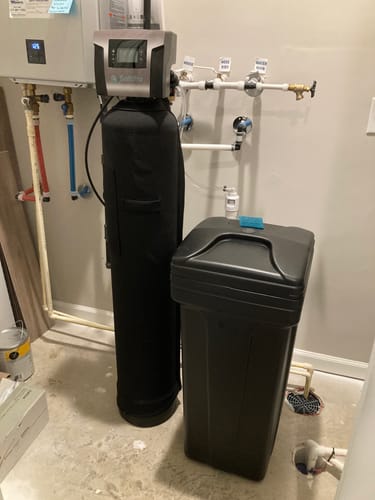
When your water tests at 2 PPM or below, you've got more flexibility in how you program the Clack WS1—and that flexibility translates directly into longer filter life and lower operating costs. These settings let the system work smarter, not harder.
| Setting | Recommended Value | Why It Matters |
|---|---|---|
| Regen Day | Every 4 days | Prevents over-cycling |
| Regen Time | 1 AM or 4 AM | Avoids household usage |
| DPI | Off | Maintains valve function |
Keep the valve size confirmed at 1.0 inch during initial programming, and verify the Flow reading shows 00 in Service Mode. These two checkpoints tell you the system's calibrated correctly and performing exactly as designed.
Clack WS1 Settings for High Iron and Sulphur PPM
Higher iron and sulphur concentrations demand a tighter programming approach—what works at 2 PPM won't cut it when levels climb.
We'll set the Regen Day to every 3 days, giving the system enough recovery time to stay ahead of heavy contamination without burning through efficiency.
Setting the Regen Day to every 3 days keeps the system ahead of heavy contamination without sacrificing efficiency.
For Regen time, choose either 1 AM or 4 AM—whichever avoids your water softener's regeneration cycle. Overlapping those two processes kills performance fast.
Before securing your settings, release the valve using the Down, Next, Up, Set Clock sequence.
Confirm DPI is off and Backwash is set to Off. Then jump into Service Mode and verify the Flow reading hits 00. That zero confirms everything's running exactly as it should.
How Often Should Your Iron Filter Regenerate?
How often your iron filter regenerates makes all the difference between clean, clear water and a system that's constantly playing catch-up. Get the timing wrong, and you're either wasting water through over-regeneration or watching your filter choke on accumulated iron.
Here's the practical breakdown:
- ~1 PPM iron: Regenerate every 3–4 days
- 5 PPM or higher: Daily regeneration is necessary
- Iron + sulfur present: Set cycles to every 3 days
These aren't arbitrary numbers—they're thresholds that protect your filter's efficiency and extend its lifespan.
We recommend testing your iron levels regularly, because concentrations shift seasonally and after heavy rainfall. Adjusting your schedule based on actual PPM data keeps your system performing at its peak rather than reacting to problems after they've already developed.
When Your Clack WS1 Settings Are No Longer Working
Even a well-programmed Clack WS1 can drift out of spec over time, leaving you with discolored water and a filter that's working harder than it should.
When standard troubleshooting isn't cutting it, work through these four checkpoints:
- Unlock the valve using the sequence: Down, Next, Up, Set Clock.
- Adjust your Regen Day setting to every 3 days, particularly when managing iron and sulfur.
- Confirm backwash shows "Off" before proceeding with any additional adjustments.
- Verify Service Mode flow reads 00, confirming the system is functioning correctly.
If problems persist after hitting all four checkpoints, reset the control valve and power cycle it.
A power failure may have corrupted your settings entirely.
Frequently Asked Questions
Is 2 Ppm Iron High?
Yes, 2 PPM iron is moderate—not extreme, but enough to cause metallic taste, discoloration in beverages, and gradual pipe buildup. We recommend addressing it promptly with proper filtration to protect your home's water quality.
How Many Ppm of Iron Can a Water Softener Remove?
We'll typically see water softeners effectively remove iron up to 1 ppm. Beyond that threshold, you'll need a dedicated iron filter—especially if you're dealing with levels exceeding 3 ppm for truly ideal results.
What Is 1 Ppm Iron in Water?
1 PPM of iron means there's 1 milligram dissolved in every liter of your water. That's enough to turn it yellowish, create metallic tastes, and stain your fixtures—signaling you'll need treatment.
How to Check Iron Filter System for Clogging?
We'll check for clogging by monitoring flow rate drops, inspecting pressure gauges for spikes, initiating backwash cycles, observing sediment buildup, and checking service mode displays—a "00" reading confirms your filter's stopped working effectively.


