


![SoftPro™ Chlorine+ Carbon Whole House Water Filter to Remove PFAS, Chlorine, Chloramine & Pesticides [City Water Filters Series]](http://www.softprowatersystems.com/cdn/shop/files/SoftPro_Whole_House_Carbon_Filter_with_Spin_Down_Water_Filter.webp?v=1783547361&width=140)


 855-683-8488


Iron Filter Drain Line Requirements: Correct Flow Rate, Pipe Size, and Placement Guidelines

Your iron filter drain line needs at least 2.5 GPM of flow during backwashing to properly flush out iron-laden sediment. We recommend using 1/2 inch ID plastic pipe and keeping the line under 20 feet to prevent pressure loss. Always terminate at a utility sink or floor drain with an air gap to avoid back-siphoning risks. Get these details right, and your backwash cycle works exactly the way it should — stick around to find out how.
Key Takeaways
- Iron filter drain lines require a minimum flow rate of 2.5 GPM during backwashing to ensure complete flushing of iron and sediment.
- Use 1/2 inch ID plastic pipe for drain lines to maintain adequate flow and prevent restrictions during backwash cycles.
- Keep drain line length under 20 feet to avoid pressure loss that weakens backwashing effectiveness.
- Always terminate drain lines with an air gap at suitable points like utility sinks or floor drains to prevent back-siphoning.
- Avoid direct sewer line connections and pipes smaller than 1/2 inch, as both significantly compromise backwash performance.
What Happens When Your Iron Filter Drain Line Is Wrong

When your iron filter's drain line isn't set up correctly, the whole system starts working against you. Poor flow rates lead to inefficient backwashing, which clogs the filter media and tanks your filtration performance.
If your drain line runs longer than 20 feet, you're losing pressure fast—and incomplete backwashing follows.
Drain lines over 20 feet bleed pressure fast — and an incomplete backwash means your filter is already failing.
Pipe size matters too. Anything smaller than 1/2 inch ID restricts flow enough to compromise the entire system's effectiveness.
But here's what most people overlook: placement mistakes carry the biggest risks. Skipping an air gap at the drain point opens the door to back-siphoning, pulling contaminated water directly into your clean supply.
Connecting the drain line straight to a sewer line makes things worse, creating dangerous backflow conditions that threaten both your system and your health.
What Flow Rate Must Your Iron Filter Drain Line Handle?
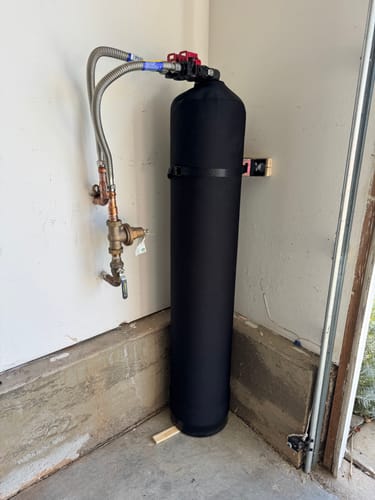
Now that we grasp what goes wrong with a poorly set up drain line, let's look at the numbers that keep everything working right—starting with flow rate.
Your iron filter's drain line must handle a minimum of 2.5 GPM during backwashing. That's the threshold that guarantees iron-laden water and accumulated sediment flush out completely rather than settling back into your media bed.
Why does this number matter so much? Because backwashing is your filter's self-cleaning cycle. If the drain line can't keep up with that flow, the whole process stalls, and your filtration performance deteriorates fast.
We recommend verifying your drain can consistently achieve that 2.5 GPM minimum—not occasionally, but every single backwash cycle.
That consistency is what separates a reliable system from a problematic one.
Where Should Your Iron Filter Drain Line Go?
Where your drain line terminates matters just as much as how it's built. Get the endpoint wrong, and you risk contaminating your water supply or disrupting your entire filtration system.
Here's what we recommend: always create an air gap at the drain point. This simple measure prevents back-siphoning, keeping your clean water supply protected from potential contaminants.
Always create an air gap at the drain point—it's your best defense against back-siphoning and contamination.
Never connect the drain line directly to a sewer line—that's a contamination risk you don't want to take.
Choose a termination point that allows wastewater to discharge freely, like a utility sink, floor drain, or outdoor area. Keep the line under 20 feet to avoid pressure loss during backwash cycles.
Inspect the drainage point regularly—clogs here can silently sabotage your filter's performance.
What Pipe Size Does an Iron Filter Drain Line Actually Need?
Pipe size might seem like a minor detail, but it's one of the most common mistakes we see with iron filter installations. Getting this wrong restricts flow during backwash, reducing your system's effectiveness greatly.
We recommend using 1/2 inch ID plastic pipe for your drain line.
Here's what else you need to know:
- Use 1/2 inch ID plastic pipe to maintain adequate flow
- Keep drain line length under 20 feet to prevent pressure loss
- Always create an air gap at the drain point to stop back-siphoning
- Never connect directly to a sewer line—contamination risks are real
- Inspect and clean drain lines regularly to prevent clogs
These aren't suggestions—they're requirements for a properly functioning iron filter.
Which Iron Filter Drain Line Mistakes Kill Backwash Performance?
Even small drain line mistakes can silently sabotage your iron filter's backwash cycle, leaving iron buildup unchecked and your water quality suffering.
Let's identify the specific errors that compromise performance most.
Connecting your drain line directly to the sewer invites back-siphoning and contamination. Instead, always create an air gap at the drain point. Keep your drain line under 20 feet — longer runs create pressure loss that weakens backwash effectiveness. If your line diameter falls below 1/2 inch ID, restricted flow will consistently undermine the cycle.
Small drain line mistakes silently sabotage backwash cycles — air gaps, proper length, and correct diameter aren't optional.
We also can't overlook maintenance. Neglecting regular drain line inspections allows clogs to develop gradually, disrupting backwashing timing and degrading filtration quality over time.
Mastering these details means your system performs reliably, protecting both your equipment and your household water.
Frequently Asked Questions
What Size Drain Line for Water Softener?
We recommend using a minimum 1/2 inch ID plastic pipe for your water softener's drain line. Keep it under 20 feet to maintain ideal flow and prevent pressure loss during regeneration cycles.
How to Size an Iron Filter?
To size an iron filter, we'll assess your well pump's flow rate, iron concentration, daily water usage, and pH levels. These factors guarantee we select a filter that handles your household's specific demands effectively.
How Far Can You Run a Drain Line for a Water Softener?
We recommend keeping your water softener's drain line to a maximum of 20 feet. Longer runs create pressure loss that'll compromise drainage flow, reducing your system's backwashing effectiveness and overall performance.
Where to Run a Water Softener Drain Line?
We recommend running your water softener drain line to a standpipe or indirect drainage system. Always create an air gap at the drain point to prevent back-siphoning and never connect directly to a sewer line.






