


![SoftPro™ Chlorine+ Carbon Whole House Water Filter to Remove PFAS, Chlorine, Chloramine & Pesticides [City Water Filters Series]](http://www.softprowatersystems.com/cdn/shop/files/SoftPro_Whole_House_Carbon_Filter_with_Spin_Down_Water_Filter.webp?v=1783547361&width=140)


 855-683-8488


Iron Filter Flow Rate and Pressure Drop: What's Normal, What's a Problem, and How to Tell

For an iron filter, a normal pressure drop runs between 1 and 3 PSI, while flow rates vary by media type — greensand handles 8–20 GPM, and activated carbon can push past 25 GPM. When pressure exceeds 7.25 PSI or flow dips below 15 GPM consistently, your system is waving a red flag. These numbers aren't just stats; they're your filter's way of talking to you. Stick with us and we'll show you exactly what to listen for.
Key Takeaways
- A healthy iron filter maintains a pressure drop of 1–3 PSI; anything exceeding 7.25 PSI signals potential clogging or system issues.
- Normal flow rates vary by media type: greensand filters handle 8–20 GPM, while activated carbon filters can exceed 25 GPM.
- Flow rates consistently below 15 GPM or readings around 5.3 GPM indicate severe clogging or system misconfiguration.
- Use two pressure gauges before and after the filter, targeting 30–40 PSI, to independently test pressure drop.
- Replace filter media if frequent backwashing fails; replace the entire unit if flow stays under 15 GPM persistently.
What's a Normal Pressure Drop for an Iron Filter?

When it comes to iron filters, a pressure drop of 1 to 3 PSI during normal operation is what we'd consider healthy.
A pressure drop of 1 to 3 PSI during normal operation is what we'd call healthy.
Think of it as your system's baseline signature — a small, expected trade-off for clean, iron-free water moving through your home. That modest resistance tells you the filter media is doing its job: capturing iron particles, engaging the filtration process, and delivering treated water downstream.
It's not a problem; it's proof the system's working.
Where things get concerning is when that drop climbs past 7.25 PSI — roughly 0.5 bar. At that threshold, you're likely looking at media clogging or an undersized system struggling to keep pace with your household's actual demand.
That's the signal worth paying attention to.
How Filter Media Type Determines Your Actual Flow Rate
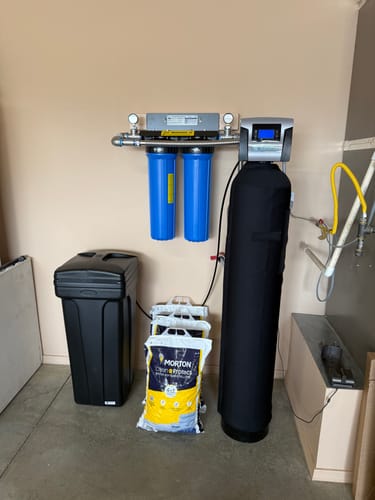
Not all filter media are created equal — and that gap shows up directly in your flow rate. Greensand filters typically deliver 8–20 GPM, while catalytic and birm media routinely exceed 20 GPM.
That's not a minor difference — it's the difference between a strong shower and a frustrating trickle.
Activated carbon filters push even further, starting at 15 GPM and reaching beyond 25 GPM under ideal conditions. However, simultaneous household usage can pull those numbers down fast.
Here's the trade-off worth understanding: lower flow rates actually improve filtration. More contact time between water and media means better contaminant removal and fewer pressure problems.
Choosing the right media isn't just about speed — it's about matching your water demands with smart, sustainable performance.
Flow Rate Numbers That Mean Your Iron Filter Is Failing
A struggling iron filter doesn't always announce itself dramatically — it shows up in the numbers. Watch for flow rates dropping below 15 GPM, since household peak demand typically runs 15–20 GPM.
Fall beneath that threshold and you're already behind.
A reading around 5.3 GPM signals something worse — clogging or a seriously misconfigured system. Pair that with persistent high iron levels on your monthly tests, and your filter's likely failing outright.
Pressure drops exceeding 0.5 bar demand immediate attention: check your backwashing schedule and assess the media before the problem compounds.
Here's the clearest diagnostic we can ascertain: bypass the filter temporarily. If flow improves considerably, your filter isn't just struggling — it's undersized and unable to meet your actual demand.
How to Test Your Pressure Drop Without Calling a Plumber
Testing your own pressure drop is easier than you'd think — grab two pressure gauges and install them on the water line directly before and after the filter. The difference between those two readings tells you everything. You're aiming for 30–40 PSI for effective filtration; anything beyond a 7.25 PSI sudden spike signals clogging or an undersized system.
Grab two pressure gauges, install them before and after your filter, and let the difference do the talking.
Here's a quick field test: run two taps simultaneously and watch your flow. Normal pressure holds steady across multiple outlets — significant drops mean trouble.
Don't stop at a single measurement. Record readings periodically to build a baseline, then monitor during peak usage hours.
Deviations from that baseline expose backwash needs or media saturation before small problems become expensive ones.
When to Fix Your Iron Filter vs. Replace It Entirely
Once you've identified pressure and flow problems, the next decision is whether to fix what you have or cut your losses and replace it entirely.
Here's how we make that call:
- Fix it if flow rates dip temporarily below 15 GPM or pressure drop exceeds 0.5 bar—these often signal clogging, not failure.
- Replace the media if backwashing every 1-3 weeks hasn't controlled iron levels, indicating full saturation.
- Replace the unit if flow consistently stays under 15 GPM, rust stains persist, or water quality remains unpredictable despite repairs.
Think of repairs as treating symptoms; replacement addresses the root cause.
When maintenance cycles stop producing results, holding onto an underperforming filter costs more than upgrading to a properly sized system.
Frequently Asked Questions
What Is the Average Pressure Drop Across a Filter?
We typically see an average pressure drop of 1-3 PSI across a water filter during normal operation. If you're noticing readings beyond that range, it's time to investigate potential clogging or undersizing issues.
What Are Common Problems With Iron Filters?
We've seen iron filters struggle with saturated media, clogged valves, and air intake issues during regeneration. These problems cause rust stains, pressure drops, and inconsistent water quality—all signs your system needs immediate attention.
How to Check Iron Filter System for Clogging?
We'll check for clogging by monitoring pressure gauges for drops exceeding 0.5 bar, observing reduced flow rates, listening for gurgling noises, and testing iron levels regularly—these indicators reveal system issues before they escalate.
What Is the Pressure Drop on a 2 Merv 8 Filter?
We'd expect a pressure drop of 1-3 PSI with a 2 MERV 8 filter under normal operating conditions. If you're seeing drops exceeding 0.5 bar, it's likely signaling clogging or that it's time for replacement.






