


![SoftPro™ Chlorine+ Carbon Whole House Water Filter to Remove PFAS, Chlorine, Chloramine & Pesticides [City Water Filters Series]](http://www.softprowatersystems.com/cdn/shop/files/SoftPro_Whole_House_Carbon_Filter_with_Spin_Down_Water_Filter.webp?v=1783547361&width=140)


 855-683-8488


Iron Filter for Large Homes: The Complete Sizing, Selection, and Installation Guide

Sizing an iron filter for a large home comes down to three things: your iron concentration, household flow rate, and water pH. Start by testing your water and running a bucket test to measure GPM. Homes with 6–8 people typically need a 2.0 cubic foot system, especially if iron exceeds 2 ppm. Your pH also determines whether you need an FOBS, FOC, or FOK system. Stick with us—there's a lot more to uncover.
Key Takeaways
- Test iron concentration and flow rate using an at-home kit and bucket test before selecting any iron filter system.
- Large homes with 6–8 residents and iron levels under 2 ppm typically require a 2.0 cubic foot filtration system.
- FOBS and FOC systems require a minimum pH of 6.8, while FOK systems can operate at pH 6.0.
- A flow rate of 10 GPM demands a 2.0 cubic foot system to maintain consistent water quality throughout the home.
- Match pipe size to your chosen filter system to avoid installation issues and impaired water delivery.
How to Test Iron Levels and Flow Rate at Home

Before investing in an iron filtration system, we need to know exactly what we're dealing with — and that starts with testing our water's iron levels and flow rate at home.
Use an at-home testing kit to measure both ferrous and ferric iron concentrations quickly. Rust-colored stains on fixtures or laundry? That's typically signaling iron levels at 2 ppm or higher, meaning filtration is non-negotiable.
Flow rate matters just as much. Run the bucket test — time how long filling a 5-gallon bucket takes, then calculate your GPM.
A 5 GPM flow rate requires a 1.0 cubic foot system; 7 GPM demands 1.5 cubic feet. Also test pH, since FOBS/FOC systems need at least 6.8, while FOK systems operate at 6.0.
What Filter Size Does Your Large Home Actually Need?
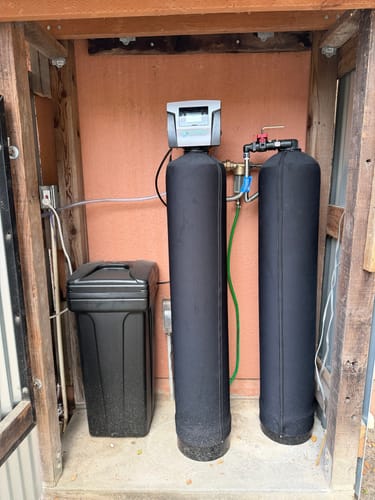
Choosing the right filter size comes down to two numbers: your household size and your iron levels. For large homes housing 6-8 people with iron levels under 2 ppm, a 2.0 cubic foot system is your benchmark.
Two numbers determine your ideal filter size: your household size and your iron levels.
It's also the right call if your flow rate hits 10 GPM—anything less and you're risking pressure drops and inconsistent water quality.
Here's where it gets critical: once iron levels exceed 2 ppm, smaller 1.0 or 1.5 cubic foot units struggle, effectively serving only 1-2 people.
Don't guess your flow rate—run a bucket test first. And before finalizing your choice, check your water's pH.
FOBS/FOC systems need at least 6.8, while FOK models handle levels as low as 6.0.
How pH and Pipe Size Determine Which Iron Filter You Can Install
Once you've locked in the right filter size, two more factors will make or break your installation: your water's pH and your existing pipe size.
pH dictates which system you can even run. FOBS and FOC systems demand a minimum pH of 6.8, while FOK systems tolerate levels as low as 6.0.
Drop below those thresholds and you're accelerating corrosion while gutting filtration efficiency.
Pipe size determines whether your filter can actually deliver. We typically see large homes working with 3/4-inch, 1-inch, or 1.25-inch pipes—each affecting flow rate and pressure differently.
Mismatching your filter to the wrong pipe size creates installation headaches and compromised water delivery.
Verify both variables before selecting your system. Compatibility here isn't optional; it's the difference between a filter that performs and one that fails prematurely.
FOBS, FOC, or FOK: Which Iron Filter System Fits Your Water?
Three variables—iron concentration, household size, and pH—determine which iron filter system actually belongs in your home.
Match these wrong, and you'll underperform from day one.
Here's what drives the decision:
- FOBS/FOC systems require pH ≥ 6.8 and handle iron below 2 ppm effectively
- 1 cubic foot systems suit households of 4–6 people at 5 GPM flow rates
- FOK systems operate down to pH 6.0, making them ideal for acidic water conditions
- 2 cubic foot FOK units become necessary for 6–8 person households or higher iron concentrations
We recommend testing both iron levels and pH before committing to any system.
Skipping that step means guessing—and guessing costs you money, equipment longevity, and water quality.
How to Buy the Right Iron Filter Without Overpaying or Undersizing
Now that you know which system matches your water chemistry, the next step is buying the right size without spending more than you need to. Start by conducting a bucket test—fill a 5-gallon bucket, time it, and calculate your GPM. A 10 GPM flow rate, for example, requires a 2.0 cubic foot system.
Iron concentration matters just as much. If your levels stay below 2 ppm, a 1.0 cubic foot system handles it efficiently. Higher concentrations demand larger units.
Don't overlook pH either. FOBS and FOC systems need at least 6.8 pH, while FOK systems tolerate down to 6.0.
Test your water regularly—skipping this step risks clogs, system failures, and costly repairs that proper sizing would've prevented.
Frequently Asked Questions
How Long Does an Iron Filter Typically Last Before Needing Replacement?
Most iron filters last 10–15 years when we maintain them properly. We'll extend their lifespan considerably by backwashing regularly, monitoring resin condition, and replacing worn components like control valves before they compromise the system's performance.
Can an Iron Filter Remove Other Contaminants Like Manganese or Sulfur?
Many iron filters also tackle manganese and hydrogen sulfide (that rotten-egg sulfur smell). We recommend choosing a multi-media or oxidizing filter system specifically rated for all three contaminants you're battling.
What Maintenance Tasks Are Required to Keep an Iron Filter Running Efficiently?
To keep your iron filter running efficiently, we recommend you regularly backwash the system, replenish oxidizing agents like potassium permanganate, inspect filter media annually, clean injectors, and monitor water pressure—these steps'll maximize performance and extend your system's lifespan.
Will an Iron Filter Affect Water Pressure Throughout My Large Home?
Yes, a poorly sized iron filter can reduce your pressure—but when we match the filter's flow rate to your home's demand, you'll maintain strong, consistent pressure at every tap.
Are Iron Filters Safe for Homes Using Well Water With Bacteria Present?
We don't recommend relying solely on an iron filter when bacteria's present—it won't disinfect your water. You'll want to pair it with a UV purifier or chlorination system for complete, safe treatment.






