


![SoftPro™ Chlorine+ Carbon Whole House Water Filter to Remove PFAS, Chlorine, Chloramine & Pesticides [City Water Filters Series]](http://www.softprowatersystems.com/cdn/shop/files/SoftPro_Whole_House_Carbon_Filter_with_Spin_Down_Water_Filter.webp?v=1783547361&width=140)


 855-683-8488


Iron Filter for Hydrogen Sulfide Sulfur Odor Removal: How AIO Technology Eliminates H2S

If your water smells like rotten eggs, hydrogen sulfide is the culprit. It forms when sulfur bacteria break down organic matter in groundwater, and concentrations as low as 0.5 ppm can make your water nearly unbearable. AIO systems tackle this without harsh chemicals by injecting air directly into the water, oxidizing that smelly gas into odorless sulfur particles that a filter media bed then captures. Stick around, and we'll show you exactly how to choose and maintain the right system for your water.
Key Takeaways
- AIO systems inject air into water, causing hydrogen sulfide to oxidize and convert into odorless sulfur particles captured by filter media.
- Dissolved oxygen drives the oxidation process, eliminating sulfur odors without requiring harsh chemicals or additives.
- System sizing matters; units handle up to 8 ppm H2S, with larger 2 Cu. Ft. models managing heavier contamination at 12 GPM.
- Catalytic Carbon and Katalox Light are ideal filter media choices for effectively targeting and removing hydrogen sulfide odors.
- Daily backwashing and maintaining water pH above 6.8 are essential for sustaining optimal H2S removal efficiency.
What Is Hydrogen Sulfide and Why Does Your Water Smell?

Hydrogen sulfide — that rotten egg smell wafting from your faucet — is a colorless gas that naturally forms when organic matter decomposes or sulfur bacteria thrive in groundwater.
That unmistakable rotten egg smell from your tap? It's hydrogen sulfide — formed when organic matter decomposes in groundwater.
It also originates from volcanic activity and mineral springs, making it a widespread water quality challenge.
In your water supply, concentrations typically range from 0.5 to 5 ppm, though higher levels intensify that unmistakable odor considerably. Beyond the smell, hydrogen sulfide affects taste and quietly corrodes your plumbing, fixtures, and appliances — damage that compounds expensively over time.
At elevated concentrations, it's not just unpleasant — it's a genuine health concern, irritating your eyes, skin, mucous membranes, and respiratory system.
Understanding what you're dealing with is the first step toward eliminating it decisively.
How AIO Systems Actually Get Rid of Sulfur Smell
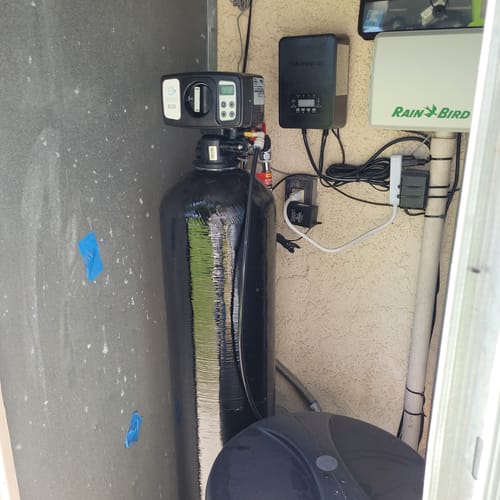
When sulfur-laden water enters an AIO (Air Injection Oxidizing) system, something elegantly simple happens — the dissolved gas collides with a pressurized air pocket inside the tank, triggering an oxidation reaction that transforms smelly hydrogen sulfide into odorless sulfur particles. Those particles then precipitate and get captured by the filter media bed.
| Stage | What Happens |
|---|---|
| Oxidation | Air pocket neutralizes H2S up to 8 ppm |
| Filtration | Media bed traps sulfur particles |
| Backwash | Daily flush purges accumulated sulfur |
We love this process because it requires zero harsh chemicals. Dissolved oxygen does the heavy lifting, protecting your fixtures from staining while delivering genuinely cleaner water — proof that the most effective solutions are often the most straightforward ones.
What H2S Level Requires Which AIO System Size?
Matching the right AIO system size to your H2S levels isn't guesswork — it's the difference between water that smells clean and water that still reeks after treatment. AIO systems handle H2S up to 8 ppm effectively, but only when properly sized.
We recommend thinking in increments: for roughly every 5 ppm of H2S present, you'll likely need to step up system capacity. Lighter contamination pairs well with smaller units running at 6 GPM service flow rates. Heavier concentrations demand 2 Cu. Ft. models capable of handling up to 12 GPM while managing increased backwash demands.
An undersized system doesn't just underperform — it overloads, shortening equipment life. Test your water first, then match capacity precisely to what's actually in it.
Which Filter Media Works Best Inside an AIO Sulfur Filter?
Not all filter media are created equal, and choosing the wrong one for your AIO sulfur filter means living with odors and contamination that shouldn't survive treatment.
We recommend matching media to your specific water chemistry after proper testing.
BIRM excels at iron removal but demands a minimum pH of 6.8—drop below that threshold, and performance collapses.
Catalytic Carbon targets hydrogen sulfide directly, eliminating that unmistakable rotten egg smell.
When you're dealing with both problems simultaneously, Katalox Light becomes your strongest option, handling sulfur concentrations up to 8 ppm and iron up to 7 ppm.
Don't guess—test first.
The right media selection, backed by accurate water quality data, determines whether your system actually solves the problem or merely delays it.
How to Maintain Your AIO System for Consistent H2S Removal
Keeping your AIO system running at peak performance comes down to a few non-negotiable habits. First, backwash daily—don't skip it. Iron accumulates fast, and without regular flushing, your H2S removal efficiency drops quickly. Most systems hit their stride on a three-day cycle, but daily backwashing keeps things consistent.
Next, monitor your pH. Below 6.8, the system struggles to eliminate sulfur odors effectively. Test your source water regularly to confirm contaminant levels stay within the system's 8 ppm H2S capacity, and verify you're running the right media for your specific conditions.
Finally, schedule annual maintenance checks. Air injection components wear down, and even small leaks compromise the oxidation process entirely. Replacing key parts yearly protects your investment and guarantees the air pocket regenerates properly every single cycle.
Frequently Asked Questions
What Is the Purpose of the Iron Removal Filter?
We've designed our iron removal filter to eliminate dissolved iron and hydrogen sulfide from your water, tackling stubborn stains, rust buildup, and that dreaded "rotten egg" odor—restoring clean, fresh-tasting water throughout your home.
Do Brita Filters Remove Hydrogen Sulfide?
Brita filters don't remove hydrogen sulfide. They're designed for chlorine, taste, and sediment reduction. For that stubborn rotten egg odor, we need a dedicated AIO system, which oxidizes H2S into filterable solids effectively.
What Kind of Filter Gets Rid of Sulfur Smell?
We've found that Air Injection Oxidizing (AIO) filters are your best weapon against sulfur smell. They eliminate up to 8 ppm of hydrogen sulfide using oxygen infusion—no harsh chemicals needed, just clean, odor-free water daily.
What Filters Remove Hydrogen Sulfide?
We've found that AIO filtration systems, like the Nelsen AIO and SoftPro Iron Filter, effectively remove hydrogen sulfide. They use air injection oxidation to eliminate H2S odors up to 8 ppm without harsh chemicals.






