


![SoftPro™ Chlorine+ Carbon Whole House Water Filter to Remove PFAS, Chlorine, Chloramine & Pesticides [City Water Filters Series]](http://www.softprowatersystems.com/cdn/shop/files/SoftPro_Whole_House_Carbon_Filter_with_Spin_Down_Water_Filter.webp?v=1783547361&width=140)


 855-683-8488


Iron Filter Inlet and Outlet Pipe Size Guide: How to Match Your Filter to Your Home's Plumbing

Matching your iron filter's inlet and outlet pipe size to your home's plumbing is simpler than it sounds, and getting it right means the difference between strong, clean water flow and frustrating pressure drops. Most homes use either 1/2 inch or 3/4 inch pipes, and your filter's ports need to match exactly. Mismatched sizes choke flow, stress appliances, and leave iron in your water. Stick with us, and we'll walk you through everything you need to know.
Key Takeaways
- Most residential plumbing uses 1/2 inch or 3/4 inch pipes, and your iron filter's inlet and outlet must match exactly.
- Measure your existing water line diameter before purchasing a filter to avoid costly sizing mistakes.
- Match filter ports directly to pipe size: 1/2 inch pipes need 1/2 inch ports, 3/4 inch pipes need 3/4 inch ports.
- For 1 inch water lines, use coupling fittings; consult a plumber when dealing with mixed pipe sizes.
- Mismatched port sizes restrict water flow, reduce pressure, and leave iron unfiltered in your water supply.
What Pipe Size Does Your Home's Plumbing Use?

When it comes to choosing the right iron filter, knowing your home's pipe size is the first thing we need to nail down. Most residential systems run on either 1/2 inch or 3/4 inch pipes, with 3/4 inch dominating main supply lines because it delivers higher flow rates where it counts most.
Here's why this matters: your iron filter's inlet and outlet sizes must match your existing plumbing. Mismatched sizes choke your flow, tank your water pressure, and force high-demand appliances to work harder than they should—accelerating wear and degrading performance over time.
Before purchasing any filter, check the manufacturer's specifications against your actual pipe diameter. Getting this right upfront saves you from costly headaches and guarantees your system performs at its peak from day one.
What the Inlet and Outlet Numbers on Your Iron Filter Mean
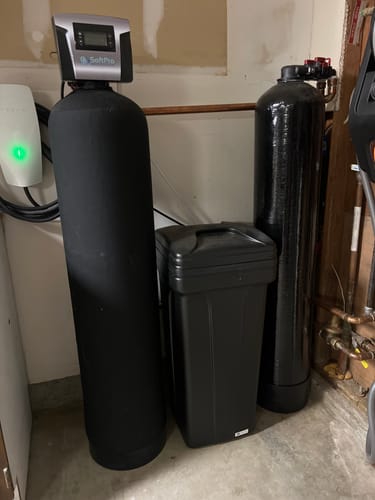
Those two numbers stamped on your iron filter's inlet and outlet ports are telling you exactly what pipe size you need to make a clean connection to your home's plumbing. They represent pipe diameter in inches—most commonly 1/2 inch or 3/4 inch—and they're non-negotiable if you want your system performing at full capacity.
Here's why it matters: when you mismatch those port sizes with your existing plumbing, you're creating pressure drops that choke water flow and compromise filtration efficiency. Your filter can't do its job properly under those conditions.
Mismatched port sizes create pressure drops that strangle water flow and leave your filtration system unable to perform.
Always cross-reference these numbers against the manufacturer's specifications for your specific model before purchasing any fittings.
Getting this right from the start saves you from troubleshooting performance problems that were entirely preventable.
How to Match Your Pipe Size to the Right Iron Filter Connection
Matching your pipe size to the right iron filter connection comes down to one straightforward measurement: your home's existing water line diameter. Measure it, then match it to your filter's port size—simple as that.
Most residential systems run either 3/4" or 1/2" lines. Mismatching creates pressure drops, starved appliances, and wasted money.
| Water Line Size | Recommended Filter Port |
|---|---|
| 1/2 inch | 1/2 inch port |
| 3/4 inch | 3/4 inch port |
| 1 inch | Use coupling fittings |
| Mixed sizes | Consult a plumber |
| Unknown | Measure before purchasing |
When in doubt, consult the manufacturer's specs or a plumbing professional. Getting this right the first time protects your system's efficiency and keeps every appliance performing at full capacity.
How Iron Filter Adapters Affect Water Pressure
Adapter size directly controls how freely water moves through your iron filter—and the wrong choice quietly sabotages pressure throughout your whole home.
When inlet and outlet sizes don't match your existing plumbing, you create flow restrictions that starve downstream fixtures and appliances. We've seen homeowners puzzled by weak espresso machines or sluggish dishwashers, only to discover the culprit was a mismatched adapter shrinking their pipe diameter.
Mismatched adapters shrink your pipe diameter—and suddenly your espresso machine and dishwasher are paying the price.
Dropping to a smaller fitting limits water volume, and that loss compounds fast. Keeping adapter sizes consistent with your home's plumbing maintains the pressure and flow your household actually demands.
We recommend monitoring pressure regularly after installation—it's the clearest early signal that something's misaligned before the problem escalates into real performance damage.
Pipe Size Mistakes That Wreck Iron Filter Performance
Getting adapter sizing right protects your pressure, but there's a whole category of pipe size mistakes that go beyond adapters and quietly destroy your iron filter's ability to do its job.
Mismatched inlet and outlet sizes are the biggest culprits. When you mix different port sizes, you create pressure drops that gut your filtration performance. Use fittings that are too small, and you'll strangle water flow, leaving iron in your water and stressing your system.
Here's what surprises most people: going too large causes problems too. Oversized ports create turbulence and flow loss, neutralizing your filter's effectiveness entirely.
We always recommend matching your pipe sizes exactly to manufacturer specifications and regularly testing your pressure and flow rates. Those numbers tell you immediately when something's wrong.
Frequently Asked Questions
What Size Iron Filter Do I Need?
We recommend a 1.0 cubic foot system if you've got 4-6 people and iron below 2 ppm. For 6-8 people or higher iron levels, upgrade to a 2.0 cubic foot system for reliable performance.
What Is the Most Common Home Furnace Filter Size?
The most common home furnace filter sizes we see are 16x20, 20x20, and 16x25 inches. Getting the right size matters because it prevents air leakage, keeps your system running efficiently, and extends your furnace's lifespan.
What Is Better, 5 Microns or 40 Microns?
We recommend 5 microns for iron filtration—it's superior at capturing fine iron particles that compromise your water quality. While it reduces flow slightly, the payoff is considerably cleaner, better-tasting water throughout your home.
How to Determine Filter Size?
We'll determine filter size by measuring your flow rate with a bucket test, analyzing iron concentration, evaluating daily usage patterns, and checking your incoming water line size for proper compatibility.






