


![SoftPro™ Chlorine+ Carbon Whole House Water Filter to Remove PFAS, Chlorine, Chloramine & Pesticides [City Water Filters Series]](http://www.softprowatersystems.com/cdn/shop/files/SoftPro_Whole_House_Carbon_Filter_with_Spin_Down_Water_Filter.webp?v=1783547361&width=140)


 855-683-8488


Iron Filter Installation and Existing Home Plumbing Compatibility: What to Check Before You Begin

Before installing an iron filter, we need to confirm your home's plumbing can actually support it. Water pressure must fall between 30 and 125 psi, and your pipes should be PVC, copper, or PEX to prevent leaks. You'll also need proper drainage, adequate clearance, and a nearby 110V outlet. Getting these details right upfront saves you from costly corrections down the road — and there's quite a bit more worth knowing before you begin.
Key Takeaways
- Verify water pressure falls between 30–125 psi, as readings outside this range will compromise iron filter performance and effectiveness.
- Confirm existing pipes are made of PVC, copper, or PEX to ensure compatibility and prevent leaks during installation.
- Calculate peak household flow rate to properly size the filter and avoid hydraulic blockages from undersized pipes.
- Install a dedicated backwash drain line with an air gap to prevent sewage backflow and contamination risks.
- Ensure at least 2 feet of clearance around the filter site and a grounded 110V outlet within 10 feet.
Is Your Home's Plumbing Ready for an Iron Filter?

Before we plunge into installing an iron filter, let's make sure your home's plumbing is up to the task. First, check your water pressure — it needs to fall between 30-125 psi for the filter to operate correctly. Too far outside that range, and you're fighting an uphill battle from day one.
Next, scrutinize your existing plumbing components for compatibility. Mismatched parts create inefficiencies that compound over time, turning a straightforward installation into a persistent headache.
Mismatched plumbing components don't just cause problems — they multiply them, quietly compounding into costly, persistent headaches down the line.
We also recommend evaluating your main water line carefully, identifying clean cutting points where a bypass valve can be accessed easily.
Getting these fundamentals right before you touch a single pipe saves you from costly corrections later — and sets your iron filter up for long-term success.
Iron Filter Water Pressure, Pipe Material, and Sizing Requirements
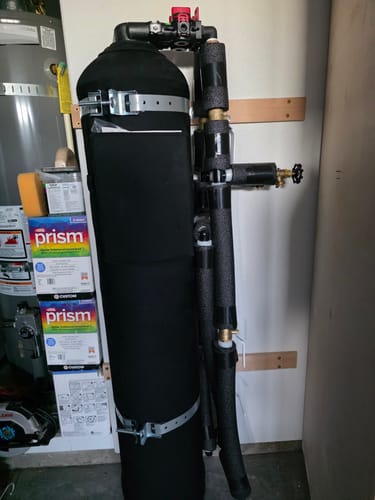
Three key factors determine whether your iron filter will thrive or struggle from day one: water pressure, pipe material compatibility, and proper sizing.
We've seen installations fail simply because one element was overlooked.
Keep your pressure between 30-125 psi—too low starves the filtration process, too high strains the system.
Next, confirm your existing pipes are PVC, copper, or PEX, since mismatched materials invite leaks that undermine everything you've invested in.
Sizing matters more than most homeowners realize.
Calculate your household's peak flow rate demands before selecting a filter, especially in high-usage homes.
Undersized pipes create hydraulic blockages that cripple filter performance.
Don't forget a dedicated backwash drain line with a proper air gap—it's non-negotiable for preventing sewage contamination during operation.
Clearance, Drainage, and Electrical Access Your Iron Filter Needs
Once you've nailed down pressure, pipe material, and sizing, the physical setup of your installation site becomes the next thing that'll make or break your filter's long-term performance.
Keep at least 2 feet of clearance around the unit so maintenance stays manageable. Your backwash drain line needs an air gap—without it, sewage backflow becomes a real risk.
Before committing to a location, verify your drainage system can actually handle backwash discharge volume without overflowing or clogging. We've seen homeowners skip this step and regret it fast.
Verify your drainage can handle backwash discharge volume before committing to a location—skipping this step leads to fast regret.
Finally, you'll need a grounded 110V outlet within 10 feet to power the control valve safely.
Get these four elements right, and your filter operates cleanly, efficiently, and without costly surprises down the road.
The Right Location to Install an Iron Filter in Your Home
Four decisions about location will determine whether your iron filter runs smoothly for years or becomes a maintenance headache from day one.
First, install it at your home's main water entry point so every drop gets treated before reaching your fixtures.
Second, confirm your water pressure reads between 30–125 psi there—outside that range, performance suffers.
Third, choose a dry area protected from flooding; moisture destroys filtration components faster than hard water ever could.
Fourth, position the unit within 10 feet of a 110V outlet to power the control panel without awkward wiring workarounds.
Nail these four location factors, and you've eliminated most of the problems we see homeowners troubleshoot later.
Get them wrong, and you'll revisit this decision repeatedly.
When Your Plumbing Makes Iron Filter Installation Impractical
Even when you've nailed the perfect location, your existing plumbing can still shut the whole project down. We've seen it happen repeatedly—homeowners invest in quality iron filters only to discover their infrastructure can't support them.
Here's what disqualifies a system:
| Plumbing Issue | Why It's Problematic |
|---|---|
| Pressure below 30 psi or above 125 psi | Cripples filter performance |
| Corroded or scaled aging pipes | Restricts flow, kills efficiency |
| Mismatched pipe sizes or materials | Creates hydraulic blockages |
| Clearance under 2 feet around unit | Prevents proper maintenance access |
| Code non-compliance | Risks failed inspections or legal issues |
Identifying these dealbreakers early saves you from costly mistakes. Before purchasing anything, audit your pressure readings, inspect pipe conditions, measure clearance, and verify local code requirements.
Frequently Asked Questions
What Is the Correct Order for Water Treatment?
We'll start with sediment filtration, then carbon filtration, reverse osmosis, and an iron filter. Next, we'll add UV disinfection, and finally, we'll balance pH and remineralize for ideal taste and safety.
Do You Need a Water Softener if You Have an Iron Filter?
Not necessarily—it depends on your water's hardness levels. If you've got high calcium and magnesium alongside iron, you'll likely need both systems to prevent scaling and achieve truly thorough water treatment.
Do You Install Iron Filter or Softener First?
We always install the iron filter first, then the softener. This order protects your softener's resin beads from iron buildup, extending its lifespan and ensuring both systems perform at their absolute best.
How Often Should an Iron Filter Backwash?
We recommend backwashing your iron filter every 3-4 weeks, though higher iron concentrations may demand more frequent cycles. Watch your pressure gauge — a noticeable drop signals it's time to run that 15-20 minute backwash.






