


![SoftPro™ Chlorine+ Carbon Whole House Water Filter to Remove PFAS, Chlorine, Chloramine & Pesticides [City Water Filters Series]](http://www.softprowatersystems.com/cdn/shop/files/SoftPro_Whole_House_Carbon_Filter_with_Spin_Down_Water_Filter.webp?v=1783547361&width=140)


 855-683-8488


Iron Filter Leak at the Distributor Tube or Control Valve Tank: How to Identify and Repair It

If your iron filter's leaking, the problem usually traces back to a cracked distributor tube or a worn control valve seal. You'll notice water pooling around the tank, rust stains near fixtures, or sudden pressure drops. During regeneration, gurgling sounds are a telltale sign something's off. Catching these issues early prevents serious system damage. We've broken down exactly how to diagnose each leak source and fix it — stick around to find out how.
Key Takeaways
- Check for water pooling, rust stains, or sudden pressure drops to identify leaks at the distributor tube or control valve.
- Cracks in the distributor tube cause media contamination, inconsistent pressure, and visible particles in post-filtration water.
- Inspect control valve seals and spacer stacks for wear, as damage causes persistent, difficult-to-diagnose leaks.
- Replace worn seals or spacer stacks immediately; avoid lubricants and follow the manufacturer's manual precisely during repairs.
- If rust stains persist, particles appear, or regeneration fails repeatedly, full system replacement may be necessary.
How to Tell If Your Iron Filter Is Actually Leaking

When it comes to iron filter leaks, catching them early can save us a lot of headaches down the line.
Start by checking for water pooling around the control valve or tank — that's often our first clue of a distributor tube or valve connection failure. Notice rust stains or discoloration near fixtures? That's iron bleed-through signaling compromised seals.
We should also monitor for sudden drops in water pressure, which suggest the system's losing its containment integrity.
During regeneration cycles, listen carefully — gurgling or bubbling sounds often point to air leaks or flow disruptions.
Finally, visually inspect the distributor tube itself for cracks or disconnections. Even hairline fractures can trigger serious inefficiencies, so don't underestimate what a thorough inspection reveals.
Distributor Tube Cracks: Causes and Visual Signs
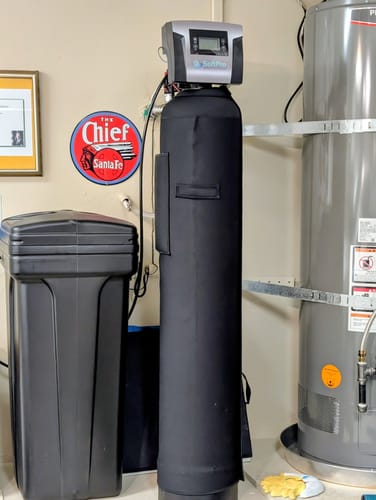
Distributor tube cracks tend to develop from two main culprits: improper installation and excessive internal pressure. Both quietly compromise your system before you even notice a problem.
Here's what to watch for:
| Visual Sign | Likely Cause | Urgency Level |
|---|---|---|
| Water pooling around tank | Crack allowing media escape | High |
| Inconsistent water pressure | Compromised flow dynamics | Medium-High |
| Visible particles post-filtration | Media mixing into water supply | High |
| Gradual pressure drops | Progressive crack expansion | Medium |
| Discolored output water | Filtration media contamination | High |
Once you spot these signs, don't delay—cracked distributor tubes require immediate replacement. Regular inspections catch early wear before it escalates into compromised water quality, protecting both your system's performance and your household's safety.
Iron Filter Control Valve Leaks: Seals, Spacers, and Pistons to Inspect
Three components inside your iron filter's control valve are responsible for most leaks you'll encounter: seals, spacers, and pistons.
Start by inspecting the seals for wear—damaged seals allow persistent leaks that won't resolve without replacement. Next, examine the spacer stacks carefully; misaligned or worn spacers create leaks that are notoriously difficult to diagnose without a close look at how they're seated.
When you reach the piston, replace it alongside the entire stack rather than swapping components individually. Mixing old and new parts invites future leakage.
We also recommend monitoring your backwash cycles and flow rates regularly—unexpected changes in performance often signal internal valve problems before visible leaking begins. Catching these early saves you from more extensive repairs down the line.
How to Repair an Iron Filter Distributor Tube or Control Valve Leak
Fixing a leak at the distributor tube or control valve starts with pinpointing exactly where the water is escaping—look for pooling around the filter tank or continuous dripping from the control valve assembly.
Once you've identified the source, inspect the distributor tube for cracks, since fractures allow water to mix with filter media, compounding your problems fast.
Cracked distributor tubes let water infiltrate filter media—turning one small problem into a much bigger, costlier mess fast.
Next, replace any worn seals or spacer stacks immediately—leaving them in place accelerates damage during normal operation.
When reassembling, skip the lubricants on seals and follow your manufacturer's manual precisely; shortcuts here cost you later.
Regular inspections of control valves and air injection integrity aren't optional—they're what separates a system that lasts from one that constantly fails.
Stay proactive, and you'll dramatically extend your iron filter's lifespan.
Signs the Iron Filter Tank or Valve Is Beyond Repair
When an iron filter starts showing certain warning signs, we need to recognize that repairs may no longer cut it.
Persistent rust stains on fixtures and laundry often mean the filter media's exhausted beyond recovery. If you're noticing water pooling around the tanks, a distributor tube or control valve may have sustained irreparable damage.
A significant pressure drop signals clogged filtration beds that simply can't perform anymore. Watch for regeneration failures too — if the system isn't cycling every 2-3 days, internal damage has likely progressed too far for repairs to restore functionality.
Finally, a strong metallic taste or visible particles in your water means iron's bypassing the filter entirely. At that point, replacement isn't just recommended — it's necessary.
Frequently Asked Questions
How Often Should an Iron Filter Regenerate?
We recommend regenerating your iron filter every 2-3 days for peak performance. Heavy usage or high iron concentrations may demand more frequent cycles, so monitor your water quality closely and adjust accordingly to maintain ideal filtration efficiency.
How Do I Stop My Filter From Leaking?
We'll tackle your leak by inspecting the distributor tube for cracks, ensuring seals and pistons are secure, cleaning mineral buildup from the control valve, and monitoring air injection levels. Persistent leaks? Let's bring in a professional.
Why Is My Iron Filter Not Working?
Your iron filter's likely failing due to worn seals, a cracked distributor tube, or air disrupting the media. These issues cause leaks, poor filtration, rust stains, and odors—all signs it's time we dig deeper for repairs.
Why Does My Iron Filter Keep Draining?
Your iron filter keeps draining due to cracked distributor tubes, worn control valve seals, loose spacer stacks, or trapped air lifting media into the control head—each flaw disrupts water retention and triggers continuous, unwanted drainage.






