


![SoftPro Chlorine+ Carbon Whole House Water Filter to Remove PFAS, Chlorine, Chloramine & Pesticides [City Water Filters Series]](http://www.softprowatersystems.com/cdn/shop/files/SoftPro_Whole_House_Carbon_Filter_with_Spin_Down_Water_Filter.webp?v=1780515157&width=140)
![SoftPro Iron Filter - Iron Master AIO - Best Iron Filter for Well Water [Air Injected Water Filter / Katalox]](http://www.softprowatersystems.com/cdn/shop/files/SoftPro_AIO_Iron_Master_Iron_Filter_Main.webp?v=1772123747&width=140)


 855-683-8488


Iron Filter Leaking or Dripping From the Bottom of the Tank: Here's Exactly What to Do

If your iron filter is leaking from the bottom, don't panic—but don't ignore it either. The most common culprits are worn O-rings, damaged seals, faulty gaskets, or a malfunctioning ball-cock shut-off assembly. Sometimes a missing ferrule in a hose adapter is all it takes to cause a steady drip. We'll walk you through exactly how to identify the source, fix it yourself, and know when it's time to call in a professional.
Key Takeaways
- Inspect the bottom of the tank for worn O-rings, cracked seals, or damaged gaskets, as these are the most common leak sources.
- Shut off the water supply and relieve system pressure before attempting any repairs or component replacements.
- Check the ball-cock shut-off assembly for malfunctions, as a faulty valve can cause persistent dripping from the tank.
- Replace any defective ferrules, hose adapters, or seals, then reassemble all components securely to restore watertight integrity.
- If leaks persist after repairs, consult a professional, as repeated failures may indicate the unit needs full replacement.
Why Your Iron Filter Is Leaking From the Bottom

When your iron filter is leaking from the bottom, a few usual suspects are worth checking first. Defective seals, gaskets, or poorly installed O-rings are common culprits—they lose their watertight integrity over time and let water escape.
A malfunctioning ball-cock shut-off assembly is another likely cause; if it can't stop water flow when the tank reaches capacity, pressure builds and leaks follow.
Overfilling the potassium permanganate tank creates excessive pressure that forces water out through connection points at the base. Missing or damaged ferrules inside hose adapters also let water slip past the fittings.
The good news? Catching these issues early is straightforward. Regular inspections of every connection, seal, and fitting keep small problems from turning into costly repairs.
The Most Common Causes of Iron Filter Tank Leaks
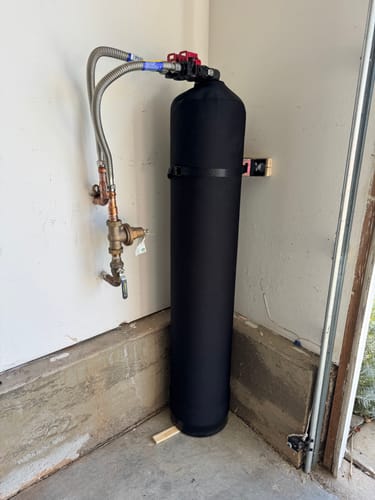
The tank itself is often where the real trouble begins. Let's break down what's actually causing the leak so you can target the fix correctly.
Defective seals or gaskets are the most frequent culprits. When they fail, water escapes under pressure — fast.
Misaligned components create gaps between the tank and valve assembly, and even slight misalignment lets water push through.
Worn connections — hose adapters, compression fittings — degrade over time and need inspection before they become bigger problems.
Overfilling chemicals builds excess pressure inside the tank, straining the housing and seals until something gives.
Corrosion or cracking in the tank material itself signals serious structural failure, often requiring full replacement rather than a simple patch.
Identifying which cause applies to your system determines everything that follows.
How to Fix a Leaking Iron Filter: Step-by-Step
Fixing a leaking iron filter doesn't require a plumber — it just requires working through the problem systematically.
- Identify the source — Visually inspect hoses, connections, and o-rings for damage, wear, or misalignment before touching anything.
- Shut everything down — Turn off the water supply and relieve system pressure so you're working safely.
- Replace and reassemble — Swap out worn seals, gaskets, or o-rings, lubricating them with petroleum jelly for a tight seal.
Check the ball-cock shut-off assembly for malfunctions and replace it if needed.
Once reassembled, tighten every connection securely and clear any debris before restoring water flow.
Most leaks trace back to degraded components — catching them early saves us from costly water damage down the line.
O-Rings, Valves, and Seals: Parts That Fail First
O-rings crack first. Constant water exposure, pressure cycling, and chemical contact degrade their elasticity faster than any other component. Lubricating them with silicone-based grease greatly extends their life.
Valves — especially the ball-cock shut-off assembly — are next. They endure mechanical stress every regeneration cycle, making them reliable failure candidates worth inspecting regularly.
Seals and gaskets follow, quietly degrading beneath the tank until leakage becomes unavoidable.
Don't overlook hose adapters and ferrules either. Routine inspection of every connection point catches micro-failures before they escalate into the kind of damage that demands costly repairs.
When Your Iron Filter Leak Needs a Professional
Sometimes a leaking iron filter outpaces what DIY repairs can handle. When that happens, calling a professional isn't admitting defeat—it's making a smart, strategic decision.
Here's when you should stop troubleshooting alone:
- Persistent dripping at the tank's bottom suggests worn gaskets, seals, or a failing ball-cock shut-off assembly requiring expert diagnosis.
- Air accumulation or improper valve functionality creates complex leak scenarios that professionals identify faster and more accurately.
- Connections, couplings, and hoses throughout the system need thorough evaluation—not just surface-level inspection.
A technician also helps you answer the critical cost question: repair or replace? When leaks keep returning after multiple fixes, investing in a new unit often wins.
Professionals give you that clarity quickly.
Frequently Asked Questions
How Do I Stop My Filter From Leaking?
We'll start by inspecting and replacing worn seals and gaskets, tightening all fittings, and cleaning the valve assembly. If leaks persist, we'll replace the entire valve assembly for a reliable, long-term fix.
How Often Should an Iron Filter Backwash?
We recommend backwashing your iron filter every 3 to 7 days, depending on your water usage and iron concentration. Higher iron loads demand more frequent cycles to prevent clogging and maintain peak filtration performance.
How to Fix a Dripping Water Filter?
We'll fix your dripping water filter by inspecting hose adapter fittings, checking the diaphragm o-ring for wear, lubricating it with vaseline, clearing vent tube blockages, and examining the ball-cock assembly for malfunctions.
How Much Does It Cost to Fix a Water Filtration System?
Fixing a water filtration system typically costs us between $150 and $500. Minor repairs like seals run $20–$100, while labor adds $75–$150 per hour. Regular maintenance at $100–$300 annually helps us avoid bigger expenses.



