


![SoftPro™ Chlorine+ Carbon Whole House Water Filter to Remove PFAS, Chlorine, Chloramine & Pesticides [City Water Filters Series]](http://www.softprowatersystems.com/cdn/shop/files/SoftPro_Whole_House_Carbon_Filter_with_Spin_Down_Water_Filter.webp?v=1783547361&width=140)


 855-683-8488


Iron Filter Low Water Pressure After Installation: Every Cause Identified and Proven Fixes Explained

If your iron filter's dropped your flow rate, you're not alone—and it's almost always fixable. Iron filters naturally reduce pressure by 20–30%, but a clogged venturi, exhausted media, or an overdue backwash cycle can push that drop much further. We've seen systems jump from 20 L/min back to 60 L/min just by bypassing the filter, proving the unit's the culprit. Stick with us, and we'll walk you through every cause and proven fix.
Key Takeaways
- Iron filters naturally reduce water pressure by 20-30%, and a drop beyond this range signals clogged venturi, exhausted media, or overdue backwashing.
- Bypassing the iron filter and comparing flow rates—like 20 LPM versus 60 LPM—quickly confirms whether the filter causes the pressure loss.
- The venturi intentionally creates pressure drops for air injection, while a sediment-loaded filter bed compounds resistance over time without regular backwashing.
- Immediate fixes include initiating a backwash cycle, inspecting air injectors for clogs, and checking pre-filters for saturation restricting downstream flow.
- Persistent low pressure after maintenance, rusty water, or absent gurgling sounds indicate exhausted media or injector failure requiring professional diagnosis.
How to Tell If Your Iron Filter Is Killing Flow Rate

How do you know if your iron filter is the culprit behind your sluggish water pressure? Simple — bypass it. If your flow rate jumps from a frustrating 20 l/min back to a healthy 60 l/min the moment you bypass the filter, you've found your problem. That's the iron filter strangling your system.
Bypass the filter. If your flow rate jumps instantly, you've found your culprit — the iron filter is strangling your system.
Here's what's happening beneath the surface: iron filters typically cause a 20-30% pressure drop under normal conditions. That's acceptable.
But when flow rates plummet beyond that threshold, something's wrong — whether it's a clogged venturi used for air injection, exhausted filter media, or a backwashing cycle that's overdue.
Recognizing these warning signs early separates homeowners who solve problems from those who tolerate them indefinitely.
6 Reasons Iron Filters Cause Low Flow After Installation
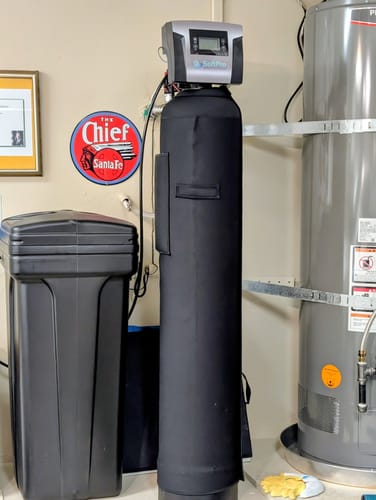
Once we've confirmed the iron filter is the problem, the next logical question is why — and the answers might surprise you. Iron filters typically cause a 20-30% pressure drop right out of the gate. That alone can push flow rates from 60+ LPM down to a painful 20 LPM.
Here's what's compounding things: venturi components inside the filter demand extra force for air injection, stealing even more pressure from your system.
Add an undersized or partially clogged filter into the mix, and resistance builds fast.
Neglected maintenance makes everything worse. Without regular backwashing and media monitoring, restriction accumulates quietly until your water supply becomes genuinely inadequate.
These aren't random failures — they're predictable, interconnected causes that we can systematically eliminate.
What's Actually Happening Inside Your Venturi and Filter Bed
Two things are silently working against your water pressure the moment an iron filter goes online: the venturi and the filter bed.
The venturi deliberately creates a pressure drop—that's how it pulls air into the system to oxidize iron. It's doing exactly what it's designed to do, but you're feeling that trade-off at every faucet.
Now add a filter bed that's accumulating iron sediment with every gallon it processes, and resistance compounds quickly. Without consistent backwashing and media rejuvenation, that bed becomes a wall rather than a filter.
When both problems run simultaneously—a restrictive venturi plus a sediment-loaded bed—your drawdown capacity shrinks, tank volume becomes irrelevant, and household demand starts winning the battle against your system.
How to Fix Iron Filter Flow Rate Without Replacing the System
Now that we recognize what's creating the problem, let's talk about fixing it—without tearing out the system and starting over.
Start with a backwash cycle—it's often the fastest win, clearing trapped particles and restoring flow immediately.
Next, inspect your air injectors. A clogged injector quietly kills performance, triggering sulfur smells and pressure drops that feel like system failure but aren't.
If your venturi's hammering pressure, remove it temporarily or replace it with a compressor for cleaner air injection.
Don't overlook your pre-filters either—a saturated pre-filter chokes everything downstream.
Finally, consider potassium permanganate or hydrogen peroxide as oxidation boosters. These additives sharpen iron removal efficiency without touching your existing infrastructure.
Small, strategic interventions compound fast when you know exactly where to apply them.
When Low Flow After an Iron Filter Needs a Professional
Sometimes DIY fixes hit a wall, and that's when you know it's time to call in a professional. If backwashing and component inspections haven't restored your flow rates, something deeper is wrong.
When pressure drops from 60 LPM to 20 LPM and stays there, that's not a maintenance issue—that's a system problem.
Rusty water persisting after proper maintenance suggests exhausted filter media or a failing air injector.
No gurgling sounds during regeneration cycles? Your injectors are likely clogged beyond what a basic cleaning can fix.
Professionals bring diagnostic tools and expertise that reveal restrictions invisible to the untrained eye.
More importantly, they guarantee any replacements or upgrades maintain full compatibility with your existing system—protecting both performance and your investment long-term.
Frequently Asked Questions
Why Is My Water Pressure Low After Installing a Water Filter?
Your new iron filter's likely causing that pressure drop—it's normal to see a 20-30% reduction. We've found clogged media, restricted bypass valves, or sediment buildup in pre-filters are the usual culprits stealing your flow.
What Are Common Problems With Iron Filters?
We've seen iron filters plagued by rusty water, sulfur smells, clogged air injectors, exhausted filter media, and significant pressure drops—sometimes 20-30%—all stemming from neglected maintenance or improper backwashing procedures that silently compromise your system's performance.
What Is the Most Common Cause of Low Water Pressure?
We've found the most common culprit is a significant pressure drop of 20-30%, caused by restrictions the filter and its venturi components create, slashing flow rates from 60+ liters per minute down to just 20.
How to Get Your Water Pressure Back Up?
We'll start by backwashing the iron filter, then inspect and replace any clogged pre-filters. If pressure's still low, we'll bypass the venturi or add an air compressor to restore ideal flow.






