


![SoftPro™ Chlorine+ Carbon Whole House Water Filter to Remove PFAS, Chlorine, Chloramine & Pesticides [City Water Filters Series]](http://www.softprowatersystems.com/cdn/shop/files/SoftPro_Whole_House_Carbon_Filter_with_Spin_Down_Water_Filter.webp?v=1783547361&width=140)


 855-683-8488


Iron Filter Low Water Pressure After Installation: How to Diagnose Every Possible Cause

If your iron filter is killing your water pressure, the culprit is usually a clogged sediment pre-filter, blocked media, or a mispositioned control valve. Trapped air and insufficient backwashing can also choke your flow. Start by bypassing the filter entirely — if pressure returns, you've confirmed the filter is your problem. Well water systems face unique challenges that city water users never deal with. Stick with us and we'll walk you through every possible cause and fix.
Key Takeaways
- Check the sediment pre-filter first, as blockages there are the most common cause of reduced water pressure after iron filter installation.
- Temporarily bypass the iron filter to determine whether the filter itself is the direct source of pressure loss.
- Perform a thorough backwash cycle, since insufficient backwashing allows iron buildup that clogs filter media and restricts flow.
- Inspect the control valve and all surrounding plumbing for scale buildup, mechanical faults, kinks, or partially closed valves.
- If pressure stays below 30 psi after all standard checks, consult a professional, as design flaws may require expert intervention.
Why Your Iron Filter Is Killing Your Water Pressure

Iron filters are a game-changer for clean water, but they can quietly strangle your home's water pressure if something goes wrong. Here's what's actually happening: as iron and other contaminants accumulate inside the filter media, they create a progressively tighter barrier that restricts flow throughout your entire system.
It's a slow suffocation your pipes can't fight back against.
But clogged media isn't the only culprit. An undersized filter struggling against high iron concentrations, a misconfigured valve, or trapped air from improper installation can all choke your pressure just as effectively.
The tricky part? Each cause produces similar symptoms but demands a completely different fix. That's why diagnosing the exact source matters before you touch anything.
The 9 Most Likely Causes of Iron Filter Pressure Loss
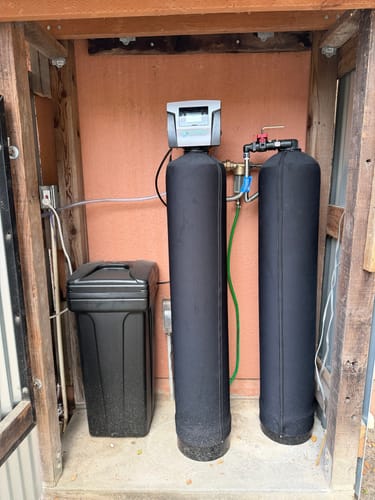
Nine distinct problems can rob your iron filter of its pressure—and most homeowners only ever suspect one.
We've seen diagnostic mistakes cost people weeks of troubleshooting. Let's eliminate every possibility systematically.
The five culprits we encounter most frequently:
- Clogged filter media from iron concentrations exceeding the system's design capacity
- Blocked sediment pre-filters restricting upstream flow before water even reaches your iron filter
- Incorrect valve positioning during installation creating hidden flow restrictions
- Trapped air in the lines generating inconsistent pressure fluctuations
- Insufficient backwashing allowing iron buildup to progressively strangle flow rates
Each problem leaves a distinct fingerprint. Monitoring pressure readings before and after your filter pinpoints exactly where performance breaks down—letting you fix the real issue rather than guessing indefinitely.
How to Diagnose the Exact Cause Step by Step
Knowing what's stealing your pressure is half the battle—actually finding it's the other half. Start with the sediment pre-filter; a clogged one restricts flow immediately and it's the easiest fix. Replace it if it looks dirty.
Next, inspect the control valve for scale buildup or mechanical faults that quietly choke water movement. Then perform a backwash following your manufacturer's instructions—trapped iron particles alone can tank your pressure.
Check your inlet and outlet plumbing for kinks or valves that aren't fully open; these get overlooked constantly. Finally, temporarily bypass the filter entirely. If pressure returns with untreated water, your filtration system is definitively the culprit.
Work through each step methodically rather than guessing—systematic diagnosis saves you time, money, and unnecessary frustration.
Why Iron Filter Pressure Fixes Differ for Well Water and City Water
Whether you're pulling water from a private well or tapping into a municipal line, the pressure problems you'll face with an iron filter aren't the same—and neither are the fixes.
Your water source shapes your pressure problems—and the right fix depends entirely on knowing which one you're dealing with.
Here's what separates the two:
- Well water saturates filter media faster due to high iron and contaminant loads.
- pH fluctuations in well water compromise filtration efficiency and accelerate pressure loss.
- City water maintains steadier pressure but chlorine buildup can quietly restrict flow.
- Sediment profiles differ—well water demands more frequent media inspections and backwashing.
- Maintenance frequency matters more for well systems; city water users prioritize chlorine and sediment monitoring.
Knowing your source isn't just helpful—it's essential. Applying a city water fix to a well water problem wastes time and money.
When Iron Filter Pressure Problems Need a Pro
Sometimes, no matter how much we troubleshoot, the problem runs deeper than a DIY fix can reach. Persistent reddish-brown stains or a metallic taste after installation means iron's bypassing your filter entirely—a clear signal something's failed mechanically.
If pressure drops below 30 psi post-installation, you're likely dealing with clogs or a fundamental design flaw that needs expert eyes.
When standard checks—inspecting sediment buildup, examining the control valve—yield nothing, stop. Continuing blind troubleshooting risks making things worse.
Complex issues like incorrect system sizing or iron bacteria contamination require tailored professional solutions, not guesswork.
And if post-installation water testing still shows poor results despite your best efforts, that's your definitive sign. A professional isn't admitting defeat—it's choosing the most efficient path to clean water.
Frequently Asked Questions
Why Is My Water Pressure Low After Installing a Water Filter?
Your low water pressure likely stems from a clogged filter media, restricted bypass valve, or improper system sizing. We recommend inspecting your sediment pre-filter, checking control valve function, and backwashing the system to restore ideal flow.
What Are Common Problems With Iron Filters?
We've seen iron filters struggle with excessive iron levels, clogged media, pH fluctuations, oversized regeneration cycles, and iron bacteria buildup. Each issue compromises filtration efficiency, reduces water pressure, and demands prompt diagnosis to restore peak performance.
What Is the Most Common Cause of Low Water Pressure?
The most common cause of low water pressure after installing an iron filter is clogged filter media. It restricts water flow, and we'll want to inspect and clean or replace it immediately.
How to Get Your Water Pressure Back Up?
We'll restore your pressure by replacing clogged pre-filters, clearing scale from the control valve, backwashing trapped particles, straightening kinked plumbing, and temporarily bypassing the system to pinpoint exactly where the pressure drop originates.






