


![SoftPro™ Chlorine+ Carbon Whole House Water Filter to Remove PFAS, Chlorine, Chloramine & Pesticides [City Water Filters Series]](http://www.softprowatersystems.com/cdn/shop/files/SoftPro_Whole_House_Carbon_Filter_with_Spin_Down_Water_Filter.webp?v=1783547361&width=140)


 855-683-8488


Iron Filter Causing Low Household Water Pressure: A Complete Troubleshooting Guide for Well Homes

If your well home's water pressure has been dropping, your iron filter is likely to blame. Over time, sediment and iron build up in the filter media, slowly restricting flow until the pressure drop becomes impossible to ignore. Filters older than six to eight years are especially vulnerable. Proper diagnosis, timely maintenance, and correct filter sizing are the keys to restoring strong pressure — and we've got everything you need to know ahead.
Key Takeaways
- Iron filters cause low water pressure through gradual sediment and iron buildup that restricts flow, often unnoticed until pressure significantly drops.
- Measure water pressure before and after the filter using a gauge; a significant pressure drop confirms the filter is the problem.
- Filter media older than six to eight years should be inspected and replaced to restore proper household water pressure.
- Undersized filters immediately restrict flow if their rating falls below your household's gallons-per-minute requirement, causing pressure issues during peak demand.
- Persistent low pressure after cleaning or media replacement signals filter failure, requiring professional assessment to determine the correct replacement solution.
Why Your Iron Filter Is Killing Your Water Pressure

If you've got an iron filter in your well system, it might actually be the culprit behind your low water pressure. Over time, sediment and iron buildup clog the filter media, restricting flow markedly.
It's a slow process, but the pressure drop becomes undeniable.
Here's what we've learned: media replacement every 6 to 8 years isn't optional—it's essential. Skip it, and you're fighting a losing battle. High iron concentrations accelerate this degradation, so testing your water regularly helps you stay ahead of failures.
We also need to evaluate filter sizing. An undersized unit simply can't handle your household's flow demands.
Start with a backwash cycle to clear obstructions, but if pressure remains low afterward, you're likely facing a deeper systemic issue.
How Iron Filters Restrict Flow Over Time
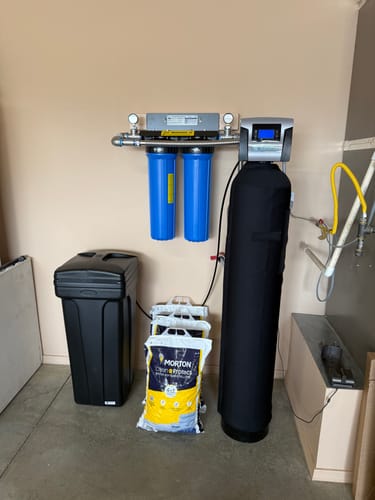
When an iron filter starts restricting flow, it's rarely a sudden event—it's a gradual process that sneaks up on you. Iron and sediment accumulate layer by layer within the filter media, slowly choking the flow path.
Iron filter restriction doesn't happen overnight—it's a slow accumulation, quietly strangling your flow before you notice.
You'll notice pressure dropping incrementally, often dismissing it as something else entirely.
Here's what's actually happening: the filter's designed flow rate parameters are being compromised. Once sediment loading exceeds the media's capacity, pressure loss accelerates. Insufficient backwashing makes this worse—trapped particles stay put instead of flushing out.
High iron concentrations speed this timeline dramatically. What might take years in a moderate-iron environment takes months in severe conditions.
Understanding this progression helps you intervene early, before restriction becomes a full-blown pressure crisis requiring costly intervention.
How to Diagnose Low Water Pressure From Your Iron Filter
Diagnosing your iron filter as the pressure culprit comes down to one straightforward test: measure the water pressure at two points—before the filter and after it. Use a simple pressure gauge on each side.
If you're seeing a significant pressure drop across the filter, you've found your problem.
What causes that drop? Usually it's sediment buildup, iron accumulation, or exhausted filter media restricting flow through the system.
If your filter's been running for six to eight years without a media replacement, that's your first suspect.
Don't stop at diagnosis, though. Consider whether your iron filter is working alongside other treatment stages.
A well-designed system maintains consistent pressure throughout. One overloaded component can quietly compromise everything downstream.
Fix It or Replace It? Repair vs. Replace Your Iron Filter
Once you've confirmed the iron filter is the pressure problem, the next question hits fast: do we fix it or replace it entirely?
Start with maintenance. If you haven't cleaned or replaced the filter media recently, do that first—these systems typically need fresh media every 6 to 8 years.
Filter media doesn't last forever—plan on replacing it every 6 to 8 years to keep things running right.
But here's where it gets telling: if pressure stays low after servicing, or if odors and staining keep returning shortly after cleaning, that's your filter signaling it's done.
Persistent symptoms mean a deeper system failure, not a simple fix.
At that point, bring in a water treatment professional. They'll assess whether repair is even viable and help you select a replacement filter that matches your household's demand and integrates cleanly with your existing plumbing.
Why the Wrong Filter Size Causes Low Pressure From the Start
Sometimes the pressure problem isn't a failing filter—it's a filter that was never right for the job. Sizing matters more than most homeowners realize, and getting it wrong creates pressure issues from day one.
Here's what happens when your filter is undersized:
- Flow restriction – A filter rated below your home's GPM requirement starves your system immediately.
- Rapid clogging – Undersized filters overwhelm quickly, accelerating pressure drop beyond normal levels.
- Peak demand failures – During high-usage moments, an insufficient filter simply can't keep up.
- Constant maintenance cycles – Frequent replacements become your new normal instead of a rare occurrence.
We recommend matching or exceeding your home's maximum flow rate. Measure your peak usage patterns first—then size accordingly.
Frequently Asked Questions
What Causes Low Water Pressure in the Whole House With a Well?
We've found that low whole-house water pressure in well systems typically stems from clogged filters, a failing pressure tank, plumbing leaks, a worn-out well pump, or an incorrectly calibrated pressure switch restricting proper flow.
How to Check Iron Filter System for Clogging?
We'll check for clogging by measuring inlet and outlet pressure, monitoring flow rates against manufacturer specs, inspecting filter media for saturation, looking for sediment buildup, and checking pre-filter cartridges for blockages that reduce performance.
How Can I Increase the Water Pressure on a Well System in My Home?
We can boost our well system's water pressure by adjusting the pressure switch to 40-60 PSI, installing a booster pump, maintaining the pressure tank, replacing clogged filters, and fixing any plumbing leaks promptly.
Is 30 Psi Too Low for Water Pressure?
Yes, 30 PSI is too low. We need at least 40-60 PSI for appliances and fixtures to work efficiently. Anything below 30 PSI signals a potential pump or pressure tank issue requiring immediate attention.






