


![SoftPro™ Chlorine+ Carbon Whole House Water Filter to Remove PFAS, Chlorine, Chloramine & Pesticides [City Water Filters Series]](http://www.softprowatersystems.com/cdn/shop/files/SoftPro_Whole_House_Carbon_Filter_with_Spin_Down_Water_Filter.webp?v=1783547361&width=140)


 855-683-8488


Iron Filter Media Clog Causing Low Water Pressure After Installation: How They're Directly Connected

When iron filter media clogs, it directly suffocates your water pressure — and we've watched flow rates collapse from 60 LPM to just 20 LPM within weeks of installation. Trapped iron and sediment build up inside the media, creating resistance that chokes incoming water. You'll notice pressure drops of 20-30% and sputtering faucets before long. Understanding exactly how this happens — and what to do about it — can save your system before things get worse.
Key Takeaways
- Clogged iron filter media increases resistance to water flow, directly causing pressure drops of 20–30% throughout the system.
- High iron and manganese concentrations exceed the media's trapping capacity, accelerating clogging and reducing water pressure after installation.
- Flow rates can plummet from 60 LPM to 20 LPM when media becomes severely clogged, losing two-thirds of delivery capacity.
- Inadequate pre-filtration allows excess sediment into the media, compounding clogging and worsening pressure loss over time.
- Undersized filters struggling with peak demand intensify media clogging, creating a direct link to sustained low water pressure.
Why Iron Filter Media Clogs in the First Place

There are 3 main culprits behind iron filter media clogging: high iron and manganese levels, excess sediment, and an undersized filter.
When iron and manganese concentrations exceed your media's trapping capacity, they accumulate until flow becomes restricted. It's a slow buildup that sneaks up on you.
When iron and manganese overwhelm your media's capacity, the buildup is gradual—until suddenly, your water pressure tells a different story.
Sediment compounds the problem fast.
If your pre-filtration is inadequate, particulate matter floods the media, and in high-turbidity environments, clogging can happen within weeks of installation.
Then there's filter sizing.
An undersized filter simply can't handle your home's peak flow demand or contaminant load, making it far more vulnerable to premature clogging.
Understanding these three factors isn't just helpful—it's essential for diagnosing why your water pressure dropped and what you need to fix it.
How Iron Filter Media Clogs Cut Your Water Pressure
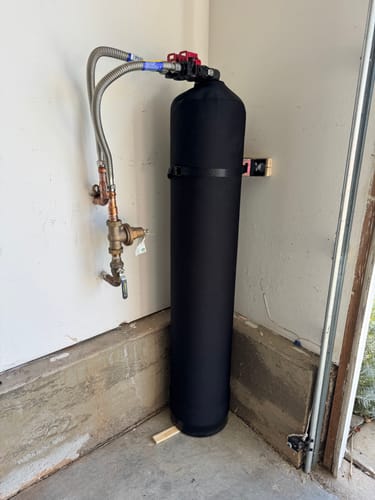
Now that we comprehend what causes iron filter media to clog, let's look at what that clogging actually does to your water pressure. When media clogs, it creates excessive resistance against incoming water, triggering a 20-30% pressure drop throughout your entire system.
We've seen flow rates plummet from a healthy 60 LPM down to a frustrating 20 LPM — that's two-thirds of your water delivery simply gone.
That pressure loss doesn't stay isolated in your filter. It ripples outward, degrading appliance performance across your home. Your dishwasher struggles, your shower disappoints, your washing machine labors.
Monitoring your flow rates and pressure readings gives you the early warning you need. Once you spot that drop, act immediately — waiting only compounds the damage.
Warning Signs Your Iron Filter Media Is Clogged
How do you know when your iron filter media is crying out for attention?
We've seen these warning signs show up consistently, and catching them early saves you from bigger headaches down the road.
Watch for these red flags:
- Pressure drops of 20-30% signal iron accumulation inside your media
- Flow rates plummeting from 60 LPM to 20 LPM mean filtration performance is compromised
- Increased backwashing frequency indicates your system's struggling to self-clean
- Sputtering or surging faucets reveal air locks caused by blockage buildup
- Consistent pressure readings 3-5 psi below normal confirm your media's approaching full clog status
Don't dismiss these signals.
Each one tells a specific story about what's happening inside your filtration system.
How to Backwash Iron Filter Media and Restore Pressure
Once you've spotted those warning signs, the fix is often simpler than you'd think — backwashing your iron filter media can restore pressure and get your system performing like new again.
Switch your system to backwash mode, targeting a flow rate of 5-10 GPM, and let it run for 10-15 minutes.
Set your system to backwash mode at 5-10 GPM and let it run for 10-15 minutes.
Watch your pressure gauge — a noticeable drop means the media's releasing trapped iron particles and debris.
After backwashing, rinse for another 5-10 minutes to flush out residuals before returning the system to service.
To stay ahead of future clogs, we recommend backwashing every 1-3 weeks, adjusting based on your water's iron concentration.
Consistency here is everything — regular backwashing prevents long-term pressure loss and keeps your system running efficiently.
When to Replace Iron Filter Media Instead of Backwashing
Backwashing is a powerful maintenance tool, but it has its limits — and knowing when to replace your iron filter media instead can save you from chasing a pressure problem that simply won't go away.
Here's when replacement beats backwashing every time:
- Pressure drops 20–30% consistently, even after backwashing
- Backwashing no longer improves flow rate after multiple cycles
- Flow rate decreases more than 15% compared to post-installation baselines
- Iron concentrations exceed 0.3 ppm, accelerating media saturation faster than expected
- Media has been in service 3–5 years without replacement
Once your media hits exhaustion, no amount of backwashing recovers its capacity.
Recognizing these thresholds early keeps your system performing and prevents you from misdiagnosing a replacement problem as a maintenance problem.
Frequently Asked Questions
Why Is My Water Pressure Low After Installing a Water Filter?
Your new iron filter's media creates resistance that slows water flow—that's normal! We've seen pressure drop 20-30% post-installation. Check your filter's orientation, monitor pressure gauges on both sides, and replace clogged cartridges regularly.
Can a Clogged Sediment Filter Cause Low Water Pressure?
Yes, a clogged sediment filter absolutely causes low water pressure. Once it's saturated with particles, it creates a bottleneck, restricting flow and dropping pressure by over 3-5 psi throughout your entire home's water system.
Can a Clog Cause Low Water Pressure?
Yes, a clog absolutely causes low water pressure. When iron filter media gets blocked, it creates resistance that restricts water flow, dropping pressure by 20-30%—leaving you with weak output from every fixture.
What Are Common Problems With Iron Filters?
We've seen iron filters struggle with pressure drops, premature clogging from sediment, incorrect micron ratings, channeling in carbon filters, and neglected maintenance—all of which compromise flow rates and water quality if left unaddressed.






