


![SoftPro™ Chlorine+ Carbon Whole House Water Filter to Remove PFAS, Chlorine, Chloramine & Pesticides [City Water Filters Series]](http://www.softprowatersystems.com/cdn/shop/files/SoftPro_Whole_House_Carbon_Filter_with_Spin_Down_Water_Filter.webp?v=1783547361&width=140)


 855-683-8488


Iron Filter Not Removing Hydrogen Sulfide Sulfur Smell: The Most Common Causes and Solutions

If your iron filter isn't removing that rotten egg smell, you're likely dealing with one of five common culprits: clogged air injectors, exhausted filter media, hydrogen sulfide levels above 10 ppm, low pH water, or neglected maintenance. Each one undermines your filter's ability to oxidize and capture contaminants. The good news? Every cause has a proven fix. Stick with us and we'll walk you through exactly how to diagnose your system and restore clean, odor-free water.
Key Takeaways
- Hydrogen sulfide levels exceeding 10 ppm overwhelm standard iron filters, requiring aeration, chlorination, or activated carbon as supplementary treatment.
- Clogged air injectors disrupt the oxidation process, causing persistent rotten egg smells even when the filter is otherwise functional.
- Low pH water below 6.5 reduces filter effectiveness, necessitating an acid neutralizer before filtration can work properly.
- Exhausted filter media, typically after 5-10 years, loses contaminant capture capacity, allowing sulfur odors to return.
- Neglected maintenance causes sediment buildup, compromising filtration efficiency and worsening hydrogen sulfide removal over time.
Why Iron Filters Fail to Remove Hydrogen Sulfide Smell

When your iron filter isn't tackling that rotten egg smell, there's usually a specific reason why. Understanding these failure points helps you diagnose and fix the problem faster.
Iron filters fail for specific reasons. Knowing why helps you diagnose and fix that rotten egg smell faster.
Several culprits consistently emerge. If your hydrogen sulfide concentration exceeds 10 ppm, your iron filter simply can't keep up—you'll need alternative treatment methods.
Low pH water (below 6.5) weakens your filter's effectiveness, making an acid neutralizer necessary. Clogged air injectors disrupt the oxidation process that eliminates odors, while exhausted filter media—typically after 5-10 years—loses its contaminant-capturing capacity entirely.
Neglecting regular maintenance compounds every one of these issues. Sediment buildup from skipped backwashing cycles quietly destroys filtration efficiency.
Each cause has a solution, and we'll walk you through all of them.
The Most Common Reasons Your Sulfur Filter Stops Working
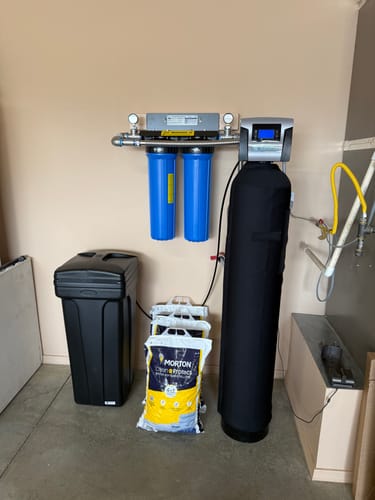
Sulfur filters don't just stop working overnight—they fail for predictable reasons that we can catch early if we recognize what to look for. Whether it's clogged air injectors, exhausted media, or low pH dragging efficiency down, each failure leaves clues.
| Failure Cause | Warning Sign |
|---|---|
| Clogged air injectors | Persistent rotten egg smell |
| Exhausted filter media | Returning rust or sulfur odors |
| Low pH (below 6.5) | Reduced filtration effectiveness |
When hydrogen sulfide exceeds 10 ppm, standard filters simply can't keep up—specialized treatment becomes necessary. Improper installation compounds every problem, turning manageable issues into system-wide failures. We recommend auditing your setup against these failure points before assuming your filter is beyond saving.
How to Tell If Your Iron Filter Is Actually Removing Sulfur
How do you actually know if your iron filter is pulling its weight against sulfur? Start with your nose — if that rotten egg smell lingers after filtration, your system's already failing the test.
But don't stop there. Get your water tested for both iron and hydrogen sulfide levels. Numbers don't lie.
If hydrogen sulfide exceeds 10 ppm or your pH dips below 6.5, your iron filter was never equipped for the job. Check your maintenance history too.
Clogged air injectors and exhausted media quietly undermine performance long before you notice the smell returning.
Think of testing as your diagnostic tool. It tells you whether you need supplementary treatment — aeration, activated carbon — or simply better upkeep of what you already have.
When to Replace Media, Resize Your System, or Add a Second Stage
Even the best iron filter has a lifespan, and ignoring the signs that yours is fading costs you more than just a bad smell.
Replace your filter media every 5–10 years, but don't wait that long if you're seeing rusty stains or persistent odors—those are your system telling you it's exhausted.
If hydrogen sulfide levels exceed 10 ppm, resizing or adding a second-stage treatment isn't optional—it's necessary.
Your current system simply wasn't built for that load.
Also, check your water's pH.
Anything below 6.5 undermines filtration efficiency and likely demands an acid neutralizer alongside your existing setup.
When routine maintenance stops moving the needle, stop guessing.
Bring in a water treatment professional and redesign the system properly.
The Best Treatment Combinations When Iron Filters Can't Beat Sulfur
When an iron filter keeps failing against hydrogen sulfide, the problem usually isn't the filter—it's the load. Sulfur above 10 ppm overwhelms standard iron filters every time. That's when smart combinations win.
| Condition | Primary Treatment | Secondary Treatment |
|---|---|---|
| Sulfur < 10 ppm, pH ≥ 6.5 | Fleck 2510AIO Air Injection | Iron Filter |
| Sulfur > 10 ppm | Aeration or Chlorination | Activated Carbon Filter |
| Clogged Air Injector | Backwash & Maintenance | Iron Filter Reset |
We've seen these layered approaches transform problem wells into clean, odor-free systems. Activated carbon paired with your iron filter targets both sulfur and iron simultaneously. Before committing to any combination, test your water thoroughly—consulting a water treatment professional guarantees you're solving the actual problem, not guessing.
Frequently Asked Questions
Will an Iron Filter Remove Sulfur Smell?
We'll tell you straight—yes, an iron filter can remove sulfur smell, but only up to 10 ppm and when your water's pH stays above 6.5. Beyond that, you'll need additional treatment.
What Neutralizes the Smell of Sulphur?
We've found that activated carbon filters, aeration systems, potassium permanganate, shock chlorination, and anode rod replacement all effectively neutralize sulfur smell by eliminating hydrogen sulfide through adsorption, oxidation, or bacterial reduction.
What Smell Is Often Associated With Hydrogen Sulfide?
We've all experienced that unmistakable "rotten egg" smell — that's hydrogen sulfide's calling card. It's detectable at concentrations as low as 0.5 mg/L in water, making it nearly impossible to ignore when it's present.
What Causes a Strong Sulphur Smell?
A strong sulfur smell's primarily caused by hydrogen sulfide gas, produced when sulfur-reducing bacteria thrive in low-oxygen environments. We're often seeing this in groundwater, where organic matter decays and bacterial activity runs rampant.






