


![SoftPro™ Chlorine+ Carbon Whole House Water Filter to Remove PFAS, Chlorine, Chloramine & Pesticides [City Water Filters Series]](http://www.softprowatersystems.com/cdn/shop/files/SoftPro_Whole_House_Carbon_Filter_with_Spin_Down_Water_Filter.webp?v=1783547361&width=140)


 855-683-8488


Iron Filter Not Removing Iron After 1 Year of Use: Is This Normal Wear or a Fixable Problem?

An iron filter that stops working after just one year isn't normal wear — it's almost always a fixable problem. Most early failures trace back to improper sizing, neglected maintenance, or incorrect regeneration settings that overwhelm the filter media. You might notice rusty laundry stains, metallic-tasting water, or dropping water pressure. These are warning signs, not death sentences for your system. Stick with us, and we'll walk you through exactly what's going wrong and how to fix it.
Key Takeaways
- Iron filter decline after one year often signals neglected maintenance, improper sizing, or incorrect regeneration programming rather than normal wear.
- Rusty stains, metallic taste, and sudden pressure drops confirm your filter is actively failing and needs immediate attention.
- Test water samples before and after the filter using kits like Hach strips to measure exactly how much iron passes through.
- DIY fixes like cleaning the venturi, unclogging the injector, and breaking salt bridges can restore filter performance quickly.
- If DIY repairs fail and repair costs approach 50% of a new system's price, professional evaluation becomes necessary.
Why Your Iron Filter Is Failing After Just One Year

Most iron filters are built to last 6-8 years, so when yours starts failing after just one year, something's clearly gone wrong.
The culprit usually falls into one of five categories: improper sizing during installation, clogged filter media from high iron concentrations, neglected maintenance routines, incorrect regeneration programming, or challenging water conditions like fluctuating pH levels.
Here's what's interesting—most of these failures aren't inevitable. They're fixable. A filter that's undersized for your household's water demand will struggle immediately.
Skip backwashing and injector cleaning, and you're accelerating that decline. Program the regeneration cycle incorrectly, and untreated iron slips right through.
Understanding which factor is driving your specific problem is exactly where we need to start.
Warning Signs Your Iron Filter Has Stopped Working
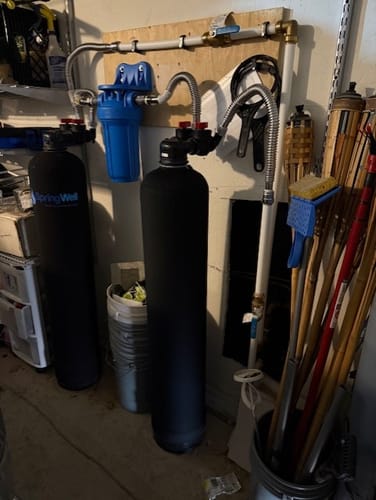
When does a slow decline become an obvious failure? Usually, your water tells you first. Rusty stains on laundry and fixtures mean untreated iron is passing straight through. A metallic taste or sulfur odor confirms the media isn't catching contaminants like it should.
Watch your water pressure too. Sudden drops often signal clogged or iron-saturated media choking the system's flow. And if your filter's running frequent backwash cycles without actually improving water quality, that's not maintenance—that's a distress signal.
We recommend combining visual inspections with actual water testing. Elevated iron levels don't lie. Once you've confirmed the numbers aren't improving, you're no longer dealing with a quirk—you're dealing with a filter that's telling you it needs serious attention.
How to Test Whether Your Iron Filter Is Actually Working
Once you've spotted those red flags, the next logical question is simple: how bad is it, really? Here's how we find out: collect water samples before and after the filter, then test both using a kit like Hach test strips. The numbers tell the real story. If post-filter iron levels are still significant, your filter's failing.
Don't stop at iron, though. Test pH levels too, since chemistry affects how efficiently your filter performs. And trust your senses during testing—metallic taste or rust stains are confirming evidence.
We recommend testing every few months, and immediately after any noticeable pressure drop. Pressure changes often signal something's wrong before the numbers even confirm it.
Think of testing as your filter's performance report card.
The Most Common Causes of Early Iron Filter Failure
So your filter passed the one-year mark and then suddenly stopped pulling its weight—what's actually going wrong inside that system?
Several culprits consistently appear in early failures:
- Overwhelmed media from iron concentrations exceeding the filter's rated capacity
- Clogged filter beds caused by iron buildup and skipped maintenance cycles
- Regeneration failures triggered by incorrect programming settings, leaving media oversaturated
- Iron bacteria colonies producing slimy residue that blocks the system internally
One sneaky issue we often overlook is a clogged venturi or injector.
When these components fail, the system can't draw adequate air, killing its oxidation capability entirely—meaning dissolved iron flows straight through untreated.
Understanding which failure mode you're dealing with changes everything about how you approach the fix.
DIY Fixes and When to Call a Professional
Now that we've identified what's likely gone wrong, let's talk about what you can actually fix yourself—and where that line is between a Saturday afternoon project and a call to the pros.
Start with the basics: unclog the injector assembly, clean the venturi, and break up any salt bridges in the brine tank. These fixes restore regeneration and filtration efficiency faster than you'd expect.
Every six months, replace seals and flush the system—don't skip this.
Still seeing elevated iron after testing your output water? That's your signal. When DIY efforts stall and repair quotes creep toward 50% of a new system's cost, stop throwing money at it.
Call a professional for a real evaluation. Some problems simply outgrow the toolbox.
Frequently Asked Questions
What Is the Life Expectancy of an Iron Filter?
We'd expect your iron filter to last 10–15 years, with premium models stretching 15–20 years through proper maintenance. If yours is failing after just one year, that's definitely not normal wear—let's investigate further.
What Are Common Problems With Iron Filters?
We've seen iron filters struggle most with clogged injectors, incorrect programming, iron bacteria buildup, insufficient air draw from blocked venturis, and excessive iron concentration—all fixable issues that routine maintenance and water testing can address before they permanently compromise performance.
What Are the Symptoms of Too Much Iron in Water?
We'll notice orange stains on fixtures, metallic tastes, reddish-brown laundry discoloration, reduced water pressure, and slimy red buildup in plumbing—all telltale signs that iron's overtaking our water supply and filtration's failing us.
How Often Should Your Iron Filter Regenerate?
We recommend regenerating your iron filter every 2-3 days or after treating a set water volume. Higher iron levels demand more frequent cycles—so we'd monitor usage closely and test iron concentrations regularly to dial in the perfect schedule.






