


![SoftPro™ Chlorine+ Carbon Whole House Water Filter to Remove PFAS, Chlorine, Chloramine & Pesticides [City Water Filters Series]](http://www.softprowatersystems.com/cdn/shop/files/SoftPro_Whole_House_Carbon_Filter_with_Spin_Down_Water_Filter.webp?v=1783547361&width=140)


 855-683-8488


Iron Filter Not Removing Iron Effectively: How to Pinpoint Every Performance Issue and Fix It

When an iron filter stops working, the clues are hard to miss — rusty stains, metallic-tasting water, and orange-tinted laundry that won't come clean. The culprits usually come down to saturated media, skipped backwash cycles, oxidation failures, or an undersized system struggling under peak demand. We can pinpoint exactly what's gone wrong using simple at-home tests and targeted fixes. Stick with us, and we'll walk you through every solution worth knowing.
Key Takeaways
- Rusty water, orange stains, metallic taste, and pressure drops are key symptoms indicating your iron filter is failing to remove iron effectively.
- Use a DIY iron test kit to confirm post-filtration iron levels stay below 0.3 mg/L and pH remains between 6.5–8.5.
- Skipping backwash cycles saturates the media bed, causing iron breakthrough; backwash every 4–6 weeks to prevent this.
- Undersized systems overload during peak demand, allowing iron to bypass filtration; monitor pressure and flow rates continuously for early detection.
- Regularly inspect and clean the injector assembly monthly to prevent silent oxidation failures that undermine overall filtration performance.
Iron Filter Symptoms That Signal Something Is Wrong

How do you know when your iron filter is starting to fail? Watch for these clear warning signs.
Rusty water, orange stains on fixtures, and discolored laundry all indicate your filter isn't capturing iron effectively. Notice a metallic taste? That's untreated iron bypassing your system entirely.
Beyond aesthetics, pay attention to pressure. Sudden drops—especially during peak demand—often signal clogged media saturated with oxidized iron.
If you're backwashing more frequently than usual, your system can't keep up with inflow demands.
These symptoms rarely appear in isolation. When iron bypasses filtration, you're triggering a chain reaction of ongoing oxidation issues throughout your water supply.
Catching these early warning signs gives you the best chance of fixing the problem before it escalates.
How to Test Your Iron Filter's Performance at Home
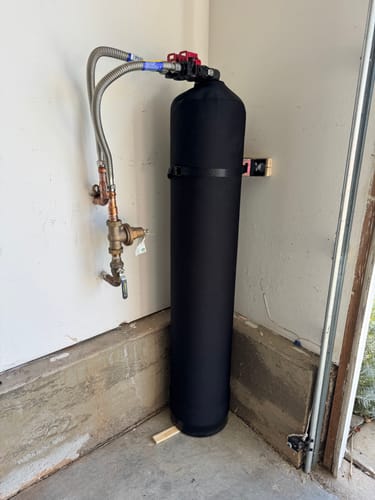
Testing your iron filter's performance doesn't require expensive equipment or a professional visit. With a few targeted checks, we can identify exactly where things are breaking down.
| Test | What to Look For |
|---|---|
| Glass clarity test | Rust particles after 30 minutes |
| DIY iron test kit | Levels below 0.3 mg/L post-filtration |
| pH test strip | Reading between 6.5–8.5 |
| Filter media inspection | Cloudiness signals backwash needed |
| Pressure/flow monitoring | Drops indicate clogging or air intake issues |
Run these tests systematically. Backwash every 4–6 weeks to prevent media clogging, and always compare iron concentrations before and after filtration. If pH climbs above 8.5, rust particle formation accelerates — a detail most homeowners miss until the problem compounds.
What Actually Causes Iron to Break Through Your Filter
Iron breakthrough doesn't happen randomly — there are 4 core culprits that consistently sabotage even well-maintained filtration systems. Understanding them puts you back in control.
- Backwashing gaps — Skipping cycles saturates your media bed, and iron slips through like water through a clogged sieve.
- Undersized systems — During peak demand, your filter simply can't keep up, and iron exploits every moment of overload.
- Oxidation failures — Dissolved iron that isn't properly converted into particles remains invisible to your filter media, passing through untouched.
Maintenance failures compound everything — neglected injector assemblies and pre-oxidation chambers quietly erode your system's effectiveness.
Real-time iron monitoring catches these failures early, before staining signals a problem that's already out of hand.
Backwashing, Regeneration, and Oxidation Fixes That Work
Once we grasp what's breaking the system, we can fix it — and most of these solutions are simpler than you'd expect.
Start with backwashing every four to six weeks to dislodge trapped oxidized iron and sediment before buildup compromises flow. If you're running a regenerating system, schedule cycles every seven to ten days and confirm your control valve draws the correct brine concentration.
Backwash every four to six weeks and run regeneration cycles every seven to ten days to stay ahead of buildup.
Watch your water clarity — cloudiness signals media saturation, so don't wait for a scheduled cycle if you're already seeing it.
For oxidation, chlorine or ozone treatment works well when you maintain pH between 6.5 and 8.5, which keeps ferrous iron converting into filterable ferric iron efficiently.
Finally, inspect your injector assembly regularly — a clogged injector creates silent failures that undermine everything else.
Maintenance Habits That Keep Your Iron Filter Running Clean
Keeping your iron filter in peak condition doesn't require complicated routines — just consistent habits applied at the right intervals. Miss one, and you'll chase problems that compound quietly until performance collapses entirely.
- Backwash every 4–6 weeks — flush trapped iron particles before they compact into a dense, flow-restricting layer inside your filter media.
- Inspect and clean the injector assembly monthly — a partially blocked injector silently starves your system of air, gutting oxidation before it even starts.
- Test water quality monthly and shock chlorinate quarterly — iron bacteria build invisible biofilms that foul output and create odors; consistent testing catches pH shifts and iron spikes before they escalate.
Monitor pressure and flow rates continuously — early deviations signal clogs before they become costly failures.
Frequently Asked Questions
What Are Common Problems With Iron Filters?
We've found the most common iron filter problems include media saturation, clogged filter beds, insufficient backwashing, and bypassed iron—all leading to rusty water, metallic tastes, pressure drops, and stubborn staining on your fixtures.
What Is the Life Expectancy of an Iron Filter?
Iron filters typically last 5 to 15 years, but we can stretch that lifespan considerably through regular backwashing, timely media replacement, and proper system sizing tailored to our water's specific iron concentration.
How to Check Iron Filter System for Clogging?
We'll check for reduced water flow, cloudy water, and gurgling sounds during brine cycles. If backwashing's needed more than every 4-6 weeks, that signals media saturation—inspect your injector assembly and bypass valve for blockages too.
How Often Should an Iron Filter Regenerate?
We recommend regenerating your iron filter every 7 to 10 days, but if you've got high iron levels or heavy water usage, you'll want to increase that frequency to maintain peak filtration performance.






