


![SoftPro™ Chlorine+ Carbon Whole House Water Filter to Remove PFAS, Chlorine, Chloramine & Pesticides [City Water Filters Series]](http://www.softprowatersystems.com/cdn/shop/files/SoftPro_Whole_House_Carbon_Filter_with_Spin_Down_Water_Filter.webp?v=1783547361&width=140)


 855-683-8488


Iron Filter Not Removing Iron From Water? Check These 7 Critical Things Before Doing Anything Else

When your iron filter stops working, we understand how frustrating that is—but don't replace anything yet. The problem usually comes down to seven fixable things: wrong filter size, confirmed breakthrough, iron type, low pH, skipped backwashing, maintenance failures, or an aging system. Identifying which one applies to your situation saves you serious money. Stick with us, and we'll walk you through exactly what to check so you can get your filter performing again.
Key Takeaways
- Test pH levels; below 6.8 prevents ferrous iron oxidation, significantly reducing your filter's ability to remove iron effectively.
- Identify iron type present: ferrous, ferric, or organic iron each requires different treatment approaches for effective removal.
- Check backwashing frequency; skipping regular backwashing causes iron accumulation in media, overwhelming the system and causing breakthrough.
- Verify filter size matches your home's flow rate and iron concentration levels for maximum filtration efficiency.
- Look for rusty stains or metallic-tasting water, which indicate iron breakthrough and signal immediate filter assessment is needed.
Is Your Iron Filter Sized for Your Water's Iron Level?

When it comes to iron filters, size matters more than most people realize. A system that's too small simply can't keep up with your water's iron concentration, and that's when you'll start seeing breakthrough and staining.
Here's a practical benchmark: a 2.5 cubic foot filter typically handles homes with a 5 GPM flow rate and moderate iron levels.
A 2.5 cubic foot filter typically handles a 5 GPM flow rate with moderate iron levels.
But once your iron exceeds 2.5 ppm, you'll need a system specifically rated for higher iron loads.
That's why regular water testing isn't optional—it's foundational. Knowing your exact iron concentration and flow rate tells you precisely what capacity you need.
And while oversizing can improve performance, matching the filter to your actual water conditions maximizes efficiency and extends equipment life.
Is Iron Actually Breaking Through Your Iron Filter?
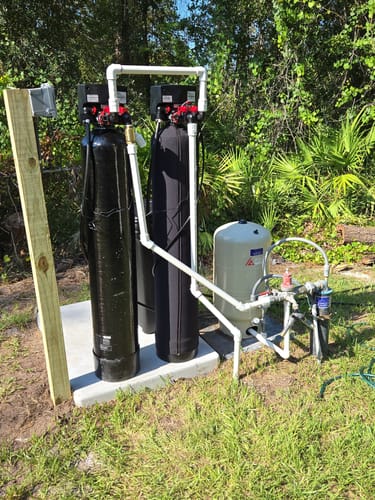
Even if your filter's the right size, it can still fail you—and the telltale sign is iron breaking through to your fixtures and water. Watch for rusty stains and metallic-tasting water—these aren't cosmetic issues; they're diagnostic clues.
To confirm breakthrough, test water before and after filtration:
| Test Point | Expected Iron Level | Breakthrough Indicator |
|---|---|---|
| Pre-filter | Baseline reading | N/A |
| Post-filter | Near zero | Elevated levels |
| At fixture | Near zero | Rusty stains present |
Two critical factors accelerate breakthrough: pH dropping below 6.8 weakens iron removal chemistry, and neglected backwashing lets iron accumulate until the media's overwhelmed. We recommend testing both variables immediately—they're often the hidden culprits stealing your filter's performance.
What Type of Iron Is in Your Water?
Before you can fix an iron problem, you need to know what you're dealing with—and iron isn't a one-size-fits-all contaminant. There are three distinct types: ferrous (clear water iron), ferric (red water iron), and organic iron.
Ferrous iron stays dissolved and invisible until it oxidizes—then it leaves those frustrating reddish-brown stains. Ferric iron is already oxidized and visible as particles. Organic iron bonds with organic matter, making it especially stubborn to treat.
Then there's iron bacteria—a slimy, plumbing-clogging nuisance that demands its own treatment strategy entirely.
Each type responds differently to filtration methods, so testing your water first isn't optional—it's essential. Get the type and concentration confirmed before selecting or adjusting any treatment system.
Is Low pH Stopping Your Iron Filter From Removing Iron?
If your iron filter isn't performing the way it should, low pH might be the culprit.
Water with a pH below 6.8 can inhibit the oxidation process your filter relies on to remove iron effectively.
The good news is that raising your pH above 7.0 with a neutralizing system or additive can restore your filter's performance and protect its components from long-term damage.
pH Affects Iron Removal
Water pH is one of those sneaky variables that can quietly sabotage your iron filter's performance without you ever suspecting it.
When pH drops below 6.8, ferrous iron stubbornly stays dissolved rather than oxidizing into filterable ferric iron—meaning your filter never gets a chance to capture it.
Add organic matter to the mix, and things get worse.
Organics bind with ferrous iron, making it even harder to remove.
The fix starts with testing.
We recommend regularly checking both pH and iron levels together, because pH adjustments alone can dramatically improve your filter's efficiency.
If your pH is low, address it first with an acid neutralizer before expecting your iron filter to perform.
Treat the root cause, and your filtration system will actually do its job.
Raising pH Levels
Raising your pH above 6.8 is often the simplest fix for an underperforming iron filter—and it's one most people overlook.
Acidic water actively blocks ferrous iron oxidation, meaning your filter can't do its job—no matter how well it's maintained.
Here's what you need to know:
- Test regularly – pH fluctuates, so routine testing tells you exactly when to act.
- Add alkalinity-increasing agents – These directly raise pH, restoring your filter's oxidation efficiency.
- Protect your components – Low pH corrodes filtration parts, causing costly mechanical failures over time.
- Stay above 6.8 – This threshold improves iron removal and extends your system's lifespan.
Get your pH right, and your filter suddenly works the way it was designed to.
When Did You Last Backwash Your Iron Filter?
Skip this step too often, and you'll notice pressure drops that signal your filter's losing its iron-removal capacity.
If you're dealing with iron levels above 2 ppm, inconsistent backwashing makes breakthrough almost inevitable.
With iron levels above 2 ppm, skipping backwash cycles doesn't just hurt performance—it guarantees breakthrough.
Before you replace components or chase other culprits, verify your backwashing schedule matches manufacturer recommendations.
Neglecting this single maintenance step doesn't just hurt performance—it shortens your entire system's lifespan, leading to repairs that cost far more than a proper backwash cycle ever would.
Which Maintenance Failures Are Causing Your Iron Filter to Underperform?
Backwashing gets most of the attention, but it's rarely the only maintenance failure dragging your iron filter's performance down.
Here's what we consistently see undermining systems that should be working perfectly:
- Unchecked pH levels — Anything below 6.8 actively fights your filter's iron removal chemistry and corrodes components quietly.
- Ignored mechanical components — Failing valves and timers disrupt cycling schedules, throwing your entire treatment process off rhythm.
- Skipped inspections — Wear and developing clogs compound silently until they become expensive, system-wide problems.
- No maintenance records — Without documented water testing and service history, you're unable to spot emerging trends before they escalate.
Each failure compounds the others.
Treating maintenance as a complete system rather than isolated tasks is what separates consistently clean water from chronic underperformance.
Should You Repair Your Iron Filter or Replace It?
When maintenance costs start stacking up, the repair-or-replace decision becomes one of the most consequential choices you'll make for your water treatment system.
Start by evaluating age—systems beyond 10-20 years with recurring breakdowns rarely justify continued investment.
Next, track your repair expenses. If you're consistently spending considerable portions of your budget on fixes, a new system will likely pay for itself faster than you'd expect.
Don't overlook performance data either. If iron levels remain elevated despite repairs, your filter simply can't handle the load anymore.
Here's what often tips the decision: newer systems deliver advanced filtration technologies that outperform older designs considerably.
When reliability, efficiency, and iron removal effectiveness all decline simultaneously, replacement isn't just logical—it's the smarter long-term investment.
Frequently Asked Questions
Why Is My Iron Filter Not Working?
Your iron filter's likely failing due to improper sizing, low pH levels, clogged media, irregular backwashing, or untested water quality. We recommend checking each factor systematically to pinpoint and resolve the exact issue quickly.
Can High Iron in Water Cause Skin Problems?
Yes, high iron in water can cause skin problems! It'll dry out your skin, irritate it, and even worsen conditions like eczema. Iron disrupts your skin's natural pH balance, leaving it dull and unhealthy-looking.
What Filter Will Remove Iron From Water?
We recommend using BIRM, Manganese Greensand, or Katalox Light filters to effectively remove iron from your water. Each targets different iron forms and concentrations, so matching the right filter to your water's specific iron levels is essential.
Why Is My Water Softener Not Removing Iron?
Your water softener may not be removing iron because ferrous iron levels exceed 2.5 ppm, resin beads need cleaning, pH is below 6.8, or ferric iron's clogging the resin bed.






