


![SoftPro™ Chlorine+ Carbon Whole House Water Filter to Remove PFAS, Chlorine, Chloramine & Pesticides [City Water Filters Series]](http://www.softprowatersystems.com/cdn/shop/files/SoftPro_Whole_House_Carbon_Filter_with_Spin_Down_Water_Filter.webp?v=1783547361&width=140)


 855-683-8488


Iron Filter or Appliance Replacement? A Homeowner's Cost Comparison

If you've got iron in your water, you're facing a choice: keep replacing damaged appliances or fix the root problem. Iron quietly destroys washing machines, dishwashers, and plumbing — costing thousands in replacements. An iron filtration system starts around $830, protecting everything downstream. Appliance replacements run $500–$2,000 each, and they'll keep failing if the water stays untreated. The numbers tell a clear story, and we've broken it all down for you ahead.
Key Takeaways
- Iron filtration systems start at $830–$933, significantly less than the $500–$2,000 cost of replacing a single iron-damaged appliance.
- Iron deposits narrow pipes, strain water heaters, and clog dishwashers, shortening appliance lifespans and increasing energy bills.
- Plumbing repairs caused by iron buildup range from $100 to $1,500, compounding overall household costs.
- An iron filter eliminates the root cause of damage, protecting multiple appliances simultaneously rather than replacing them individually.
- Many iron filtration systems include lifetime warranties, making them a predictable, long-term investment over repeated appliance replacements.
Signs You Have an Iron Problem: Stains, Taste, and Buildup

Iron — it's one of those sneaky problems that creeps up before we even realize what's happening.
First, we notice reddish-brown stains spreading across our sinks, bathtubs, and laundry.
Then comes that unmistakable metallic taste ruining our morning coffee.
Eventually, we're dealing with mineral buildup choking our plumbing and appliances, quietly destroying efficiency and triggering expensive repairs.
There's often another telltale sign we can't ignore — a rotten egg odor.
That's hydrogen sulfide, a frequent companion to elevated iron levels, confirming we've got a real contamination issue on our hands.
The smartest move? Get our water tested.
Confirmed iron concentrations help us identify exactly which filtration system we need, rather than guessing — or worse, replacing appliances that iron will simply destroy again.
What Iron in Your Water Does to Appliances Over Time
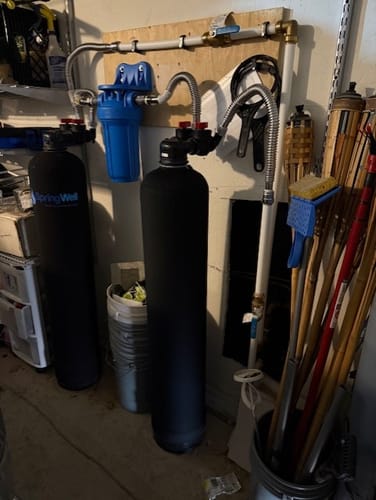
Every appliance iron touches pays a slow, compounding price. It starts subtly—a faint metallic taste, a reddish tint around your dishwasher's door seal.
Then it deepens. Iron deposits narrow your pipes, strangle water flow, and force your water heater to work harder just to maintain temperature. That inefficiency quietly inflates your energy bills while accelerating internal wear.
Iron deposits don't just slow your water—they quietly drain your wallet and wear your appliances from the inside out.
Your dishwasher's spray arms clog. Your washing machine's inlet valves stiffen. Manufacturers design these appliances for clean water, not mineral-laden water that deposits sediment with every cycle.
The result? Lifespans shrink, repair calls multiply, and replacement timelines arrive years earlier than they should.
Here's what we understand: iron doesn't damage appliances dramatically—it does it gradually, invisibly, and expensively. That's what makes it so dangerous.
The Real Cost of Replacing Iron-Damaged Appliances
When iron finally wins, the bill arrives all at once. A failing washing machine runs $500 to $2,000. A dishwasher? Same range.
Add plumbing repairs — anywhere from $100 to $1,500 depending on severity — and suddenly you're staring down a serious financial hit.
Here's what makes it worse: iron doesn't just damage appliances once. It shortens their lifespan by at least 50%, meaning you're replacing them twice as often. That compounding cost adds up fast.
Meanwhile, a whole-house iron filtration system can save homeowners up to $1,500 annually compared to cycling through damaged appliances.
Iron contamination also drives up to 30% of plumbing replacement costs — expenses that dwarf the upfront investment in prevention. The numbers aren't subtle.
What an Iron Filter System Actually Costs
Two numbers define the entry point for whole-house iron filtration: $830 for the Iron Rival with Katalox Light® media, and $933 for the Iron Rival with Filox media. That's your starting point—a one-time investment rather than a recurring nightmare.
Replacement cartridges, like the Max Water Whole House Iron Manganese set, handle up to 30,000 gallons before you'll need a swap. That capacity keeps ongoing costs predictable and manageable.
Professional installation adds to the upfront figure, though self-installation guides make that route genuinely accessible.
Either way, you're protecting your plumbing and appliances from iron-related damage that costs far more to repair.
Many systems also carry lifetime warranties, meaning the manufacturer shares the long-term risk with you.
That's not just a filter—that's a financial safeguard.
Iron Filter or New Appliances: Which Is Actually Worth It?
Why replace what you can protect? When we weigh a $800–$1,500 iron filter installation against the thousands we'd spend replacing rust-damaged appliances, the math tells a clear story.
Iron doesn't just stain your sinks—it quietly erodes your water heater, dishwasher, and washing machine from the inside out, cutting their lifespan short and driving up energy costs along the way.
An iron filter attacks the root cause rather than the symptoms. Instead of repeatedly servicing or swapping out appliances, we're investing once in a system that keeps our water clean and our equipment running efficiently.
Stop treating symptoms. An iron filter targets the source, so your appliances stay protected and your water stays clean.
Lower maintenance bills, no more rust stains, better-tasting water—these aren't small wins. They're exactly the kind of compounding benefits that make an iron filter the smarter long-term financial decision.
Frequently Asked Questions
How Often Should an Iron Filter Be Replaced?
We recommend replacing your iron filter every 5 to 10 years, though we'll need to replace it sooner if your water's high in iron or manganese—it's all about protecting your home's plumbing.
Do Iron Filters Really Work?
Yes, they absolutely work! We've seen iron filters eliminate up to 15 ppm of dissolved iron, wiping out metallic tastes, staining, and odors—transforming well water into something you'd actually enjoy drinking daily.
What Is the Correct Order for Water Treatment?
We'll start with sediment filtration, then move to iron removal, followed by manganese and hydrogen sulfide treatment, then carbon filtration for taste and odor, and finally UV disinfection to eliminate bacteria before water reaches your taps.
What Are Common Problems With Iron Filters?
We've seen iron filters struggle with high iron concentrations, causing ongoing staining. They'll clog, reducing water pressure, and often miss manganese or hydrogen sulfide, leaving persistent odors unless we combine them with additional treatment methods.






