


![SoftPro™ Chlorine+ Carbon Whole House Water Filter to Remove PFAS, Chlorine, Chloramine & Pesticides [City Water Filters Series]](http://www.softprowatersystems.com/cdn/shop/files/SoftPro_Whole_House_Carbon_Filter_with_Spin_Down_Water_Filter.webp?v=1783547361&width=140)


 855-683-8488


Iron Filter and pH Adjustment for Acidic Well Water: Everything You Need to Know First

If your well water is acidic, standard iron filters won't save you — dissolved iron slips right through them. Acidic water, anything below pH 7.0, keeps iron in a form that's nearly impossible to filter out. That means stained sinks, clogged pipes, and equipment that corrodes faster than it should. You'll need to test your water first, then combine pH neutralization with the right iron filtration system. Stick with us, and we'll walk you through exactly how to do it.
Key Takeaways
- Acidic well water (below pH 7.0) keeps iron dissolved, allowing it to bypass standard filters and cause staining and pipe damage.
- Test your well water annually at a certified lab to measure pH levels and distinguish between dissolved and oxidized iron.
- Calcite neutralizers effectively raise pH between 5.0–6.9, while soda ash injection is better suited for pH levels of 5.0 or below.
- Oxidation-based systems using chlorine or hydrogen peroxide convert dissolved iron into filterable particles, making removal significantly more effective.
- Size your system by calculating flow rate in GPM and identifying iron concentration to select the appropriate filter and neutralization method.
Why Acidic Well Water Makes Iron Removal So Much Harder

When your well water tests acidic—typically below a pH of 7.0—iron removal becomes a whole different battle. Low pH keeps iron dissolved, meaning it flows right past standard filtration media without getting caught. That dissolved iron then penetrates your plumbing, leaving stubborn stains and slowly clogging pipes and appliances.
Here's what makes it trickier: acidic water also accelerates corrosion inside filtration equipment itself, reducing its effectiveness while simultaneously increasing metal leaching risks.
You're fundamentally fighting on two fronts simultaneously.
Traditional filters aren't designed for this environment. They need stable, near-neutral pH conditions to trap iron efficiently.
Without addressing acidity first, you're running an expensive system that underperforms. Understanding this relationship between pH and iron solubility is exactly why thorough water analysis matters before selecting any treatment approach.
How to Test Your Well Water for pH and Iron Levels
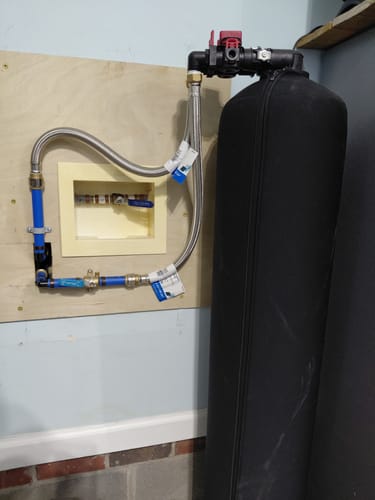
Before investing in any treatment system, we need to know exactly what we're dealing with—and that starts with testing. Send your water sample to a certified lab—it's the only way to get results you can trust.
Here's what you're measuring and why it matters:
| Parameter | What to Watch For |
|---|---|
| pH Level | Below 6.5 means corrosive, acidic water |
| Total Iron (mg/L) | Above 0.3 mg/L causes staining and damage |
| Iron Form | Oxidized vs. dissolved determines treatment choice |
Test annually—or immediately if your water's taste, color, or smell changes. Knowing your exact pH and iron form isn't optional; it's the foundation every effective treatment decision rests on.
Calcite Neutralizers vs. Soda Ash for Acidic Well Water: Which Do You Need?
Now that we recognize our pH and iron levels, we can match the right neutralization method to the problem—and the two main contenders are calcite neutralizers and soda ash injection.
If your pH sits between 5.0 and 6.9, calcite neutralizers work beautifully, gradually raising pH to that 7.0–8.0 sweet spot using calcium carbonate. It's a gentle, incremental fix—though expect slightly harder water.
When pH drops to 5.0 or below, soda ash injection becomes your go-to. It acts fast, hits severe acidity hard, and won't add calcium hardness, making it ideal where softness matters.
Both systems demand regular maintenance, but soda ash needs more frequent replenishment.
Know your pH, know your target—that's what determines the right call.
The Best Iron Filter Systems for Acidic Well Water
Getting the pH sorted is half the battle—but if iron's still fouling your water, you need a filtration system that can actually keep up with acidic conditions.
We recommend oxidation-based systems using chlorine or hydrogen peroxide—they convert dissolved ferrous iron into filterable ferric iron, dramatically improving water quality. For iron levels above 3.0 ppm, twin-tank systems maintain consistent pressure while delivering efficient removal.
Oxidation-based systems convert dissolved iron into filterable form—twin-tank setups handle high levels without sacrificing water pressure.
Greensand filters paired with potassium permanganate handle up to 10 ppm when pH stays above 7.0. Prefer chemical-free? Aeration systems work well below 8–10 ppm but demand regular monitoring.
Whatever system you choose, budget $200–$400 annually for maintenance—it's non-negotiable for sustained performance. The right system transforms problematic well water into something genuinely usable.
How to Size Your Iron Filter and pH System for Acidic Well Water
Sizing your system correctly comes down to 3 critical measurements: flow rate, iron concentration, and pH level.
Start by timing how long it takes to fill a known volume to calculate your GPM. This tells us exactly what your system must handle.
Next, get a detailed water test. Iron above 0.3 mg/l needs dedicated filtration — twin-tank systems handle higher concentrations, while softeners work well between 0.3 and 3.0 ppm. A pH below 7.0 signals you'll need neutralization, and calcite neutralizers perform best between 5.0 and 6.9.
Don't overlook installation space. These systems need room for backwashing and maintenance.
Get those three measurements right, and you'll select equipment that actually solves your water problems long-term.
Frequently Asked Questions
What Is the Correct Order of Water Filters?
We'll start with a sediment filter, then a carbon filter, followed by an iron filter, a pH neutralizer, a water softener, and finally a reverse osmosis system for pure, contaminant-free drinking water.
How to Fix Well Water That Is Acidic?
We'll fix acidic well water by installing a calcite neutralizer, soda ash injection system, or upflow neutralizer—each raises your pH effectively. If it's at or below 4.5, we'd recommend a two-tank backwashing neutralizer system.
What Are the Symptoms of Too Much Iron in Well Water?
When there's too much iron in your well water, you'll notice brown, red, or yellow stains on fixtures and laundry, a metallic taste, clogged pipes, rusty sediment, and iron bacteria growth complicating your water quality.
Is pH Level 9.5 Water Safe to Drink?
While pH 9.5 water isn't immediately harmful, it's outside the EPA's recommended 6.5–8.5 range. We'd suggest testing for contaminants like heavy metals and TDS to guarantee it's truly safe before drinking regularly.






