


![SoftPro™ Chlorine+ Carbon Whole House Water Filter to Remove PFAS, Chlorine, Chloramine & Pesticides [City Water Filters Series]](http://www.softprowatersystems.com/cdn/shop/files/SoftPro_Whole_House_Carbon_Filter_with_Spin_Down_Water_Filter.webp?v=1783547361&width=140)


 855-683-8488


Iron Filter pH Adjustment: How AIO Air Injection Technology Helps Neutralize Acidic Well Water

If your well water's pH is too low, it's quietly corroding your pipes and leaching metals into every glass you drink. AIO air injection technology fights back by introducing oxygen into your water supply, naturally raising pH and converting dissolved iron into a filterable form — no chemicals needed. It's a cleaner, lower-maintenance solution that protects your plumbing and your health. Stick with us, and we'll show you exactly how it all works.
Key Takeaways
- AIO air injection technology raises water pH naturally by introducing air, eliminating the need for chemical additives in iron filtration.
- Acidic well water below pH 7 corrodes pipes and leaches harmful heavy metals like lead and copper into drinking water.
- AIO systems achieve 75–90% iron removal efficiency, but only when water pH reaches 8.0 or higher.
- When pH drops below 7, AIO effectiveness declines significantly, requiring a pH neutralizer or Terminox ISM® filter instead.
- Testing well water pH is essential for selecting the correct iron filter and ensuring optimal treatment performance.
Why Acidic Well Water Damages Plumbing and Ruins Taste

When your well water turns acidic—dropping below a pH of 7—it quietly wages war on your plumbing. It corrodes pipes, triggers leaks, and forces expensive repairs you didn't budget for.
Acidic well water silently corrodes your pipes, triggers costly leaks, and drains your budget before you ever notice the damage.
Worse, that acidity leaches heavy metals like lead and copper directly into your drinking water, creating serious health risks you can't see or smell.
But the damage doesn't stop underground. You'll notice blue-green stains on fixtures and laundry that refuse to budge.
Your iron and manganese filters struggle because they need balanced pH levels to perform.
And that metallic, off-putting taste? It drives people away from drinking their own tap water entirely.
Acidic well water doesn't just damage infrastructure—it erodes confidence in your water supply.
How Does AIO Air Injection Neutralize pH Without Chemicals?
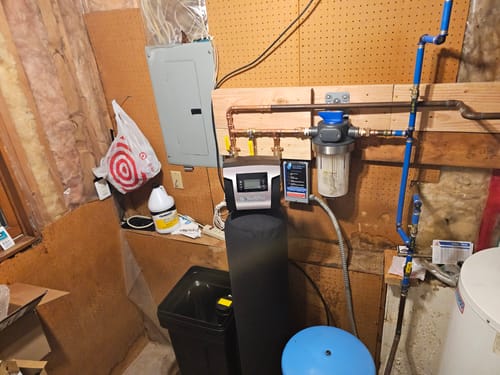
Fixing acidic well water doesn't have to mean hauling chemicals or babysitting complicated treatment systems. AIO air injection technology handles the heavy lifting by introducing air directly into your water supply, triggering a natural oxidation process that transforms dissolved ferrous iron into ferric iron.
That same process raises pH levels organically—no additives required. Here's where it gets impressive: once pH climbs to 8.0 or higher, the system achieves 75-90% iron removal efficiency.
We're talking serious performance without the recurring cost or hassle of chemical replenishment. There are no regeneration cycles to manage, no chemical inventories to maintain.
The result is water that's cleaner, less corrosive to your plumbing, and gentler on appliances—all achieved through a process that works with chemistry, not against it.
Is Air Injection Better Than Chemical Treatment for Acidic Iron-Heavy Water?
Whether air injection beats chemical treatment depends on what your water's actually dealing with. If your pH holds at 8.0 or higher, air injection wins—75-90% iron removal, no chemicals, less maintenance. Chemical treatments offer broader pH flexibility, but they come with recurring costs and constant replenishment.
| Factor | Air Injection |
|---|---|
| pH Requirement | 8.0 or higher |
| Iron Removal Efficiency | 75-90% |
| Chemical Use | None |
| Maintenance Frequency | Low |
| Potential Downside | Cloudiness, tap spitting |
We'd also point out that air injection consistently outperforms manganese greensand filters, which depend on chemical regeneration and demand heavier upkeep. The tradeoff worth watching is water clarity—introducing air can cause cloudiness. Know your water's baseline, and the right choice becomes obvious.
When Does AIO Air Injection Fail and What Should You Use Instead?
AIO air injection works well—until it doesn't. When your pH drops below 7, the oxidation process struggles—air injection needs a pH of 8.0 or higher to effectively knock out dissolved ferrous iron. Acidic water simply won't cooperate.
Iron bacteria create another breaking point. Once contamination sets in, air injection loses its edge, and you'll need chlorination or a system that bypasses air entirely.
Persistent cloudiness and sputtering faucets? That's trapped air causing chaos—a clear signal something's wrong.
Here's what we recommend instead: a pH neutralizer upstream to correct acidity before filtration, or better yet, a Terminox ISM® filter. It oxidizes iron effectively at lower pH levels without relying on air injection—cleaner results, fewer headaches.
Which Iron Filter Actually Works at Your Water's pH Level?
Choosing the right iron filter comes down to one thing: your water's pH level. Match the wrong system to your water, and you're throwing money at a problem that won't budge.
| pH Range | Best Filter Option |
|---|---|
| Below 7 (acidic) | Terminox® or neutralizer first |
| 7–8 (neutral) | Manganese greensand filter |
| 8+ (alkaline) | AIO air injection system |
Here's what that table tells us: there's no universal winner. Terminox® handles acidic conditions where others fail. Manganese greensand sits comfortably in the middle, though it demands ongoing chemical regeneration. Air injection dominates at pH 8 and above, delivering 75–90% iron removal efficiently. Test your well water first—that single step determines everything.
Frequently Asked Questions
Do Air Injection Iron Filters Work?
Yes, they work! We've seen air injection iron filters remove 75-90% of dissolved iron without any chemicals. They're most effective when your water's pH sits at 8.0 or higher.
What Can Be Used to Neutralize Acidic Water?
We can neutralize acidic water using calcite media, limestone, or magnesium oxide. Systems like the Calcite Neutralizer 7500-SXT gradually raise pH levels, protecting your plumbing and appliances from corrosion while delivering consistently better water quality.
What Are the Symptoms of Too Much Iron in Well Water?
When your well water's got too much iron, you'll notice reddish-brown stains on laundry and fixtures, a metallic taste, pipe sediment buildup, foul-smelling bacterial growth, and potential health risks like hemosiderosis in sensitive individuals.
Can You Filter Out Iron From Well Water?
Yes, we can filter iron from well water using air injection technology. It oxidizes dissolved ferrous iron into filterable ferric iron, removing 75-90% of iron—no chemicals needed, just cleaner, safer water for your home.






