


![SoftPro™ Chlorine+ Carbon Whole House Water Filter to Remove PFAS, Chlorine, Chloramine & Pesticides [City Water Filters Series]](http://www.softprowatersystems.com/cdn/shop/files/SoftPro_Whole_House_Carbon_Filter_with_Spin_Down_Water_Filter.webp?v=1783547361&width=140)


 855-683-8488


Iron Filter Plumbing Connection Requirements: Full Specs for Well Water Point-of-Entry Installation

For a well water point-of-entry iron filter, we recommend installing it at the main water line entry in a dry area with 2 feet of clearance on all sides. Use 1-inch PVC or CPVC pipe with potable-rated fittings and Teflon tape on all threaded connections. Maintain incoming pressure between 30–125 psi, include a bypass valve, and run a backwash drain line with a proper air gap. Keep a grounded 110V outlet within 10 feet, and everything else falls into place once you know the full specs.
Key Takeaways
- Install the iron filter at the main water entry point, ensuring incoming well pressure stays between 30–125 psi for optimal filtration.
- Use 1-inch PVC or CPVC pipes with potable-water-rated fittings, applying Teflon tape on all threaded connections for watertight seals.
- Install a bypass valve to allow maintenance and cartridge changes without interrupting household water access.
- Run a dedicated backwash drain line with a minimum ¼-inch-per-foot slope and a 1-inch air gap above flood level.
- Position the unit within 10 feet of a grounded 110V outlet, keeping all electrical components dry and code-compliant.
Where to Install an Iron Filter on a Well Water Line

Before anything else, we'll want to install the iron filter at the main water entry point — this guarantees every drop of incoming well water gets treated before it ever reaches a faucet, shower, or appliance.
Installing the iron filter at the main water entry point ensures every drop of well water gets treated before reaching any faucet or appliance.
Why does placement matter so much? Because a point-of-entry installation means contaminated water never sneaks past the system into your plumbing infrastructure.
Here's what else we'll need to confirm about the location:
- Dry environment — avoid flood-prone areas entirely
- Clearance — maintain at least 2 feet on all sides for maintenance access and airflow
- Electrical proximity — position the filter within 10 feet of a 110V grounded outlet
- Water pressure — verify incoming well pressure falls between 30–125 psi
Nail these placement requirements, and you've built the foundation for a high-performing system.
Pipe Sizes, Fittings, and Sealants an Iron Filter Connection Requires
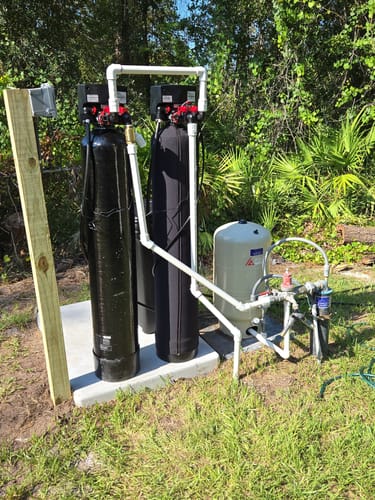
Getting the plumbing connections right means starting with the correct pipe size — for most residential point-of-entry iron filter installations, that's a 1-inch pipe, which handles standard home flow rates without restricting water pressure.
For fittings, we recommend PVC or CPVC — both materials integrate cleanly with standard pipe systems and satisfy plumbing code requirements.
One critical detail: every fitting must carry a potable water rating. Non-rated fittings introduce contamination risks that compromise your entire system's safety compliance.
On threaded connections, always apply Teflon tape. It creates a reliable watertight seal and eliminates the slow leaks that threaded joints are notorious for developing over time.
Before finalizing any materials, check your local plumbing codes — specific pipe size restrictions or fitting requirements vary by jurisdiction and can affect your installation plan.
Iron Filter Pressure, Flow Rate, and Bypass Valve Requirements
With pipe sizing and fittings sorted, pressure and flow rate become your next critical variables — get these wrong, and even a perfectly plumbed system underperforms.
We're targeting 30–125 psi incoming pressure to hit true filtration efficiency. Match flow rate to your household's peak demand — fall short here, and high-usage moments expose the gap fast.
A bypass valve isn't optional; it's what separates a serviceable system from a liability.
- Maintain incoming pressure between 30–125 psi for ideal filtration performance
- Size flow rate to peak household demand to prevent supply shortfalls
- Install a bypass valve to enable maintenance without interrupting water access
- Flush the system through the bypass after every cartridge change, and eliminate dead legs to block bacterial growth and preserve flow dynamics
How to Run a Backwash Drain Line With a Proper Air Gap
Backwash drain line installation is where code compliance and contamination prevention intersect — skip the details here, and you're gambling with your potable water supply.
Run a dedicated line and maintain a ¼-inch-per-foot slope minimum. That slope isn't optional — it's what keeps waste moving.
The air gap is your contamination firewall:
| Requirement | Specification |
|---|---|
| Air gap type | Vertical open space |
| Minimum height | 1" above flood level |
| Slope | ¼" per foot minimum |
That vertical separation physically prevents wastewater from siphoning back into your filtration system — no check valve replaces it.
Inspect the drain line regularly for blockages. A clogged backwash line doesn't just slow drainage — it compromises the entire filtration cycle and risks contaminating your potable supply.
How to Wire and Power an Iron Filter Control Valve
Wiring the control valve wrong doesn't just trip a breaker — it can damage the valve electronics or create a genuine safety hazard. We've seen both happen.
Here's what proper installation demands:
- Grounded 110V outlet within 10 feet of the installation site — no extension cord workarounds
- Manufacturer-specified wire gauge — undersized wire creates resistance, heat, and eventual failure
- Hot water heater powered off before making any electrical connections — non-negotiable
- Moisture and heat separation — keep all electrical components clear of both to protect long-term performance
Local electrical codes aren't suggestions — they're your compliance and liability baseline. Follow them precisely.
Getting this step right protects your investment, your system's longevity, and everyone in the building.
Frequently Asked Questions
Can You Filter Iron From Well Water?
Yes, we can filter iron from well water! We'll use specialized systems like oxidizing filters or catalytic media to tackle even high concentrations, giving you clean, iron-free water throughout your entire home.
How to Install a Whole House Iron Filter?
We'll start by testing your well water, then install the filter at your main entry point with 2-foot clearance, connect it using Teflon-taped adapters, verify 30-125 psi pressure, and add a backwash drain line.
How to Plumb in a Water Filtration System?
We'll connect the iron filter at your main water entry, using Teflon tape on all fittings, maintaining 30-125 psi pressure, establishing a dedicated backwash drain line with an air gap, and keeping a grounded 110V outlet nearby.
What Are the Specifications of a Water Filter?
We'll want to verify inlet/outlet connections are sealed with Teflon tape, confirm pressure gauges and isolation valves meet IPC standards, and schedule cartridge replacements every 3–12 months to maintain peak filtration performance.






