


![SoftPro™ Chlorine+ Carbon Whole House Water Filter to Remove PFAS, Chlorine, Chloramine & Pesticides [City Water Filters Series]](http://www.softprowatersystems.com/cdn/shop/files/SoftPro_Whole_House_Carbon_Filter_with_Spin_Down_Water_Filter.webp?v=1783547361&width=140)


 855-683-8488


Iron Filter Pressure Restoration After Installation: A Proven Step-by-Step Diagnostic and Fix Guide

A pressure drop after installing an iron filter almost always traces back to a handful of fixable causes — clogged media, a blocked injector assembly, trapped air pockets, or simply an undersized system. We'll walk you through diagnosing each culprit systematically, restoring pressure through proper backwashing and regeneration, and deciding whether deep cleaning or full media replacement is your smartest next move. Stick with us, and you'll have everything you need to get your pressure back.
Key Takeaways
- Check flow rates first; readings below system minimums confirm sizing errors or installation issues causing pressure drops.
- Backwash immediately by running 10–20 minutes until water clears, then trigger regeneration to restore filtering capacity.
- Inspect the injector assembly for iron deposits; buildup here significantly restricts water movement and reduces pressure.
- Monitor backwash frequency; cycles occurring under every 4 days signal saturated media requiring replacement, not cleaning.
- Hire a technician to analyze live pressure patterns, clear injector deposits, and recommend media upgrades if needed.
Why Your Iron Filter Is Tanking Water Pressure After Install

There are 5 common culprits behind that frustrating pressure drop you're noticing after installing an iron filter, and we'll walk you through each one.
First, media clogging is the most frequent offender — your filter's media bed gets saturated with iron deposits, strangling flow until you backwash or replace it every 3-5 years.
Second, improper installation or undersized systems can't match your well pump's flow rates, creating a bottleneck right from day one.
Third, a clogged injector assembly — packed with iron buildup — critically restricts water movement.
Fourth, excessive backwashing cycles beyond the recommended 4-14 day schedule signals media that's completely saturated and needs replacing.
Fifth, your pressure gauge tells the real story — significant fluctuations post-installation mean something's wrong and needs immediate professional evaluation.
5 Pressure Culprits to Diagnose Before Touching Anything
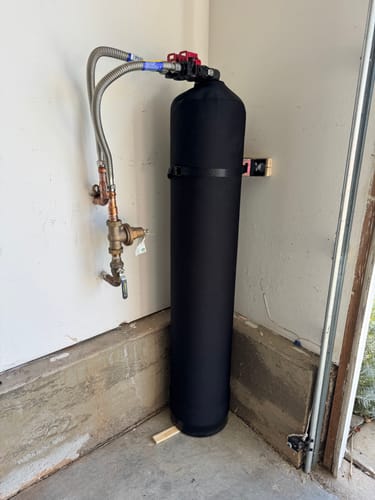
Now that we recognize what's causing the pressure drop, let's figure out exactly where to look before we start turning wrenches.
Three culprits consistently surface during diagnostics: the injector assembly, backwashing cycles, and air pockets. Each tells a story we can read without touching a single component yet.
| Culprit | Warning Sign | Priority |
|---|---|---|
| Injector Assembly | Iron deposits visible | High |
| Backwash Cycles | Frequency under 4 days | High |
| Air Pockets | Inconsistent flow rates | Medium |
Check your flow rates first. Readings below your filter's minimum requirement confirm sizing or installation errors immediately. Frequent backwashing signals saturated media. Air trapped in piping creates pressure inconsistencies that mimic bigger failures. Identifying which culprit we're dealing with saves us hours of unnecessary troubleshooting.
How to Backwash and Regenerate an Iron Filter to Restore Pressure
Backwashing and regenerating your iron filter is the fastest way to recover lost pressure without replacing a single part.
Switch to backwash mode and run it for 10–20 minutes. You'll watch the water shift from cloudy to clear—that's your signal it's working. Once complete, trigger a regeneration cycle to pull brine solution through the media, restoring its filtering capacity fully.
We recommend backwashing every 4–14 days depending on your water quality and usage. Skipping this invites channeling and pressure drops that compound over time.
If pressure still won't recover after several regeneration cycles, inspect the injector assembly for iron deposits—they're a common hidden culprit.
Track every cycle in a maintenance log so you'll know exactly when media replacement becomes necessary.
If Pressure Is Still Low, Here's How to Decide Between Deep Cleaning and Media Replacement
When backwashing and regeneration still leave you with sluggish pressure, it's time to dig deeper into what's actually failing. First, check your injector and control valve components—buildup there quietly chokes performance, and deep cleaning every 3–12 months often resolves it.
Sluggish pressure after backwashing? Your injector and control valve may be quietly choking performance—deep cleaning often fixes it.
But deep cleaning isn't always the answer. Pull a core sample annually to examine your media. Mudballs or heavy erosion mean replacement, not cleaning.
Watch for pressure drops during active use—that's saturated media signaling it's done its job and can't recover. If backwashing frequency keeps climbing, your media is likely failing, not just dirty.
Here's our decision rule: if multiple regeneration cycles haven't restored pressure or water quality, stop troubleshooting alone.
Call a professional. Some problems demand fresh media, not another cleaning attempt.
What a Professional Iron Filter Technician Will Do That You Can't
Some problems run deeper than what a weekend troubleshooting session can reach, and that's exactly where a professional technician earns their keep.
They'll monitor live pressure and flow rates, catching patterns we'd likely miss. They'll pull apart the injector assembly, clearing iron deposits that silently strangle system performance.
They'll run multiple back-to-back regenerations as a deliberate diagnostic tool, something most homeowners don't know is even possible.
When plumbing configurations complicate filtration efficiency, they'll untangle those interactions with precision.
Most valuably, they bring localized water quality knowledge that shapes smarter media recommendations and upgrade decisions.
If we've exhausted our diagnostic steps and pressure still won't recover, calling a technician isn't admitting defeat. It's making the intelligent move toward a lasting fix.
Frequently Asked Questions
How Often Should an Iron Filter Regenerate?
We recommend regenerating your iron filter every 4 to 14 days. Monitor your differential pressure closely—if you're seeing rusty tints or pressure drops, it's time to increase your regeneration frequency immediately.
Does the Iron Filter Go Before or After the Pressure Tank?
We recommend installing your iron filter after the pressure tank. This guarantees your system receives water at ideal pressure levels, protecting your filtration media from unnecessary wear while maximizing long-term filtration efficiency.
Why Is My Iron Filter Not Working?
Your iron filter's likely failing due to media saturation, clogged injectors, or skipped regeneration cycles. We've seen rusty water, pressure drops, and odd tastes signal these issues—let's diagnose and restore your system's peak performance.
How to Fix Low Water Pressure After Installing a Water Filter?
We'll start by backwashing the filter every 4-14 days to clear channeling and media buildup. If pressure's still low, inspect the injector, run multiple regenerations, and verify the filter's correctly positioned after the pressure tank.






