


![SoftPro™ Chlorine+ Carbon Whole House Water Filter to Remove PFAS, Chlorine, Chloramine & Pesticides [City Water Filters Series]](http://www.softprowatersystems.com/cdn/shop/files/SoftPro_Whole_House_Carbon_Filter_with_Spin_Down_Water_Filter.webp?v=1783547361&width=140)


 855-683-8488


Iron Filter Prevents Appliance Breakdown: A Real-World Cost Analysis

Iron filters aren't just a luxury — they're a smart financial shield for your home. Without one, iron silently destroys appliances, drives up energy bills by 20-30%, and triggers repair costs exceeding $4,500. With a filter, water heaters last nearly twice as long, and washing machines gain up to eight additional years. Premium systems recoup their investment within 2-3 years. Stick with us, and we'll break down exactly where every dollar goes.
Key Takeaways
- Iron contamination causes appliance rust, clogs, and sludge buildup, with repair costs potentially exceeding $1,500 per affected appliance.
- Premium iron filters remove over 95% of iron, preventing more than $4,500 in total appliance and plumbing damage.
- Iron filters extend water heater lifespan from 8–10 years to 15–18 years, significantly delaying costly replacements.
- Premium filtration systems recoup their initial investment within 2–3 years through reduced repairs and lower energy bills.
- Treating iron contamination can reduce energy bills by 20–30%, as appliances operate more efficiently without iron buildup.
What Iron Does to Your Appliances Without a Filter

When iron runs unchecked through your home's water supply, it quietly wreaks havoc on your appliances.
We're talking real damage—rust stains, clogged components, and sludge buildup that can cost you over $1,500 in repairs just from standard appliance wear. Let that escalate into your plumbing system, and you're suddenly staring down a $3,000+ repair bill.
Rust stains, clogged components, sludge buildup—iron damage doesn't stop at $1,500. It escalates fast.
It doesn't stop there.
Water heaters and softeners take a brutal hit, often failing prematurely and pushing replacement costs past $2,000. Meanwhile, your energy bills creep up 20-30% as struggling appliances consume more power just to perform basic functions.
Here's the hard truth: iron contamination isn't a minor inconvenience.
It's a slow, expensive erosion of everything your household depends on daily.
Repair Bills Iron Filters Actually Prevent
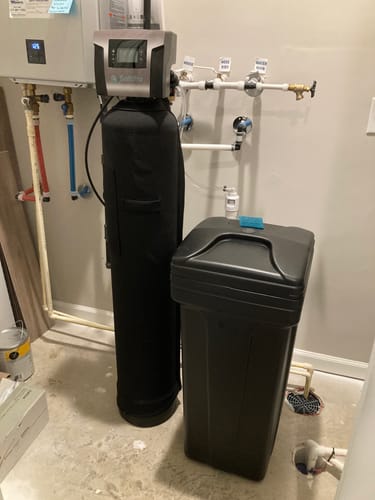
So now that we've seen what iron does to your home, let's talk about what an iron filter actually saves you.
The numbers are striking. Iron-related appliance damage alone can exceed $1,500, and plumbing repairs from pipe corrosion and sludge buildup can push past $3,000.
Combined, you're potentially staring down $4,500 or more in preventable costs.
That's the real story here.
Premium iron filters remove over 95% of iron and manganese, which directly extends appliance lifespan and keeps your plumbing intact. With routine maintenance and timely media replacement, your system stays effective long-term.
Think of an iron filter as insurance with a measurable return. You're not just avoiding rust stains—you're protecting thousands of dollars in infrastructure that quietly keeps your home running.
The Real Upfront Cost of Installing an Iron Filter
Installing an iron filter isn't cheap—but the range is wide enough that it pays to understand exactly what you're buying. Equipment alone runs $800 to $6,000, though manufacturers build these units for $100 to $250. That markup funds distribution, branding, and dealer margins—not necessarily better filtration.
Iron filter equipment runs $800 to $6,000—but manufacturers build these units for $100 to $250.
Installation adds another $500 to $2,000, and permits plus annual maintenance tack on $300 to $800 more. Most homeowners don't see those numbers until after they've committed.
Here's where it gets interesting: premium systems above $3,000 remove over 95% of contaminants and cost $800 to $1,500 to maintain long-term.
Budget models under $800 only hit 70-80% removal and can rack up $3,600 in maintenance.
Paying more upfront often means paying less overall.
How Much Longer Appliances Last With an Iron Filter
Those upfront costs hit differently once you see what they're actually protecting. Iron filtration extends appliance lifespans by 5-10 years by eliminating over 95% of iron and manganese before they cause damage. That's not a marketing claim—it's measurable.
| Appliance | Lifespan Without Filter | Lifespan With Filter |
|---|---|---|
| Water Heater | 8-10 years | 15-18 years |
| Dishwasher | 7-9 years | 12-16 years |
| Washing Machine | 8-10 years | 14-18 years |
We're talking about equipment that runs daily, quietly accumulating iron damage until it fails. Filtering that iron means we're not replacing a water heater at year nine—we're still running it efficiently at year sixteen, with lower utility bills to show for it.
Does an Iron Filter Pay for Itself?
A premium iron filtration system runs $3,000–$5,000 upfront, but it recoups that investment within 2–3 years through avoided repairs and maintenance savings alone.
Think about it: untreated iron causes appliance damage exceeding $1,500 and total repair costs surpassing $4,500 over time. That math works heavily against doing nothing.
Once you're past the break-even point, the savings compound.
Annual maintenance on a premium system costs just $40–$100, compared to $200–$600 for budget alternatives.
Premium filters also eliminate over 95% of iron contaminants, which directly improves appliance efficiency and trims utility bills by 20–30%.
We're not talking about a luxury purchase—we're talking about a financial decision that protects your home's infrastructure while consistently returning value year after year.
Frequently Asked Questions
Can an Iron Filter Improve the Taste and Smell of Drinking Water?
Yes, an iron filter can dramatically improve your water's taste and smell. We've seen it transform metallic, sulfur-tinged water into something genuinely invigorating — it's one of the most noticeable benefits you'll experience right away.
Are Iron Filters Compatible With Well Water Systems and Private Water Supplies?
Yes, iron filters are specifically designed for well water and private supplies. We'll find they tackle high iron concentrations common in groundwater, protecting our plumbing, appliances, and water quality more effectively than municipal treatment systems typically can.
How Often Does an Iron Filter Require Backwashing or Regeneration Cycles?
Most iron filters need backwashing every 2-7 days, depending on your iron levels and water usage. We recommend monitoring your system's performance closely—higher iron concentrations demand more frequent cycles to keep your filtration running at peak efficiency.
Can I Install an Iron Filter Myself, or Do I Need a Plumber?
You can install an iron filter yourself if you're comfortable with basic plumbing. We recommend shutting off the water supply, following manufacturer instructions carefully, and hiring a plumber only if soldering or complex pipe modifications are required.
What Iron Concentration Level Requires a Whole-House Filtration System?
If your water's iron level hits 0.3 mg/L or higher, you'll want a whole-house system. We recommend testing first—levels above 3 mg/L demand serious filtration to protect every appliance you own.






