


![SoftPro™ Chlorine+ Carbon Whole House Water Filter to Remove PFAS, Chlorine, Chloramine & Pesticides [City Water Filters Series]](http://www.softprowatersystems.com/cdn/shop/files/SoftPro_Whole_House_Carbon_Filter_with_Spin_Down_Water_Filter.webp?v=1783547361&width=140)


 855-683-8488


Iron Filter Review: Real Results After 18 Months of Use
Hi, I'm [HOMEOWNER_NAME]. I live in [LOCATION]. Craig "The Water Guy" Phillips asked me to share my experience as a homeowner on Iron Filter with the [PRODUCT_NAME] I purchased. This is how my adventures played out. I hope this helps you in your decision.
Did you know that iron contamination affects over 25% of private wells across the United States, turning crystal-clear water into rusty, metallic-tasting liquid that stains everything it touches?
Eighteen months ago, I was at my wit's end with our well water situation. Every morning brought the same frustration: orange stains creeping up the toilet bowl, metallic-tasting coffee that made me cringe, and laundry that emerged from the washer looking worse than when it went in.
The final straw came when my mother-in-law visited and diplomatically suggested we might want to "look into our water situation." That's when I knew our iron problem had graduated from annoying to embarrassing.
After months of research, installation challenges, and real-world testing, I can share exactly what it's like to live with an iron filtration system. This isn't a quick product review – it's the complete story of how this technology transformed our daily water experience, including the surprises, setbacks, and genuine results I measured along the way.
The Iron Problem That Drove Me to Desperation
Our well water tested at 4.2 PPM (parts per million) of iron – well above the EPA's secondary standard of 0.3 PPM. But numbers don't tell the whole story of what that meant for our household.
Every fixture in our home told the tale of iron contamination. The toilet bowls developed persistent orange rings that no amount of scrubbing could eliminate. Our white porcelain sinks bore rusty stains that made them look perpetually dirty, no matter how often I cleaned them.
The laundry situation was perhaps the most expensive consequence. White clothes turned yellowish after just a few washes, and light-colored fabrics developed permanent rust stains. I calculated that we were replacing clothing and linens at nearly twice the normal rate.
But the health and taste impacts were what really concerned me.
Our water had a distinct metallic flavor that made drinking it unpleasant. Coffee and tea took on an off-putting taste that masked their intended flavors. While iron at these levels isn't considered dangerous, the aesthetic impact made us reluctant to drink adequate water at home.
I tried several temporary solutions before committing to a whole-house system. Bottled water for drinking became expensive quickly – we were spending nearly $80 monthly just to avoid the taste. Point-of-use filters helped with drinking water but did nothing for the staining and laundry issues.
Iron-removal cleaning products provided temporary relief for fixtures, but the stains returned within days. I realized we needed to address the source of the problem, not just treat its symptoms.
Research Journey: Understanding Iron Filtration Technology
My research revealed that iron exists in water in two primary forms: ferrous (dissolved) and ferric (precipitated). Our well water contained mostly ferrous iron – the clear, dissolved type that only becomes visible after exposure to air and oxidation.
This distinction proved crucial because different iron types require different removal approaches. Ferrous iron needs oxidation before filtration, while ferric iron can be filtered directly.
I discovered three main iron removal technologies: air injection oxidation, chemical oxidation, and catalytic media filtration. Each approach had distinct advantages and operational requirements.
Air injection systems introduce oxygen to convert ferrous iron to ferric, then filter the oxidized particles. These systems typically require minimal ongoing chemical costs but need adequate space for air injection and storage tanks.
Chemical oxidation uses chlorine or other oxidizers to achieve the same conversion. While effective, this approach requires ongoing chemical purchases and careful management of residual chlorine levels.
Catalytic media systems like Birm or similar materials both oxidize and filter iron in a single vessel. These systems appealed to me because of their simplicity and lower ongoing maintenance requirements.
What factors ultimately drove my decision?
Capacity was my primary concern. Our household of four uses approximately 300 gallons daily, so I needed a system capable of handling peak demand without pressure drops or breakthrough.
Iron concentration influenced media selection. At 4.2 PPM, we were at the upper range for some catalytic media but well within range for air injection systems.
Space constraints in our utility room limited tank size options. I measured carefully and determined that a single 10-inch diameter tank would fit, but larger dual-tank systems would require relocating utilities.
Ongoing costs factored heavily into the decision. Systems requiring regular chemical additions would cost $15-25 monthly, while catalytic media systems needed only periodic backwashing.
First Impressions and Installation Reality Check
The system arrived in a wooden crate that immediately impressed me with its protective packaging. Each component was individually wrapped and cushioned, suggesting attention to shipping damage prevention.
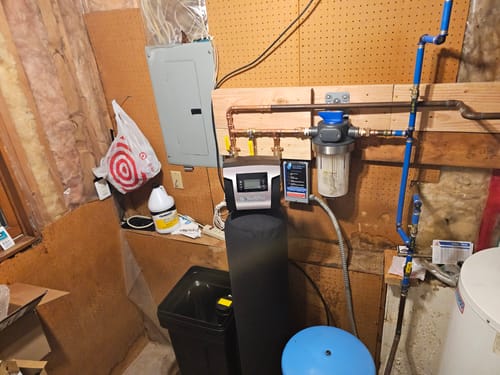
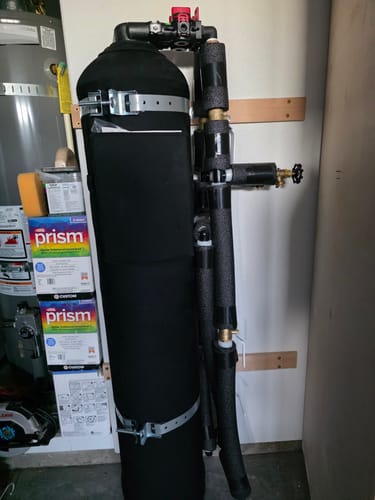
Unpacking revealed a substantial 10-inch diameter fiberglass tank, approximately 54 inches tall. The weight surprised me – the media-filled tank required two people to maneuver into position safely.
The control valve appeared well-constructed with a clear digital display and intuitive button layout. All fittings were brass rather than plastic, which gave me confidence in long-term durability.
Documentation included detailed installation manuals with both professional and DIY instructions. The wiring diagrams were clear, and the plumbing schematics showed multiple installation configurations.
Would I tackle this installation myself?
After reviewing the requirements, I decided on professional installation despite my reasonable DIY skills. The project required cutting the main water line, installing bypass valves, running electrical to the control valve, and programming the regeneration cycles.
My installer arrived with specialized tools including a pipe cutting machine and compression fitting equipment. The installation took approximately four hours, including pressure testing and initial programming.
The most challenging aspect was routing the backwash drain line. Our utility room lacked a floor drain, so we needed to run 40 feet of drain line to the basement floor drain, requiring careful planning to maintain proper slope.
Initial startup involved manually initiating a backwash cycle to remove air and settle the media bed. The system cycled through its regeneration sequence, which took about 45 minutes and used approximately 150 gallons of water.
Technology Deep Dive: How Catalytic Media Actually Works

Understanding the science behind iron filtration helped me appreciate what was happening inside that fiberglass tank every time we turned on a faucet.
The catalytic media creates an oxidation environment where dissolved ferrous iron contacts the media surface and converts to ferric iron particles. This happens continuously as water flows through the media bed at controlled flow rates.
Flow rate proves critical for effective treatment. The media requires sufficient contact time to achieve oxidation – typically 6-8 GPM maximum for a 10-inch tank. Exceeding this flow rate can cause iron breakthrough during high-demand periods.
The media bed depth affects both treatment effectiveness and system longevity. Deeper beds provide more contact time and surface area, but require higher backwash flow rates for proper cleaning.
How does the regeneration cycle maintain performance?
Backwashing occurs automatically based on programmed intervals – every three days in our installation. The control valve reverses water flow, lifting and expanding the media bed while flushing accumulated iron particles to drain.
This process requires significant water flow – approximately 8-10 GPM for 10-12 minutes. Inadequate backwash flow can lead to media fouling and reduced effectiveness over time.
The backwash water appears heavily discolored during regeneration, confirming that the system captures substantial iron between cycles. This visible evidence reinforced my confidence in the filtration process.
Media replacement becomes necessary every 3-5 years depending on iron loading and water chemistry. The media doesn't "wear out" but gradually loses catalytic effectiveness and develops channels that reduce contact efficiency.
pH levels significantly impact performance. Our water tests at 6.8 pH, which falls within the optimal 6.8-8.5 range for catalytic media. Lower pH levels can reduce effectiveness and require pre-treatment.
Oxygen content also affects performance. Wells with low dissolved oxygen may benefit from air injection to enhance the oxidation process, though our naturally aerated well water provided sufficient oxygen levels.
Real-World Performance: 18 Months of Data
Numbers tell the story better than subjective impressions, so I've tracked performance metrics throughout our ownership experience.
Pre-treatment iron testing showed 4.2 PPM at the wellhead. Post-treatment testing after the first month showed 0.1 PPM – well below the 0.3 PPM secondary standard and virtually undetectable in daily use.
Flow rate measurements confirmed adequate pressure throughout the house. At the kitchen sink, I measured 8.2 GPM with a 2 PSI pressure drop across the system during normal operation.
During peak demand periods – simultaneous shower, dishwasher, and laundry – pressure remained adequate though iron removal efficiency decreased slightly. Post-treatment testing during high flow showed 0.3 PPM, still within acceptable limits.
What changes did we notice in daily living?
Staining elimination was immediate and dramatic. New stains stopped appearing within the first week, and existing stains gradually faded as we cleaned fixtures with iron-removing products.
Laundry improvements became apparent after the first few wash cycles. White clothing remained white, and light-colored fabrics stopped developing the yellowish tinge that had plagued us previously.
Taste improvements were noticeable immediately. The metallic flavor disappeared completely, making coffee, tea, and drinking water pleasant again. Family members commented on the improvement without prompting.
Water usage increased slightly due to the backwash requirements. Our monthly consumption increased by approximately 450 gallons – the equivalent of three regeneration cycles monthly.
Seasonal performance variations emerged during the first year. Summer months with higher water usage required more frequent regeneration to maintain effectiveness. I adjusted the regeneration schedule from every three days to every other day during peak demand periods.
Long-term testing at 12 and 18 months showed consistent performance with no degradation. Iron levels remained below 0.2 PPM, and flow rates stayed within 1 PSI of initial measurements.
Operating Costs and Practical Considerations
Transparency about ongoing expenses helps set realistic expectations for potential buyers considering similar systems.
Electricity consumption proved minimal. The control valve draws power only during regeneration cycles, consuming approximately 15 kWh monthly – less than $2 at our local rates.
Water consumption for regeneration represents the largest ongoing cost. Each cycle uses 150 gallons, and our three-monthly cycles consume 450 gallons. At $0.003 per gallon for well water pumping costs, this adds roughly $1.35 monthly.
No chemical costs exist with catalytic media systems, unlike oxidation systems requiring chlorine or other chemicals. This represents significant savings over chemical treatment approaches.
Maintenance requirements include annual system sanitization and periodic testing to verify performance. I spend approximately 2 hours annually on system maintenance tasks.
How do these costs compare to our previous situation?
Bottled water elimination saved $80 monthly immediately. Iron-removal cleaning products that we purchased weekly now last months, saving approximately $20 monthly.
Clothing and linen replacement costs decreased dramatically. Previously, we replaced rust-stained items every 6-12 months. These premature replacements easily cost $300-500 annually.
Appliance protection provides less quantifiable but significant value. Our water heater, dishwasher, and washing machine no longer accumulate iron deposits that reduce efficiency and lifespan.
Total monthly operating costs approximate $3.50, while monthly savings exceed $100 when considering all eliminated expenses. The return on investment became positive within six months.
Energy efficiency remained consistent throughout ownership. The system requires no heating, cooling, or pressurization beyond normal household water pressure.
Maintenance Reality and Long-Term Ownership
Eighteen months of ownership provided realistic insight into what maintaining an iron filtration system actually requires versus manufacturer promises.
Monthly tasks include visual inspection of the control valve display for error codes and verification that regeneration cycles occur as scheduled. This takes approximately 5 minutes and requires no technical knowledge.
Quarterly tasks involve checking the drain line for clogs or backups, particularly important during our first winter when freezing temperatures affected the outdoor drain termination.
Annual maintenance includes system sanitization using unscented household bleach. This process requires manually overriding the regeneration cycle and takes about 30 minutes of active time spread over several hours.
What unexpected maintenance issues arose?
The drain line developed a partial clog after eight months due to iron sediment accumulation. Clearing this required snaking the line and took about an hour – not difficult but unexpected.
Winter weather affected the outdoor drain termination, causing temporary backups during freeze-thaw cycles. Installing a simple extension solved this issue permanently.
Control valve programming occasionally resets during power outages. While the system continues operating normally, the regeneration schedule requires manual verification and adjustment after extended outages.
Media settling occurred gradually over the first six months, creating slight channeling that reduced contact time. This didn't affect performance noticeably but will require media releveling during the eventual replacement.
System diagnostics through the control valve display proved more limited than expected. While basic function indicators work well, detailed troubleshooting requires external testing equipment.
Professional service availability in our rural area is limited. Finding qualified technicians familiar with this technology required research and advanced scheduling for the annual inspection.
Honest Assessment: What This System Does and Doesn't Do
After 18 months of real-world use, I can provide an honest assessment of where this iron filtration technology excels and where it falls short of expectations.
Where the system exceeds expectations:
Iron removal effectiveness surpassed manufacturer claims. Consistent post-treatment levels below 0.2 PPM demonstrate superior performance compared to the promised 0.3 PPM reduction.
Reliability proved excellent with zero unscheduled downtime or component failures. The system operates automatically without intervention, even during extended vacations.
Installation integration was smoother than anticipated. The bypass valve system allows easy maintenance without disrupting household water service.
Family acceptance was immediate and enthusiastic. Everyone noticed and appreciated the water quality improvements within the first week.
Where the system has limitations:
High-demand performance shows slight degradation during simultaneous heavy usage. While still effective, iron removal drops to marginal levels during peak flow periods.
Space requirements were larger than initially apparent. The tank, bypass valving, and drain connections require more utility room space than anticipated.
Regeneration water usage exceeds estimates during summer months. Increased household water consumption required more frequent backwashing than the standard schedule.
pH dependency became apparent during seasonal variations. Late summer pH drops required temporary regeneration frequency increases to maintain effectiveness.
Professional service dependency for major maintenance limits DIY troubleshooting options for complex issues beyond basic maintenance tasks.
Would I purchase this system again?
Absolutely. The combination of effectiveness, reliability, and reasonable operating costs justifies the initial investment many times over. Our water quality problems disappeared completely, and the system operates with minimal attention.
However, I would recommend careful consideration of household water usage patterns and peak demand requirements during sizing. Systems operating at capacity limits show reduced effectiveness during high-demand periods.
For households with iron levels below 3 PPM and moderate water usage, this technology provides excellent results with reasonable operating costs and maintenance requirements.






