


![SoftPro™ Chlorine+ Carbon Whole House Water Filter to Remove PFAS, Chlorine, Chloramine & Pesticides [City Water Filters Series]](http://www.softprowatersystems.com/cdn/shop/files/SoftPro_Whole_House_Carbon_Filter_with_Spin_Down_Water_Filter.webp?v=1783547361&width=140)


 855-683-8488


Iron Filter Running Brown Water After Backwash: Is It a Backwash Problem or a Media Issue?

Brown water after backwash usually points to one of two problems: a backwash process that isn't flushing iron particles out completely, or media that's too exhausted to capture iron anymore. Insufficient flow, clogged drain lines, and poor rinsing are common backwash culprits. Media fouling or saturation is the other likely cause, especially if your filter is several years old. Stick with us, and we'll help you pinpoint exactly what's going wrong.
Key Takeaways
- Brown water after backwash often signals insufficient flow rate, causing trapped iron particles to resettle instead of flushing out properly.
- Clogged drain lines or media channeling can prevent effective backwashing, leaving sediment and iron particles behind in the filter.
- Persistent brown water despite regular backwashing strongly suggests exhausted or fouled media that can no longer capture iron effectively.
- Media typically lasts 3–5 years; elevated iron levels on water tests confirm when replacement is necessary.
- Extending rinse time by 30 seconds after the sight glass clears helps clear residual particles remaining post-backwash.
Why Your Iron Filter Runs Brown Water After Backwash

Why does your iron filter spit out brown water right after a backwash cycle? It's a frustrating sight, but it's telling you something specific.
The most common culprit is insufficient backwash flow — when water doesn't move fast enough through the media, it can't flush out trapped ferric iron particles completely.
But flow rate isn't always the villain. Sometimes sediment from settled ferrous iron has accumulated deep in the media, making thorough cleaning nearly impossible without intervention.
Worse, iron biofilms can develop on that buildup, releasing rusty water the moment your system restarts. Inadequate rinsing after backwashing compounds the problem further, leaving residual particles ready to enter your supply line.
Understanding which factor you're dealing with determines exactly how you'll fix it.
Backwash Problems That Leave Brown Water in Your Iron Filter
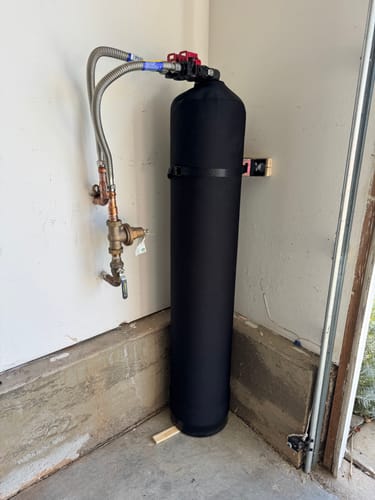
Backwash cycles are supposed to solve your brown water problem — not cause it. But when backwashing goes wrong, it often makes things worse. Insufficient flow during the cycle means trapped iron particles never fully flush out — they just resettle and bleed through later.
A clogged drain line compounds this, blocking waste removal and letting sediment accumulate.
We also see media channeling, where water carves shortcuts through the filter bed, letting iron slip past treatment entirely. That usually signals it's time for media replacement, not just another backwash.
Here's something counterintuitive: backwashing too frequently or too long can actually disturb the media bed and release more iron.
Watch your pressure gauge — significant drops tell you when maintenance is genuinely needed.
How to Diagnose Iron Filter Control Valve Problems
When your iron filter keeps underperforming despite a proper backwash setup, the control valve is often where we need to look first.
Start by monitoring pressure gauge readings during backwash—a notable drop signals flow rate issues. Then verify calibration settings match your system's specific backwash and rinse requirements.
| Diagnostic Check | What to Look For | Why It Matters |
|---|---|---|
| Pressure gauge | Significant pressure drop | Indicates control valve flow issues |
| Calibration settings | Incorrect backwash/rinse values | Causes inadequate iron particle flushing |
| Supply lines | Obstructions or blockages | Restricts water flow to valve |
Finally, inspect the valve itself for wear, damage, or mechanical inconsistencies during operation. Catching these failures early prevents brown water from persisting long-term.
Signs Your Iron Filter Media Is Exhausted or Fouled
Even with a perfectly functioning control valve, your iron filter can still fail you—and exhausted or fouled media is often the real culprit. Knowing the warning signs helps you act before the problem compounds.
Watch for these red flags:
- Persistent brown water after backwashing signals the media can no longer trap iron particles effectively.
- Backwashing too frequently—beyond manufacturer recommendations—suggests fouling or saturation.
- Noticeable pressure drops during filtration indicate clogged, failing media struggling to perform.
- Elevated iron levels on water tests despite active filtration confirm the media's capture capacity is spent.
Most media lasts 3–5 years.
If you're seeing multiple symptoms simultaneously, you're likely past the point of troubleshooting—replacement is the most efficient path forward.
Iron Filter Maintenance That Prevents Brown Water After Backwash
Preventing brown water after backwash comes down to staying ahead of the problem rather than reacting to it.
We recommend backwashing every 4 days to 2 weeks — don't let sediment and oxidized iron accumulate until they're restricting flow. After each backwash, extend your rinse time at least 30 seconds beyond when the sight glass clears; that extra flush matters more than most people realize.
Keep your pH consistently between 6.5 and 8.5, because dropping below that range tanks your iron removal efficiency and stresses the media.
If you're dealing with high iron loads, adding a 120-gallon retention tank and in-line mixer dramatically improves conversion before water even reaches the filter.
Inspect and clean your media regularly — buildup doesn't announce itself until it's already causing problems.
Frequently Asked Questions
Why Is My Water Still Brown After Filtering?
Your water's still brown because your filter media's saturated with oxidized iron particles. We've found that insufficient backwashing frequency lets trapped iron break through. Let's increase backwash duration or consider replacing the media entirely.
How Often Should an Iron Filter Backwash?
We recommend backwashing your iron filter every 4 days to 2 weeks, depending on your water usage and iron concentration. If you're dealing with high iron levels, you'll want to increase that frequency to daily.
What Comes First, Rinse or Backwash?
Backwash always comes first. We reverse the water flow to dislodge trapped contaminants, then follow with a rinse to flush out debris. Skipping or shortening the rinse causes that brown water you're seeing.
What Problems Can Develop From Improper Backwash Rates?
Improper backwash rates can cause discolored water, media channeling, increased pressure drop, iron breakthrough, and premature media wear. We're fundamentally letting trapped particles accumulate, forcing our system to work harder and shortening our filter media's lifespan.






